Showing posts with label disney. Show all posts

Tuesday, December 02, 2025

Temple Tuesday: Jane Darwell


Today’s post pays tribute to character actress Jane Darwell (1879-1967). She was born Patti Woodard in Palmyra, Missouri. Edited from the Find a Grave website:

Her father was a railroad executive who disapproved of her interest in theatre. Despite the disapproval, she continued working in theatre and made her film debut in 1912. It would be the first of over 200 film performances. Her first notable performances in talking pictures came in 1930 and 1931 when she played the part of the Widow Douglas in the films “Tom Sawyer” and “Huckleberry Finn.”

She was a frequent Shirley Temple costar, beginning with the film “Change of Heart” (1934) starring Janet Gaynor, Ginger Rogers, James Dunn, and Charles Farrell. Both Darwell and Temple have bit parts in the film, but no scenes together. Darwell played the mother of Dunn’s character (screenshot below) in a short scene at the beginning of the film:


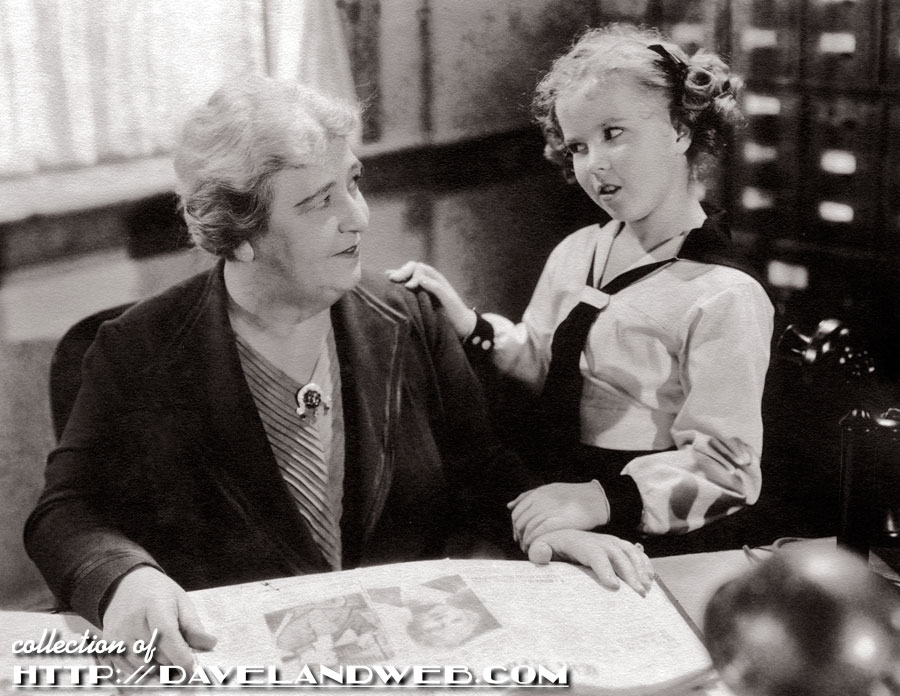
…and Shirley had a cameo with Charles Farrell (seen above) as he makes her a paper airplane aboard a real airplane. In “Bright Eyes” (1934), Shirley and Jane had a number of scenes together. Darwell played the feisty cook, Mrs. Higgins, who adores Shirley but hates the bratty little child (portrayed by Jane Withers) of her snooty employer.


In the film, Shirley’s character (also named Shirley!) borrows one of the large stockings from the plus-sized Mrs. Higgins so that Santa will have more room to give her all the gifts she’d like to have!


Next up was “Curly Top” (1935) with Darwell as Mrs. Denham, the kindly matron of the orphanage where Shirley’s character lives with her sister. Mrs. Denham is key in getting the wealthy Edward Morgan (John Boles, seen below with Darwell) to adopt the two girls.


The publicity still below shows Mrs. Denham and Mrs. Higgins (Rafaela Ottiano) crying as the two sisters leave the orphanage.


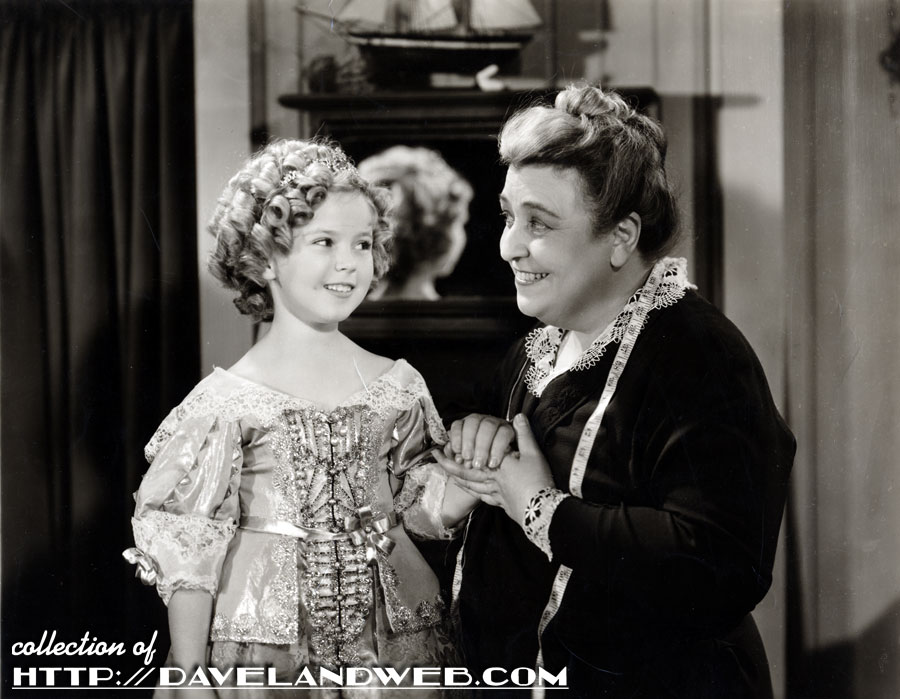
In “Captain January” (1936) Darwell portrayed the widow Eliza Croft, who has the hots for Shirley’s guardian, played by Guy Kibbee.


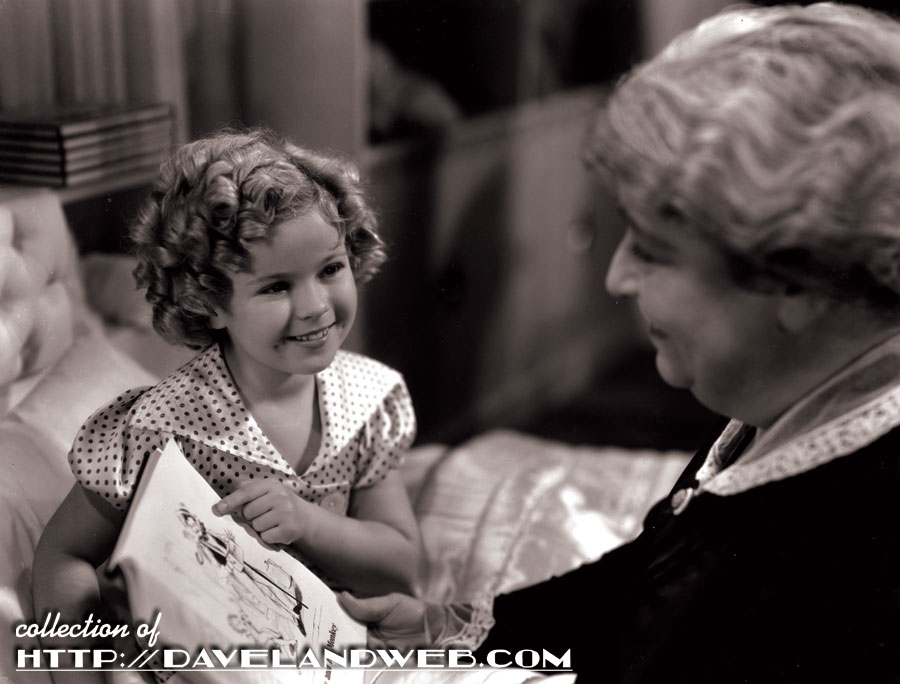
A few brief scenes between the two in “Poor Little Rich Girl (1936), with Darwell playing yet another housekeeper.


Darwell’s final silver screen pairing with Temple was “Little Miss Broadway” (1938). This time, she actually runs the orphanage that Shirley is adopted from. Finally, a career move up!
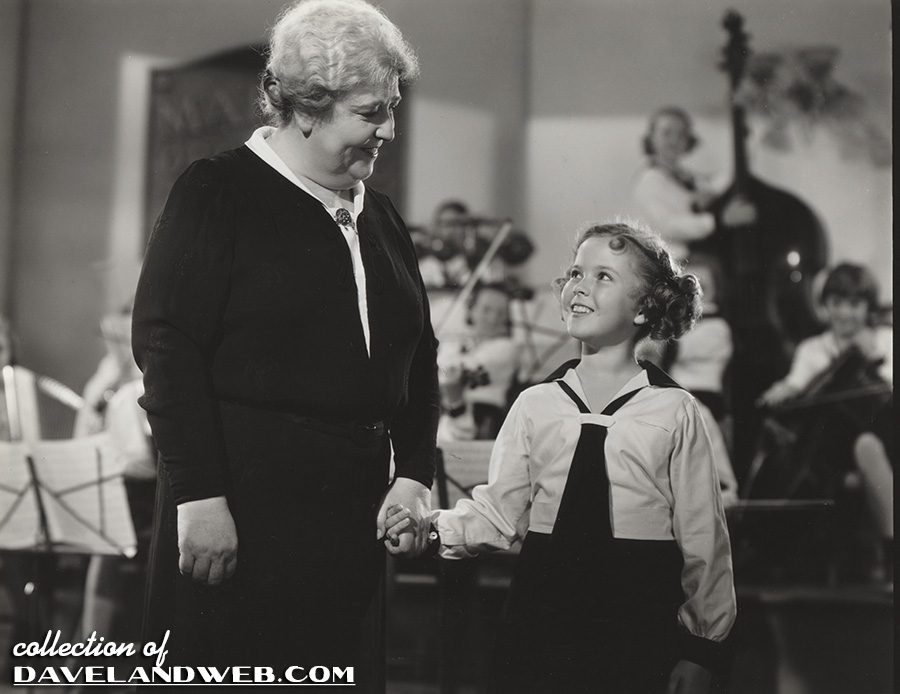


Darwell was a busy gal, playing bit parts in several other movies over the years. In “Gone with the Wind” (1939), she memorably portrayed the neighborhood gossip, Mrs. Merriwether.


More from Find a Grave:

Her career took a new path when she landed the role of the James Brothers' mother in the 1939 Tyrone Power/Henry Fonda film "Jesse James." It would be the first of several times she would play the mother of Henry Fonda on film. One of those times came in 1940 when she won an Academy Award for Best Actress in a Supporting Role for her portrayal of Ma Joad in the classic film "The Grapes Of Wrath."

Below, you can see a clip showing multiple takes of Darwell accepting the Best Supporting Actress Oscar for “Grapes.” The 13th Academy Awards was held at the Biltmore Bowl of the Biltmore Hotel in Los Angeles on February 27, 1941. She had stiff competition, beating out Judith Anderson (“Rebecca”), Ruth Hussey (“The Philadelphia Story”), Barbara O’Neil (“All This and Heaven Too”), and Marjorie Rambeau (“Primrose Path”).


In late 1948, Shirley returned to her home studio of 20th Century-Fox. Zanuck through a welcome back party and many of her former costars showed up. Below is Darwell and director Henry Hathaway:


Shirley hired Darwell for her television anthology series, “The Shirley Temple Show,” specifically the episode titled “The Fawn,” which first aired on February 5, 1961. Shirley was the narrator and Darwell played Grandma in the story that also featured Robert Crawford, Jr. (seen below).


Her final role in “Mary Poppins” (1964) was brief but extremely touching. From the Walt Disney Family Museum website:

Walt [Disney] took special care to ensure that the “Feed the Birds” sequence in Mary Poppins would be memorable. As Robert Sherman would explain, “One of the more beautiful moments in the history of movie making occurred as we were casting and filming the ‘Feed the Birds’ sequence. It’s one of those rare instances where life and art became one in the same thing.” During production of the Disney film in the summer of 1963, actor Jane Darwell was 83 years old. With a film career that stretched back to as early as 1913, she was among the most respected actors in the industry, with a star on the Hollywood Walk of Fame and an Academy Award for Best Supporting Actress for her performance of Ma Joad in 1940’s The Grapes of Wrath. She was living at the Motion Picture Country Home, a noted residence for retired film actors and artists. “Walt offered her the part of the Bird Woman, but in doing so, he also treated her as the star she had once been,” Robert Sherman recalled. “He sent her a script and a letter via special messenger (as opposed to US Mail) and had a limousine and driver pick her up once for a meeting and then again on the day of the shoot. Miss Darwell was tremendously excited to be a part of Mary Poppins and must have felt gratified to have been remembered after so many years away from the limelight. I think it was a particularly poetic thing of Walt to have done this. After all, as Walt said referring to ‘Feed the Birds,’ ‘That’s what it’s all about,’ doing just a little extra and going just a little bit out of your way to make someone feel special. Sometimes it can make all the difference in the world to a person.”


From the DVD commentary track one learns that Robert Sherman provided the speaking voice of Jane because Darwell’s voice was too soft to be heard on the soundtrack. He is heard saying her only line: “Feed the birds, tuppence a bag.”


It’s one of those magical moments where Andrews’ singing and Darwell’s performance together help bring on the waterworks. Watch the scene in the clip below:


Darwell died on August 13, 1967, after suffering a heart attack at the Motion Picture Country House and Hospital in Woodland Hills, California. Her obituary stated that she “had been residing at the hospital for the past two months, according to Maudie Hiser, her companion for 24 years.…The actress leaves a nephew, Winston Ogden, North Hollywood.” Reflecting on her career, Darwell stated, “I played either a grandmother or a housekeeper in every Shirley Temple film ever made.…I’ve played Henry Fonda’s mother so often that he calls me ma, and I call him son.” Darwell was married once in the 1920s, but was divorced within a year, according to her friends.

In other Shirley news, last month Deadline Hollywood broke this story:

EXCLUSIVE: Marty Tudor has been working with the family estate of Shirley Temple and will have access to the rights of the child actress-turned Ghana and Czechoslovakia ambassador across streaming, film, stage and more. There are also two unpublished autobiographies by Temple which Tudor is helping the estate get published. The life of Temple, who was discovered dancing in a theater lobby by Fox Film songwriter Jay Gorney, is largely an untapped IP; one prolific adaptation of her life was the 2001 Disney Channel movie, “Child Star: The Shirley Temple Story.” That was based on Temple’s autobiography of the same name and it starred Connie Britton. Tudor is an industry vet, who managed the careers of Paula Abdul and Jon Cryer, and of late has been behind a series of Hologram concert shows starting in 2018 with performances by the late Maria Callas, Roy Orbison, and Whitney Houston.…Temple began her film career in 1931. The 1934 movie Bright Eyes put her on the map as a singing child star with her signature ditty “On the Good Ship Lollipop”. In 1935, she received a miniature Juvenile Oscar. She did segue to roles as a teenager, notably starring opposite Cary Grant in 1947’s The Bachelor and the Bobby-Soxer which won an Oscar for Sidney Sheldon’s adapted screenplay.…Temple’s last movie was the 1949 comedy “A Kiss for Corliss” opposite David Niven. She hosted “Shirley Temple’s Storybook” from 1958-1961 before beginning her diplomatic career in 1969. Her friends included former FBI founder J. Edgar Hoover who gifted her a tear gas pen at the age of 20 to help protect her against any death threats. She also befriended Amelia Earhart; the duo reportedly known for their discussions about feminism, Hamlet and chewing gum. Temple as a child learned geography by tracing Earhart’s flights.“There’s so much more to American icon Shirley Temple’s life that people aren’t aware of. She was the U.S. delegate in the United Nations, a female Ambassador to Ghana and Czechslovakia, she was a breast cancer survivor, she fought sexism as the first female U.S. Chief of Protocol. What appeals to me, as a father of a daughter, is that Shirley continues to be an amazing inspiration and role model for young girls. We see a lot of kid actors who go the wrong way, she did not. There’s an amazing human being here with a big story who gave back as opposed to a pop star in it for the glory,” Tudor tells Deadline. The Temple Black family tells Deadline in a statement: “As the 100th anniversary of our Mom’s birthday approaches, we are so pleased at the idea of sharing with the world the lesser-known second half of her incredible life story. She often observed that ‘the Little Girl opened the door’, but then our Mom stepped through it, confident, courageous, authentic – all grown up.”

It would be amazing to have the rest of Shirley’s autobiography released!

See more Shirley Temple photos at my main website.

Friday, April 18, 2025

Snow White, 2025: What happened?!?


“Snow White” is the latest in live-action “re-imagined” versions of Disney animated classics…and mercifully, it may be the last. Thanks to a number of factors, this film suffered a gigantic negative social media backlash before it was even released. Still, when a friend said, “Let’s go see just how bad it is” and offered to buy tickets, I attended with an open mind. I wonder if the other two people (yes…two, 2, dos, deux, zwei, etc.) in the audience did the same? PLOT SPOILERS - BEWARE!

Rachel Zegler plays the lead role of Snow White. Sadly, the Disney Corporation felt the need to explain away the color of her skin by adding to the plot line that the Queen gave birth to her daughter during a snowstorm. It is somewhat laughable that we are expected to believe that the pregnant Queen was riding around in a carriage in the middle of winter right up until her due date. Superfluous plot points like this and unnecessary characters bloated this movie making it roughly 26 minutes longer than Walt’s tightly constructed original.

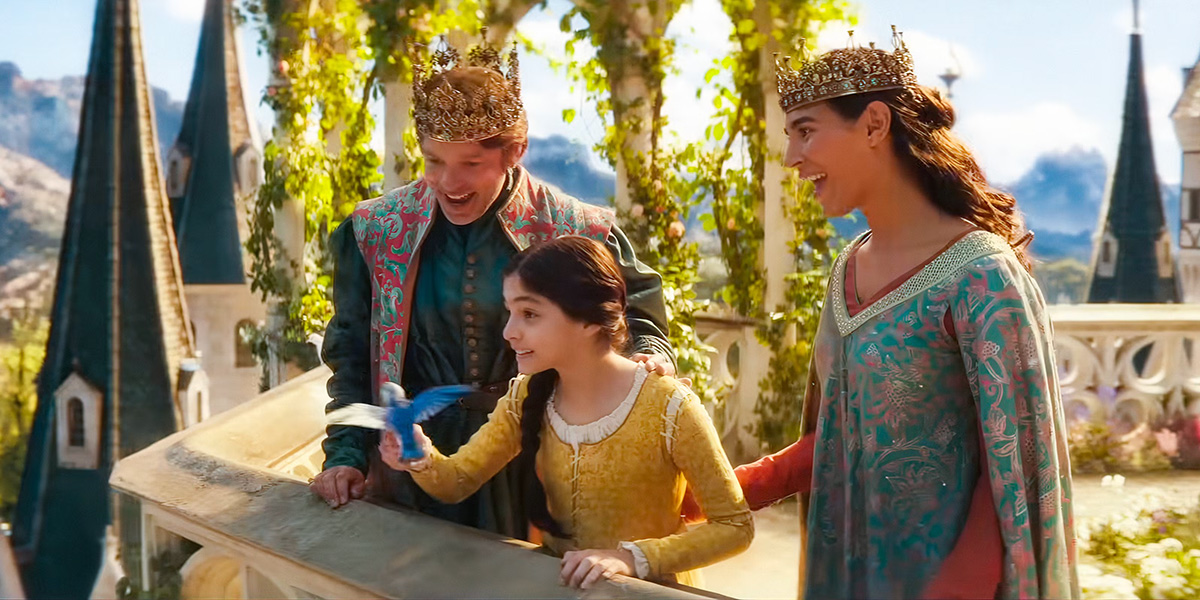
Because audiences today are apparently dimmer than they were back in 1937, the royal family is shown in all their sickeningly sweet happy moments with birds, making apple pies, and constant repetition of the King’s mantra to his daughter: “Fearless, Fair, Brave, and True.” A mantra of this type was also a main plot point of Disney’s 2015 live-action version of “Cinderella,” where her father told her to always have “courage and be kind.”


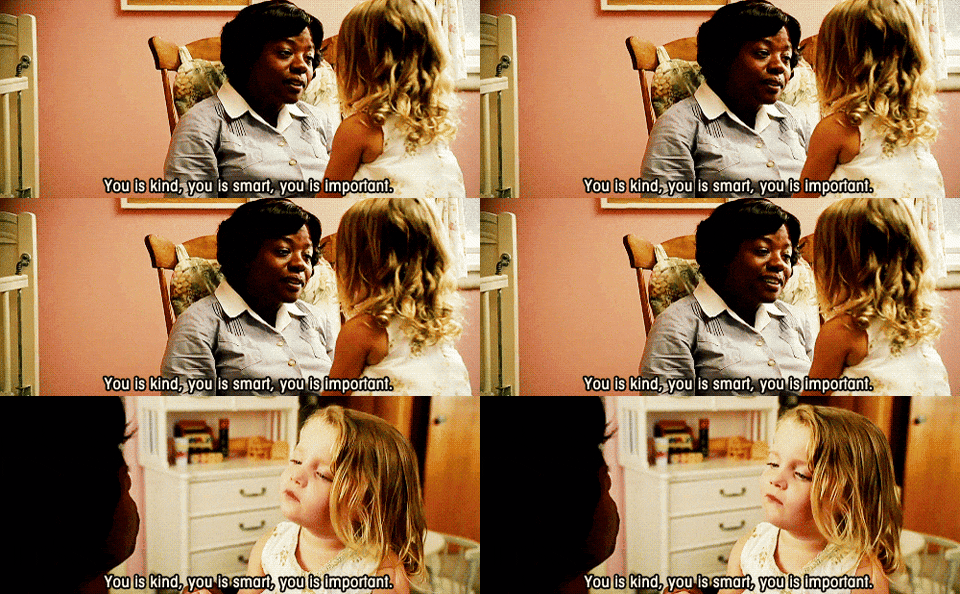
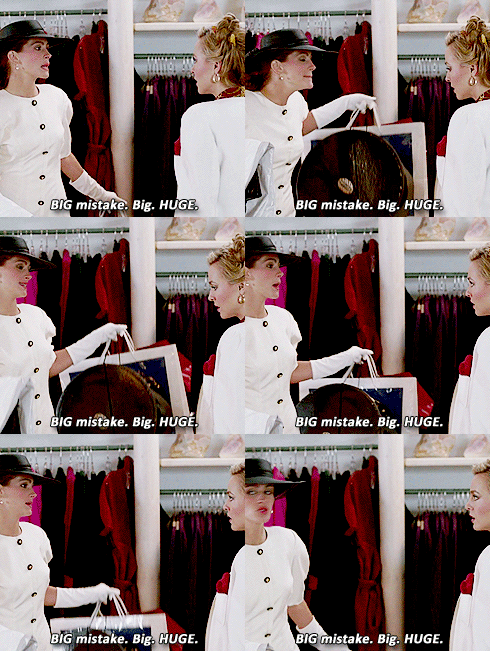
I couldn’t help but also be reminded of this one from “The Help” (2011), also released by the Disney Corporation. Are we seeing a theme yet?


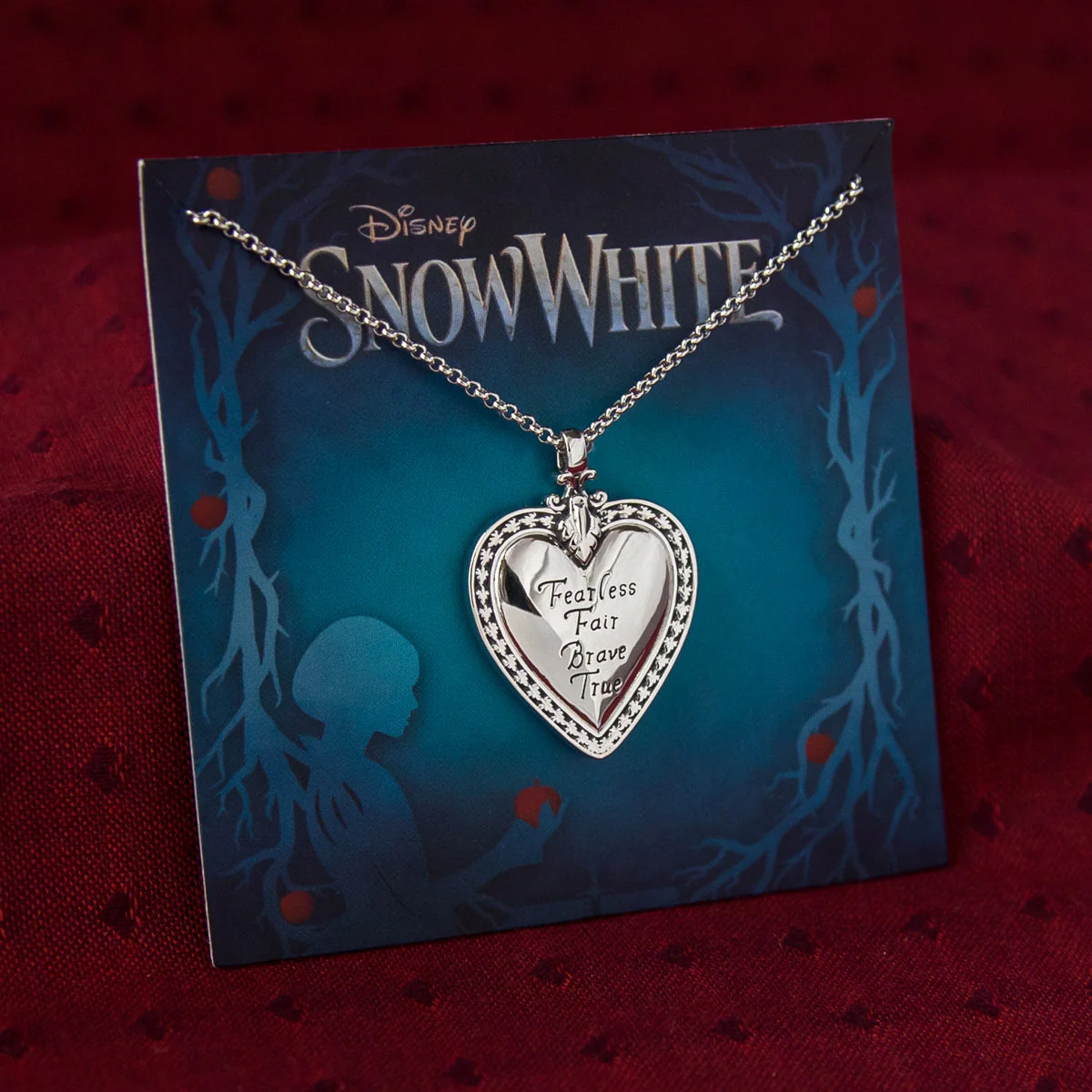
I know you will ALL be happy (and very surprised!) to discover that Disney turned this necklace into merchandise. At only $99 (cough), they probably should have added “wealthy” to the list.


Back to the plot…the Queen kicks the bucket, the King remarries to a glamorous woman who soon takes over the throne when said King disappears during a military maneuver. Snow White ends up mopping floors in the kingdom and feeling bad that the kingdom no longer makes apple pies.

The first twenty to thirty minutes weren’t awful; the movie seemed like it might be able to stand on its own and that Zegler’s performance and vocal strength in her original solo, “Waiting on a Wish” could sway me to the positive side. While I have been annoyed with the Disney Corporation’s lack of a spine, I am also annoyed with the online critiques of people who have yet to experience the film. Social media has created a wicked culture of people who sit on their ass all day and do nothing but spew out their bile, hoping to become influencers. Maybe they just need a necklace...or some apple pie.


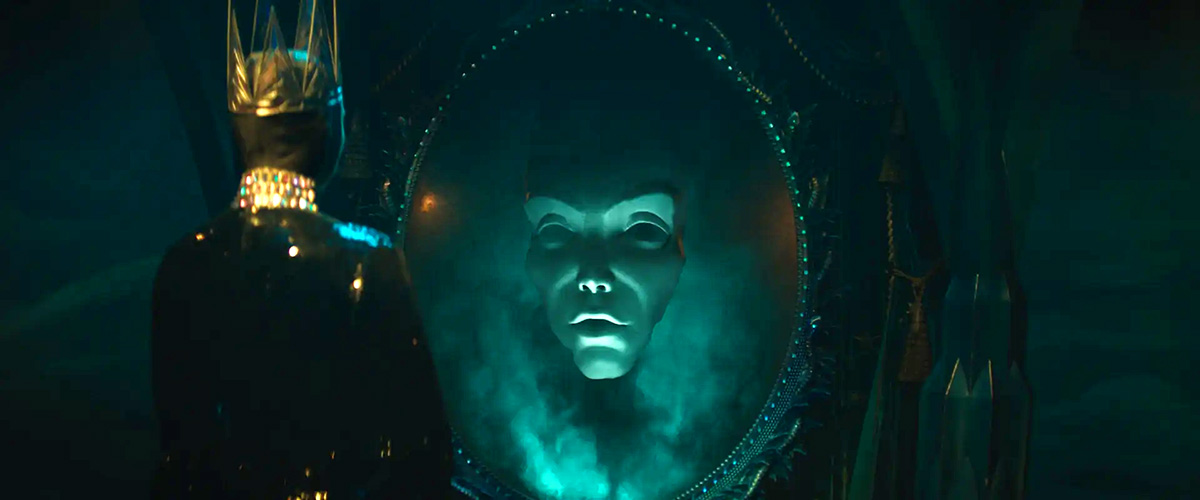
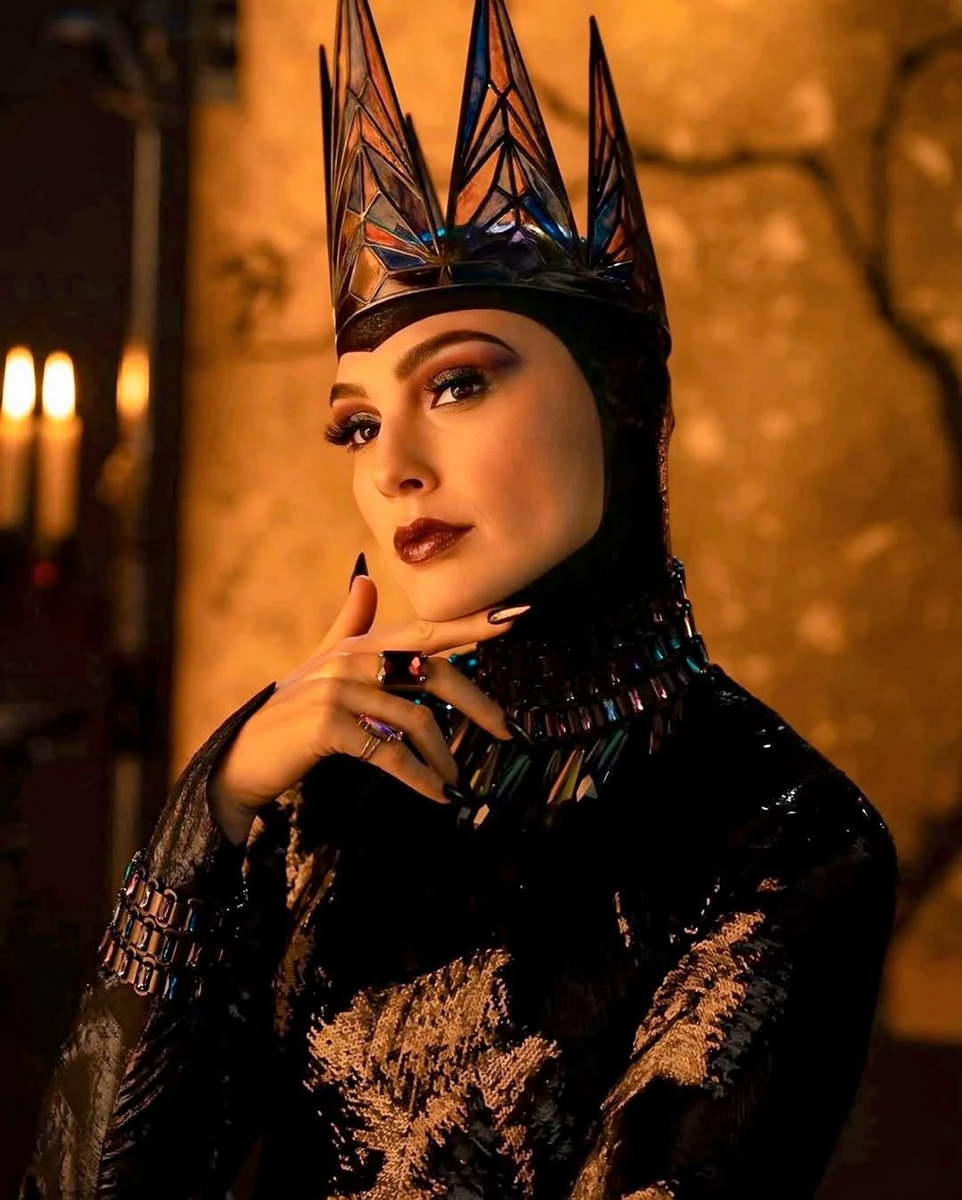
The subjects of the kingdom are shown in all their misery, stuck under the now militaristic rule of their new Evil Queen, Snow’s stepmother. Snow herself is somewhat catatonic, continuously mopping the same small area of the castle over and over again while singing. Though Zegler is a competent actress, even she can’t carry off a convincing portrait of a slave laborer. The only thing that might make the audience sympathize with Snow White is the awful hairdo the design team saddled her with. There is just too much time wasted on the village (which was never seen in the original) and attempting to give pointless backstories. On the plus side…kudos for the design of the Magic Mirror and Gal Gadot’s makeup and costuming for her role of the Evil Queen.


Doesn’t she look bewitching, evil, and potentially dangerous?


That is, until she opens her mouth and it all falls apart. Whether it was her choice or that of the director, Marc Webb, Gadot seems to have just graduated from the Ru Paul Drag Race School of Acting. The choice of adding comedic camp to her role removes all of the menace and fear from her actions.


The plot finally begins to creak forward when a Robin Hood type character, Jonathan (played by Andrew Burnap) enters the castle to steal some potatoes for sustenance. Thinking Snow White is just a servant, he suggests she take a few for herself before he escapes...into the arms of the Evil Queen’s security guards. Because she has romantic stirrings for this gent, witnessing the Queen’s cruel punishment of this thief awakens Snow White from a state of complacency and reminds her of what her father told her (I’m surprised a QR code for purchasing the locket wasn’t added to the film).

There is zero chemistry between Zegler and Burnap. It might have been more believable to have Burnap paired up with the man in the magic mirror (not that there’s anything wrong with that). In the original movie, the Prince is on screen for probably no more than five minutes; in this version which is supposedly about awakening the warrior/leader within a woman (that would be Snow), the Bandit is given significantly more screen time. How ironic that for this story of female empowerment, the theme (look at the locket in case you forgot) came from the father (not the mother) and that the “awakening” came because of the encouragement of the Jonathan character. No matter how much males get bashed these days, looks like you still need them, at least according to Disney. Unless a thread starts up on Reddit to the contrary…

The rest of the plot is fairly on spec with the animated original, other than the addition of Jonathan’s band of thieves. If you didn’t pick up the message of “being different is okay” with the Seven Dwarfs and that everybody needs to get along regardless of race, creed, etc. etc., the band of thieves give more opportunity for that sledgehammer to hit the audience’s head.

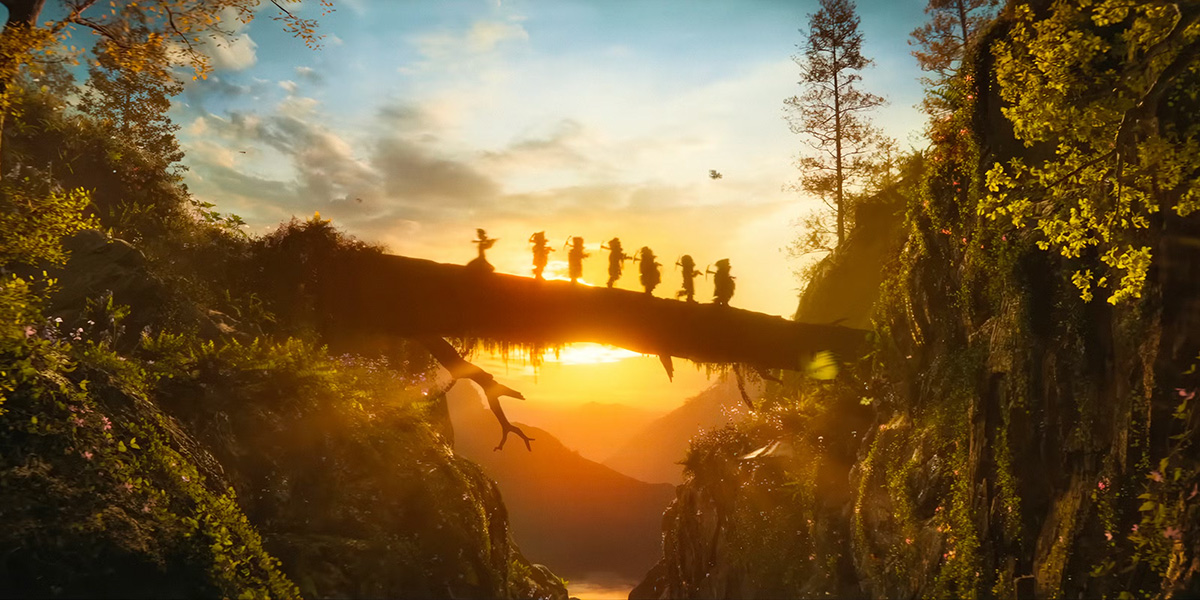
On the subject of the Dwarfs…


The final choice to use CGI characters was an unfortunate one. They lack the charm, artistry, and comedy of their animated predecessors, thanks to the hyper realism of CGI. They should have had an eighth dwarf: Creepy. Also - did polyester exist back in the days of the fairytale? Snow’s costume looks like it came from the bargain bin of a forgotten Disney Store that was shuttered long ago. Animated Snow White cleaned up the cottage of the dwarfs before meeting them to show that she was appreciative of the possibility that they might allow her to hide there from the Evil Queen; no Princess attitude here! Zegler’s Snow “teaches” the dwarfs how to clean and lets them do it; it does not make her as approachable as the original Snow. Her message for the movie - let them eat an apple pie every now and then and all will be ok.


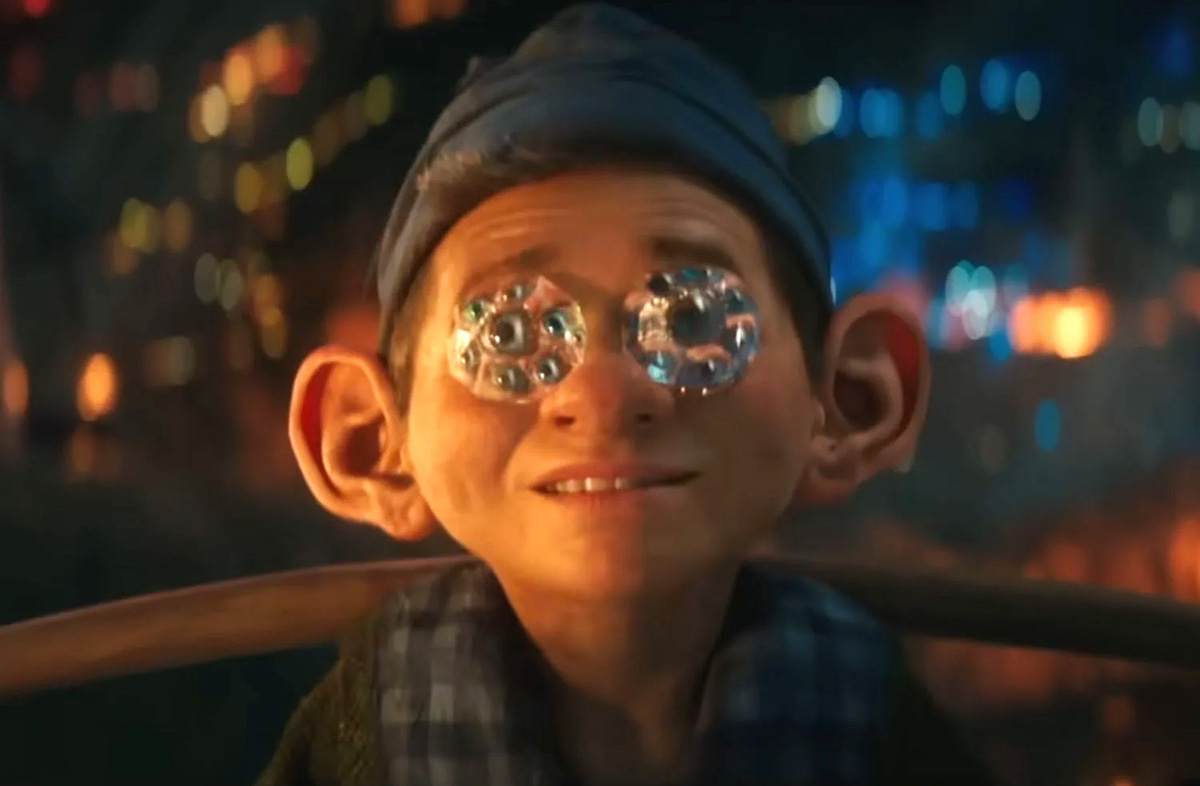
This time, Dopey is the poster boy for “being different is okay.” Naturally there is a transformation towards the end of the film that puts that sledgehammer to use again. Ouch…you might need some Advil by the time this film is over from all the blunt messaging it doles out. A bit more on the CGI: for the backgrounds, sets, and landscapes, it is perfectly over-done. It causes the sets and backgrounds to stand out and be noticed, rather than to blend in and subtly serve the story. They scream out, “Look at what my new computer can do!” Just because it CAN be done doesn’t mean it SHOULD be. Restraint is a virtue, too.


As I wrote in my appreciation of the 1937 original, the songs were seamlessly integrated into the film and moved the plot forward. None of them were very long, either, which keeps the derriere from getting uncomfortable. In the 2025 version, each number is a Broadway spectacular that is over-choreographed, over-produced, and over-performed. You can bet your bottom dollar that an outstretched arm ends each number (how else would you know that the song was over?). The absolute worst is the Evil Queen’s big solo, “All Is Fair.” You can probably catch it being performed at a drag show near you. Oh Gal…what were you thinking?


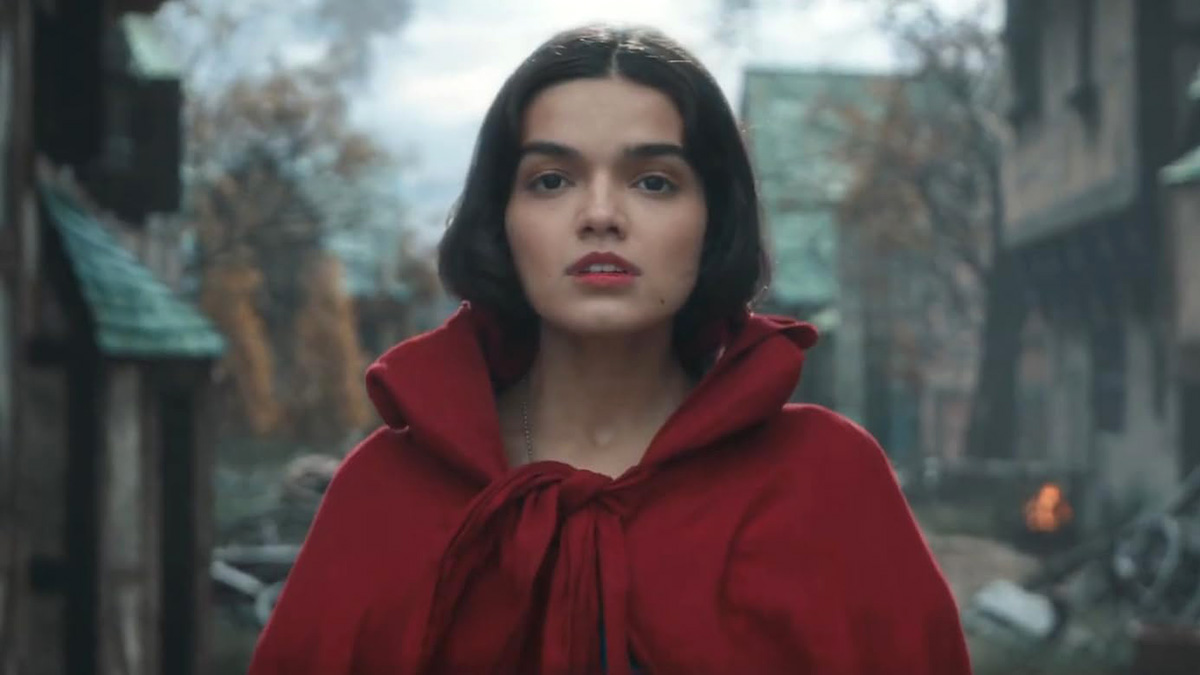
If you thought you’ve experienced the worst already…brace yourself. The end (if you stay that long) is the ultimate bag of poo. The Queen survives after she “kills” Snow White, who is still revived through “True Love’s Kiss.” Why? Because this allows Snow White to have an ultimate showdown with the Evil Queen. Despite what the photo below may lead you to think, the showdown is between the Evil Queen and Snow White, not Little Red Riding Hood. Did they run out of yellow polyester in the wardrobe department for this scene?


That idea had potential, but it is carried out in such a lackluster manner that it is fairly laughable without any cathartic benefit. If Disney had been smart, they would have gone further in changing this story from the original. Keeping it in the fairytale world made it too ripe for negative comparisons Updating it to a different era or changing the story location could have provided more opportunities for originality. Finally, having a true creative vision and a strong point of view would have served the production better than one that constantly pandered to whatever was being said by the internet trolls. The final movie is like a watered down cocktail. No satisfaction; just a slight regret for ordering in the first place. 

I am so bored with the Disney Corporation who chooses to keep pumping what has been a safe and fairly lucrative well, but lacks the innovation, daring, and excitement of what founder Walt Disney was known for. Disney Corporation - WAKE UP! Learn from this box office disaster and let your creative legacy spirit reawaken as it did back in 1989 with “The Little Mermaid.” It’s not too late.

See more classic Disney movie photos at my main website.
Monday, August 10, 2015

Let It Burn


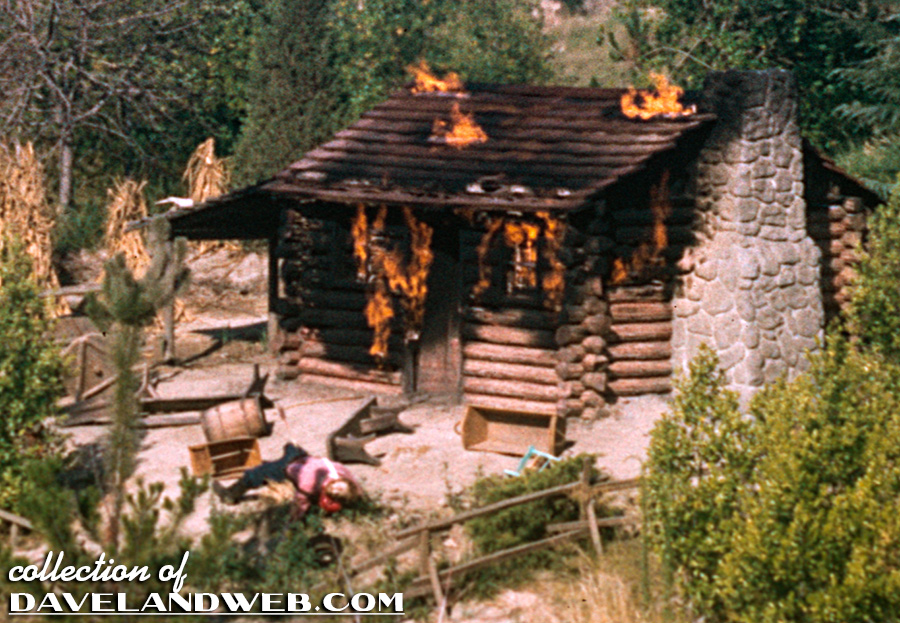
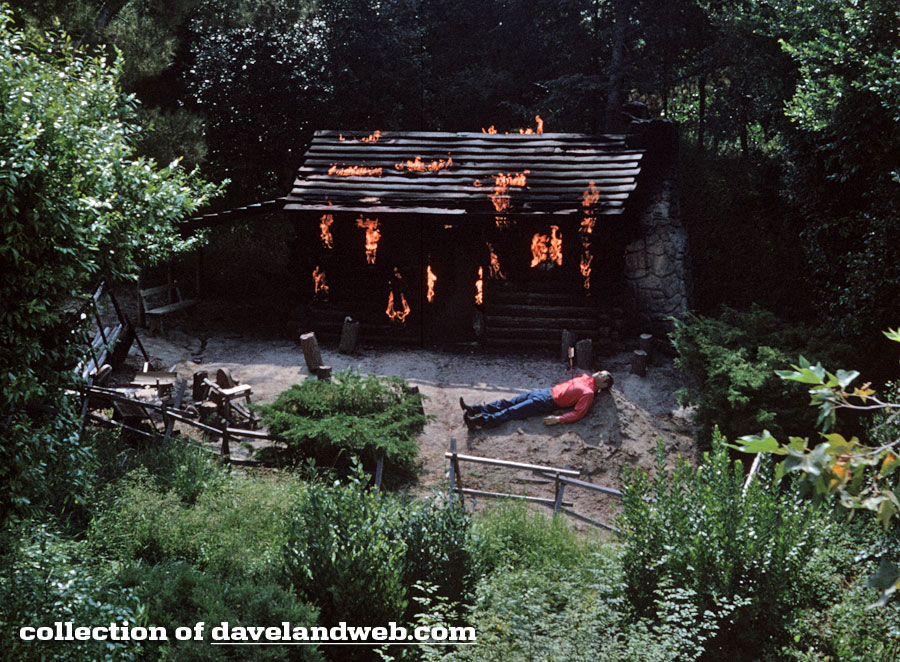
For no other reason than just because, I am posting some images of the Burning Cabin at Disneyland. It's one of those little things that really made me appreciate Disneyland so much. Even though it has a family-friendly reputation, every now and then you would encounter a little dark twist that would make you think, Hey…this Walt guy is actually pretty cool. This first shot is one of my earliest and best, dating back to October 16, 1956.


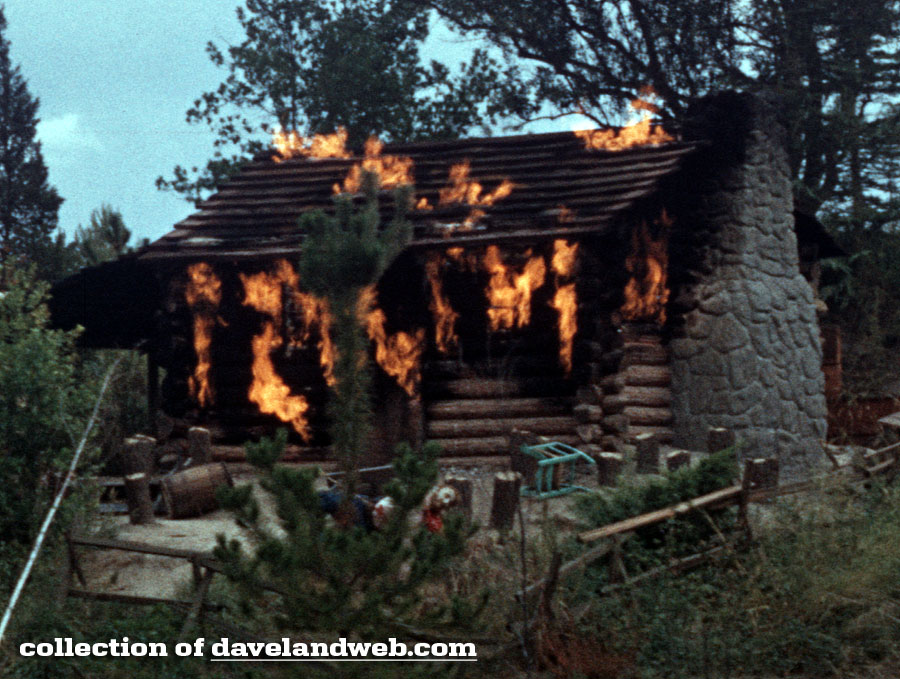
Another 1956 shot. Can't you just imagine Walt at the story meeting for this one. "OK guys…I want a cabin on Tom Sawyer's Island. And I want it to burn. And let's put a dead guy with an arrow through his chest. Sounds good, right?" In these two 1956 shots, the dead settler appears to be rolled on his side.


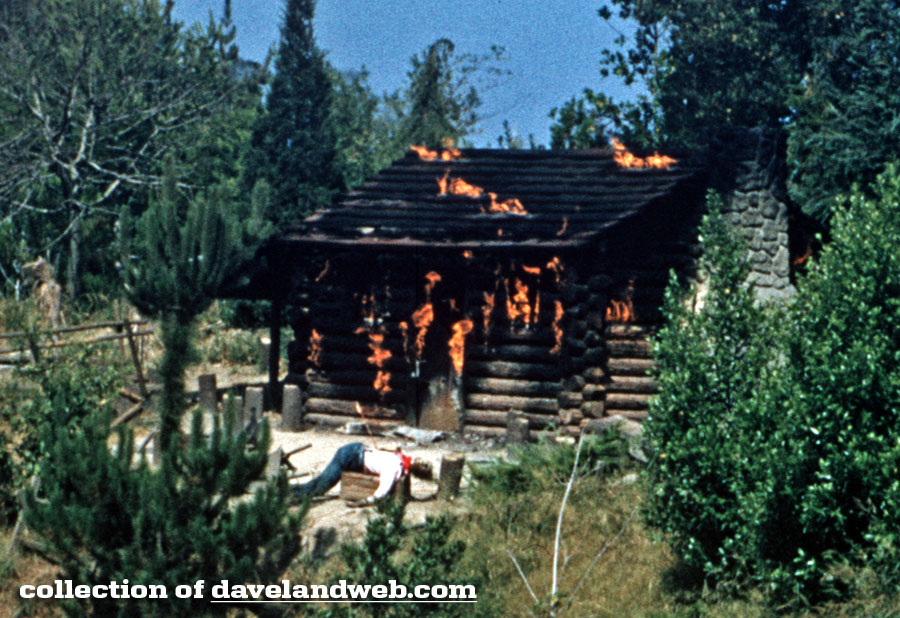
A few from 1958:


Have to get a better look at the dead settler:


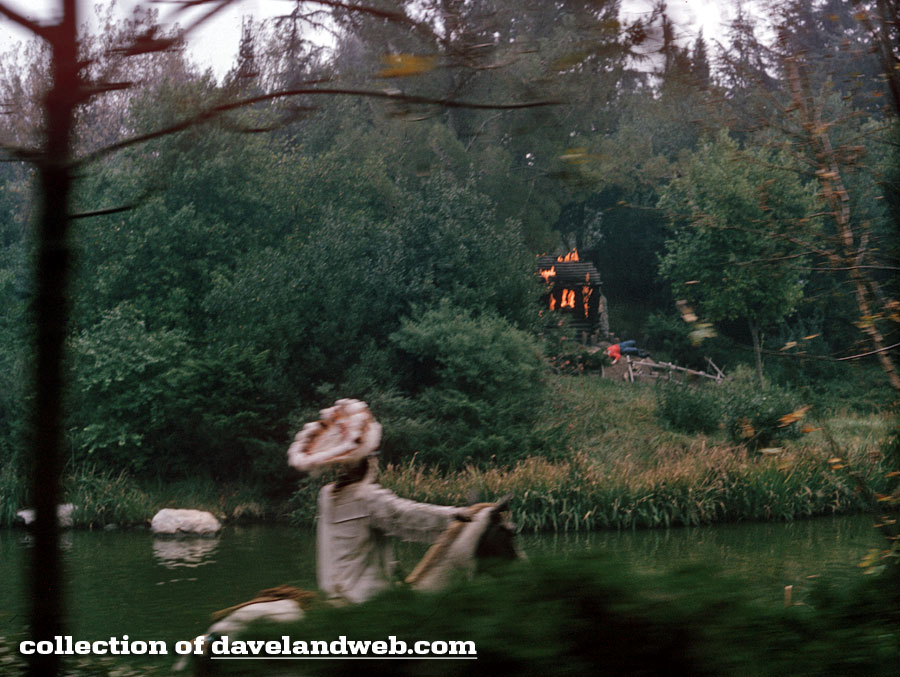
This November 1967 shot must have been taken from the train:


Talk about heartburn.


And here it is today. Positively snoozeville. No dead settler. No flames.


Light things up over at my main website with more Burning Cabin photos.