Thursday, January 23, 2014

Vintage Disneyland: Barren and Low-Tech!


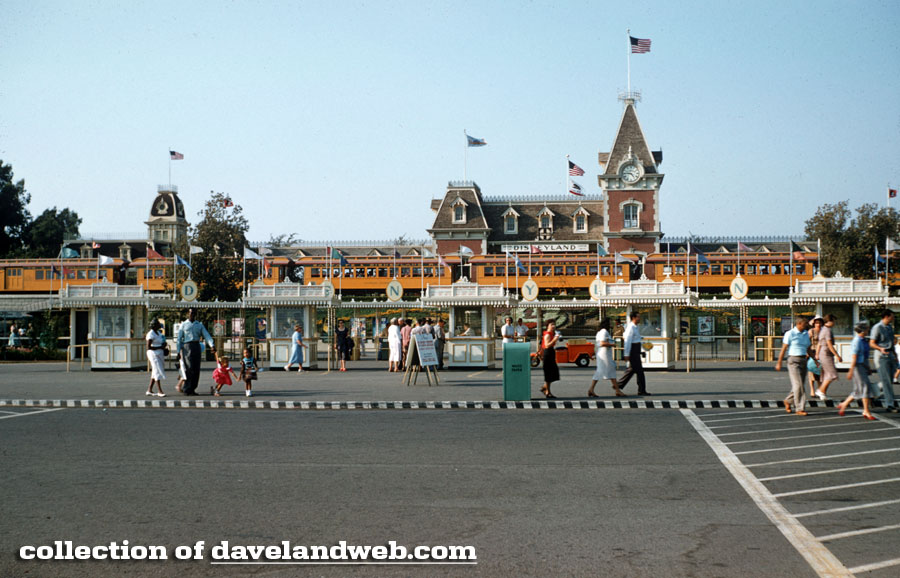
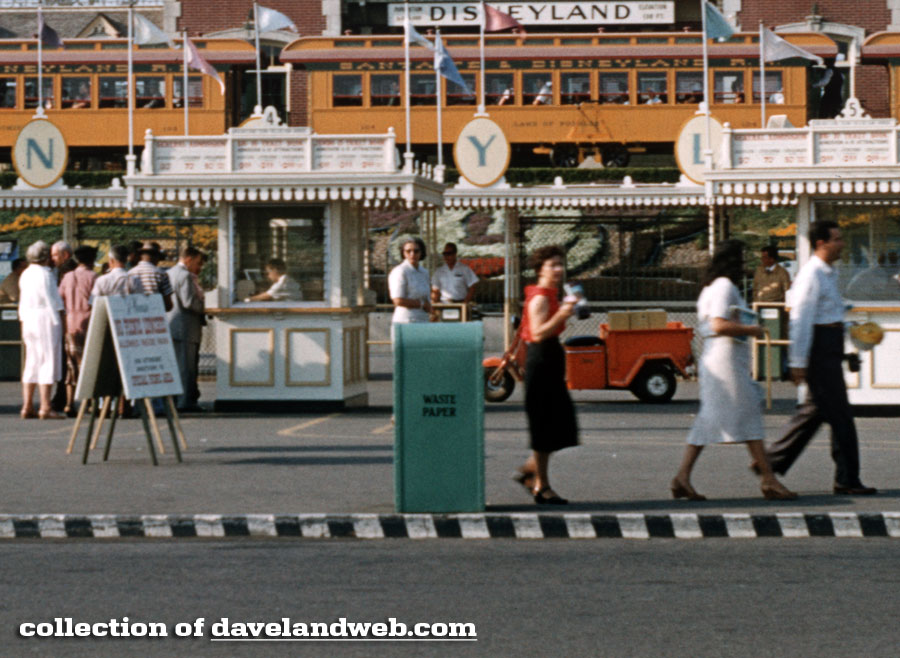
This 1950s image of the front gate at Disneyland looked like a lot of the other ones in my collection until I closed in on the little red truck barely visible in the center of the photo. I have no idea what this could have been for, other than possibly a delivery cart of some kind for the Disneyland Newspaper or perhaps some Park brochures. It sure is cute, though! And it's also fun to see RETLAW 1 pulled into the station, awaiting its next batch of guests for the Grand Circle Tour.


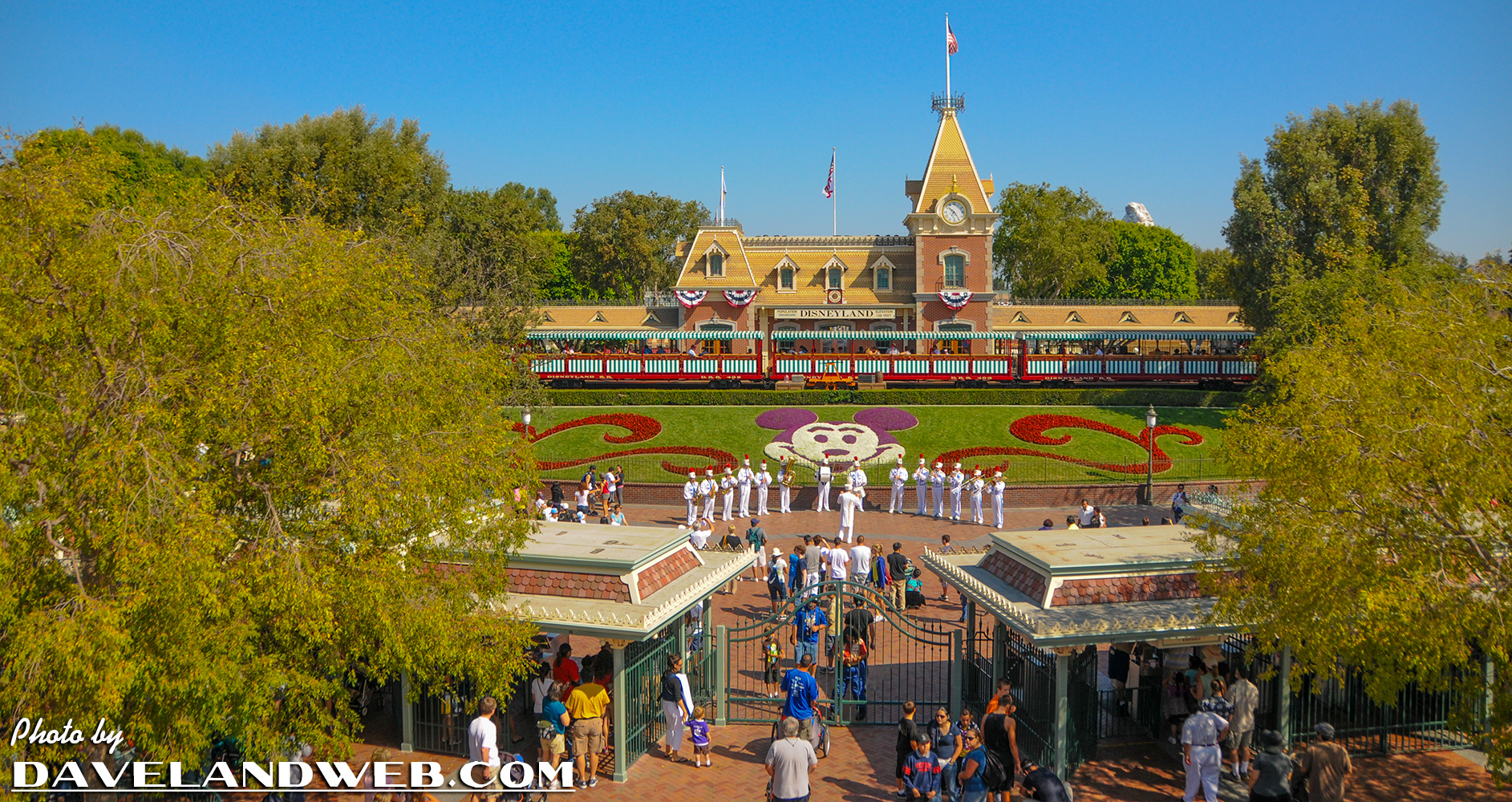
Compared to this contemporary shot, the entrance of the past looks positively barren!


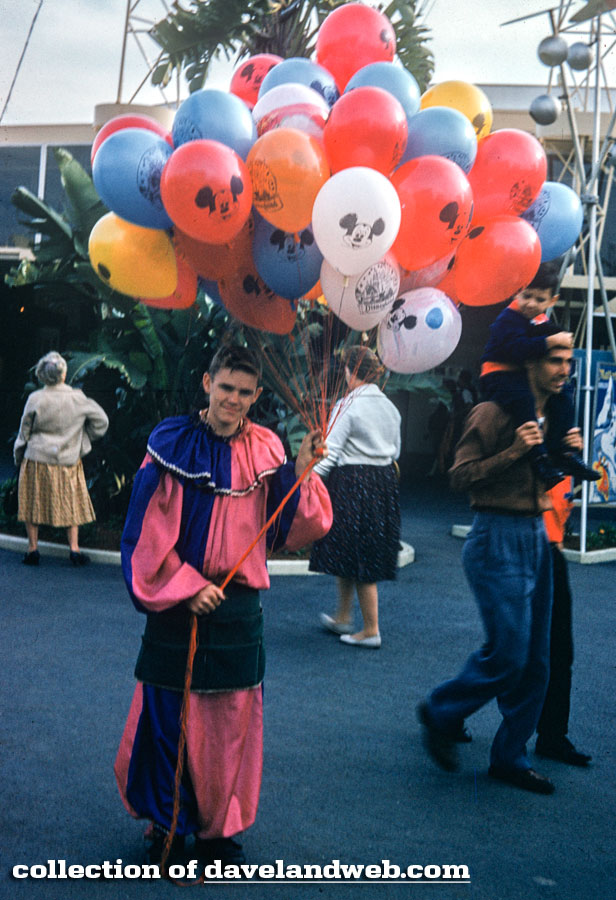
This shot caught my eye because of the balloon seller's costume. Looking at the background, surprisingly he is standing in Tomorrowland, not Fantasyland. The costume seems very much out of place for the land of Tomorrow!


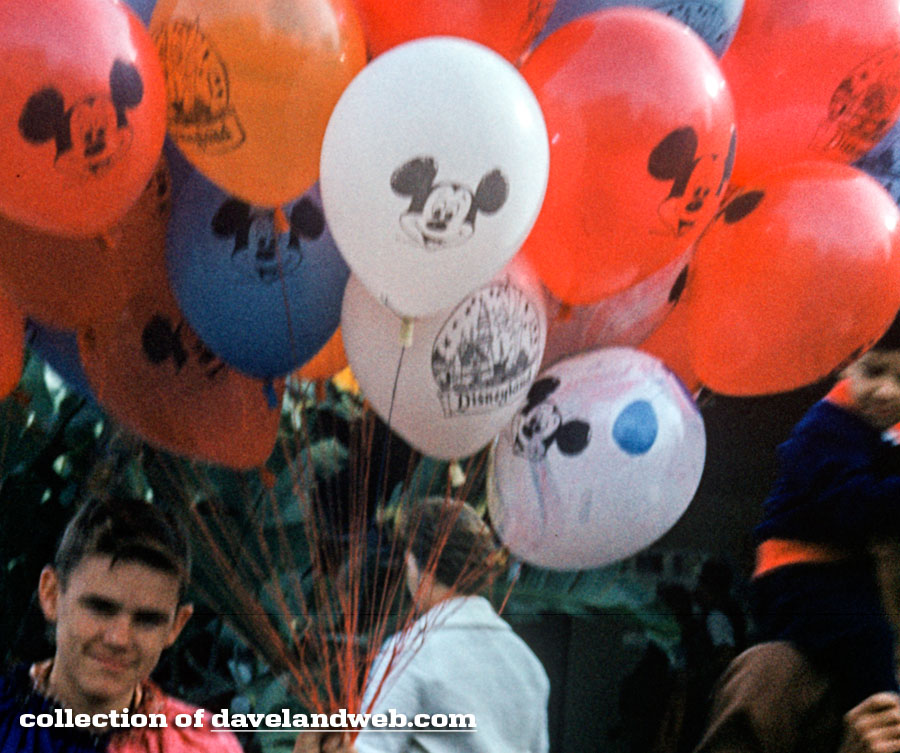
Let's take a closer look at the balloons in this January 1960 photo:


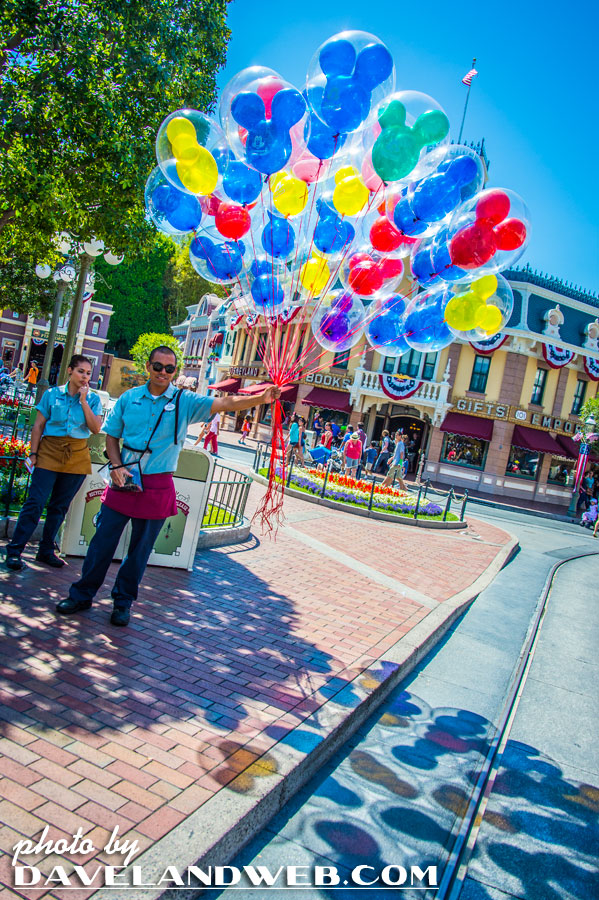
They look extremely low-tech when contrasted with the balloons sold at Disneyland today:


It should come as no surprise that I prefer the low-tech versions!

See more vintage & current Disneyland Entrance photos on my main website.

Wednesday, January 22, 2014

Dude, Where's My Gurrmobile?


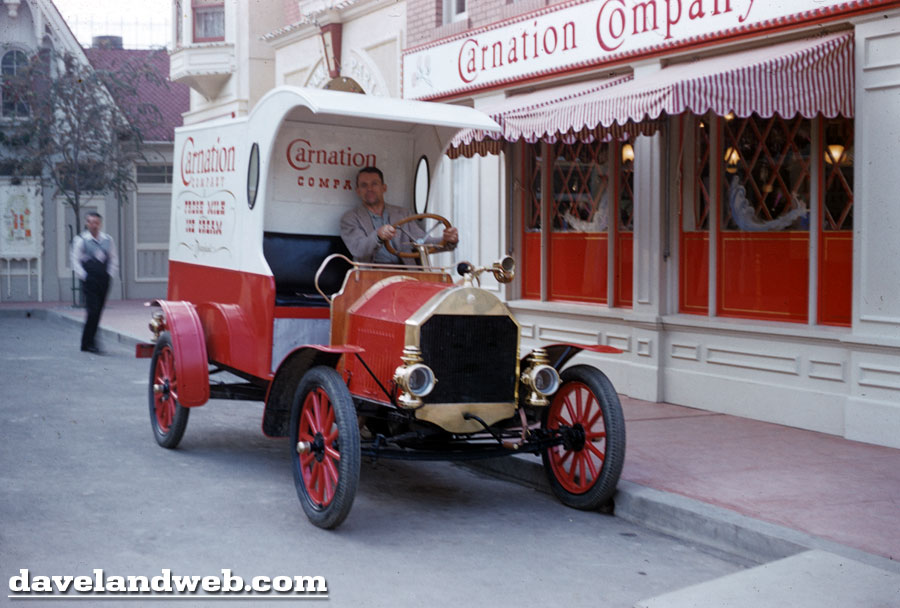
This post shows my earliest shot of the Carnation Gurrmobile (named for genius mechanical designer Bob Gurr) from December 1955 in its well-known position outside the Carnation Ice Cream Parlor on West Center Street.

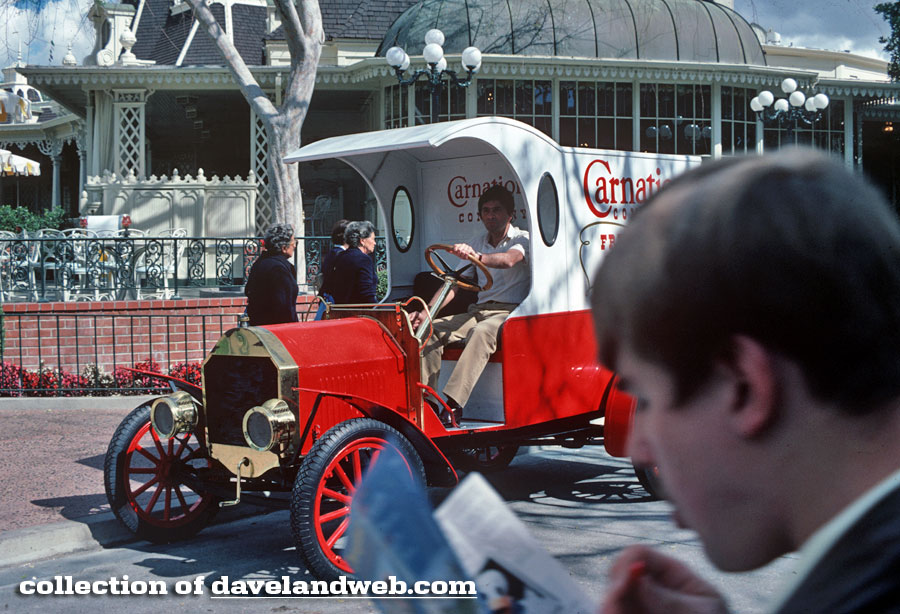
Moving ahead 26 years, the Gurrmobile finds itself across the way further down the street outside of the Plaza Inn, circa March 1981. Previously, my latest photos of the truck were from the 1970's. Nice to know it hung around at least a decade later before it was shipped off to the state of Washington.


See more vintage & current Disneyland Plaza Inn photos on my main website.

Tuesday, January 21, 2014

My How You've Grown


As a little kid, I remember groaning every time I heard that phrase from an adult: "My, how you've grown!" However, that dreaded childhood utterance does seem appropriate for these "Then and Now" shots of Balboa Park in San Diego.

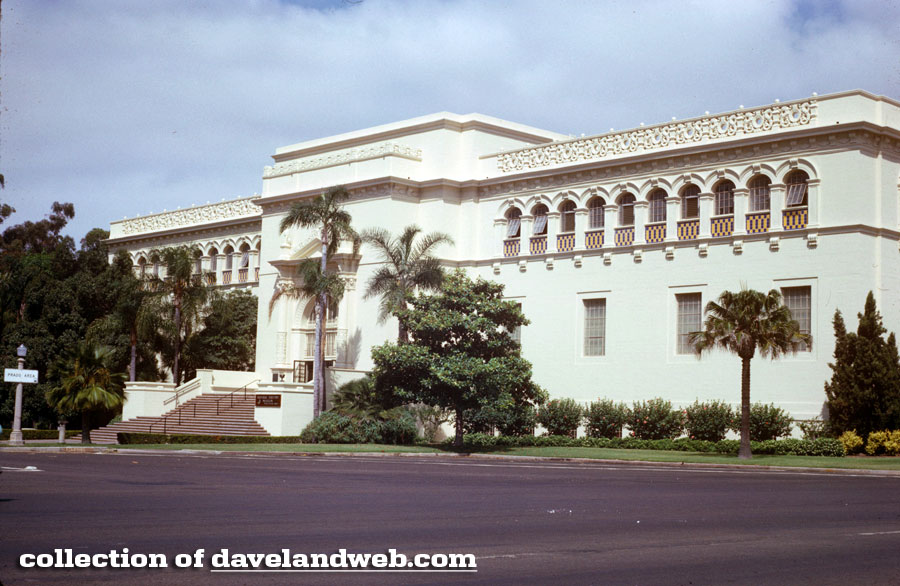
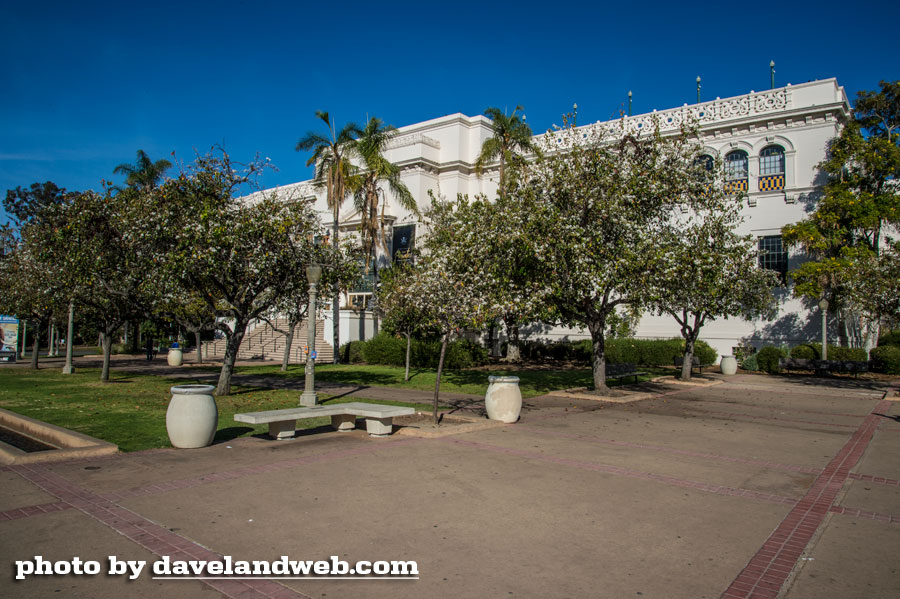
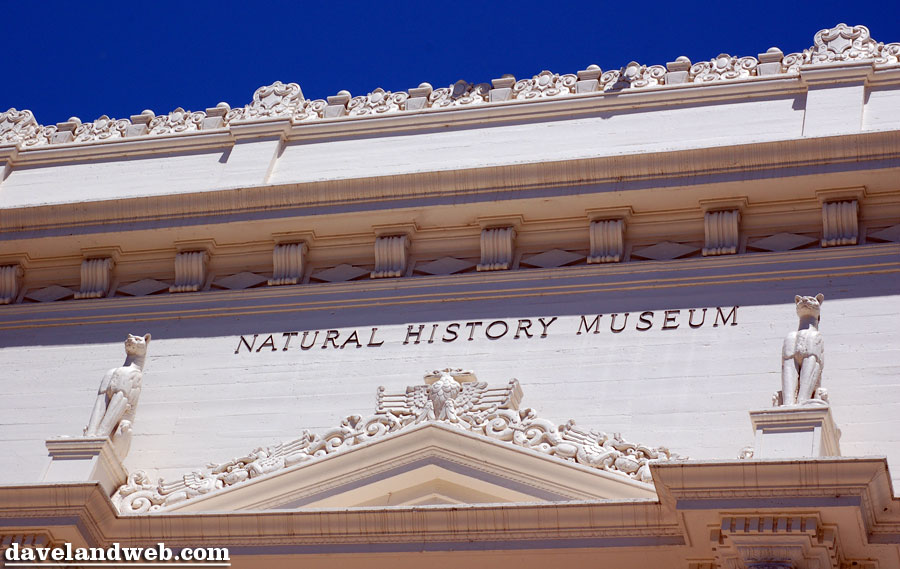
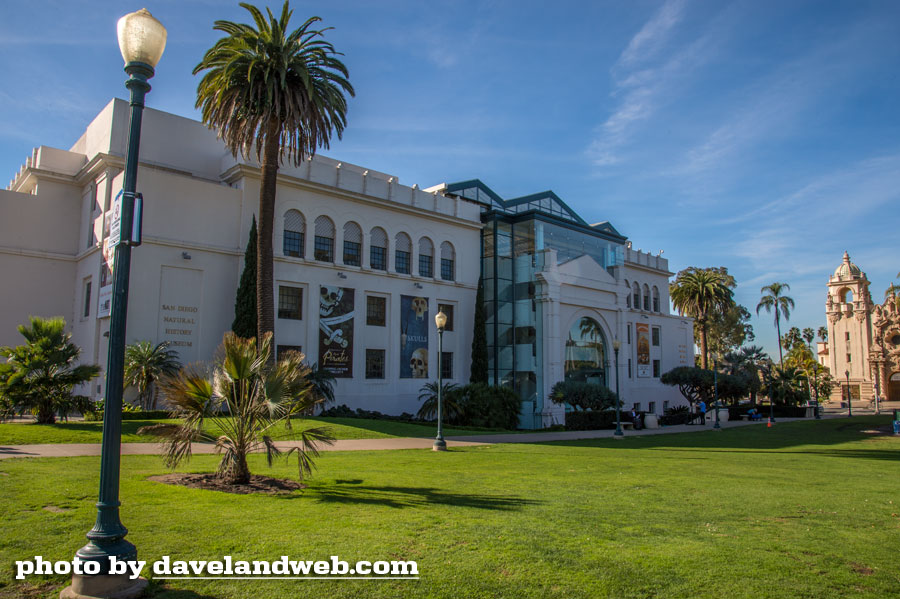
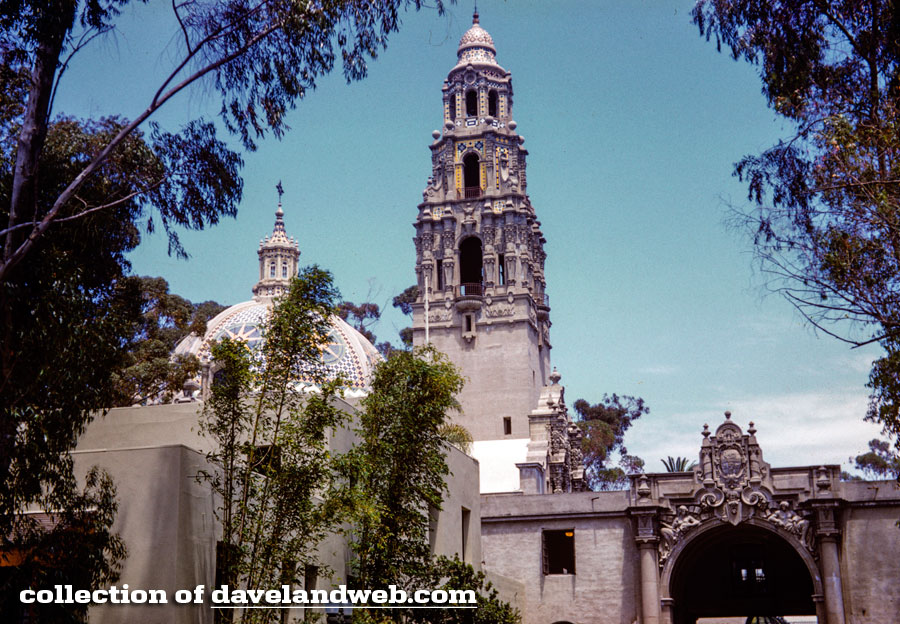
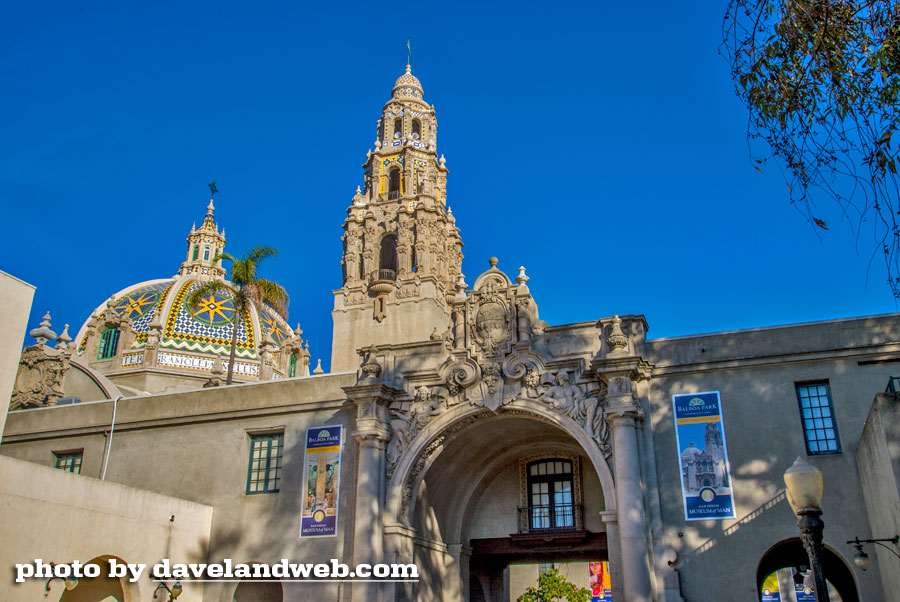
First up is a September 1963 photo of The San Diego Natural History Museum which opened in 1933, designed by William Templeton Johnson. Here is a contemporary view from approximately the same angle. As you can see (or not see), the building is now virtually hidden by trees.


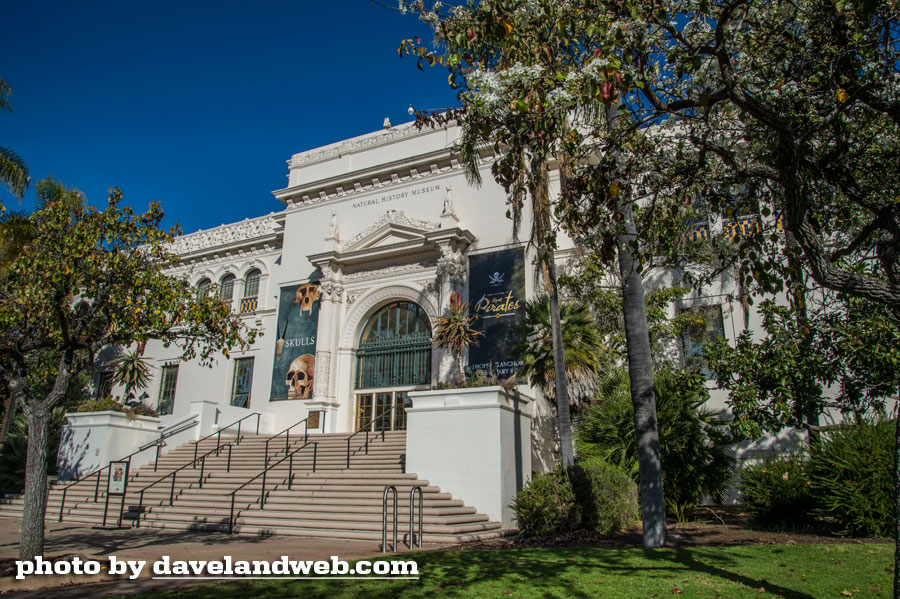
Walking closer, you can get a better view of the actual building itself.


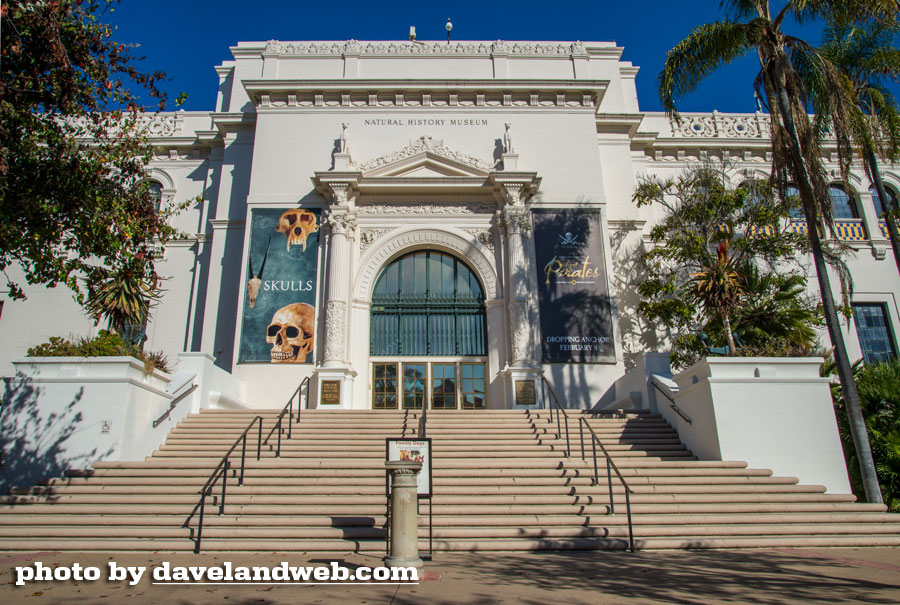
I love the two sculpted felines atop the building; so Cleopatra-looking!


In 2001 the museum completed a major reconstruction, with a 90,000 square foot addition more than doubling its size. Here is a view of the back-side of the building, where the addition was built. It is a nice example of blending new with the old.


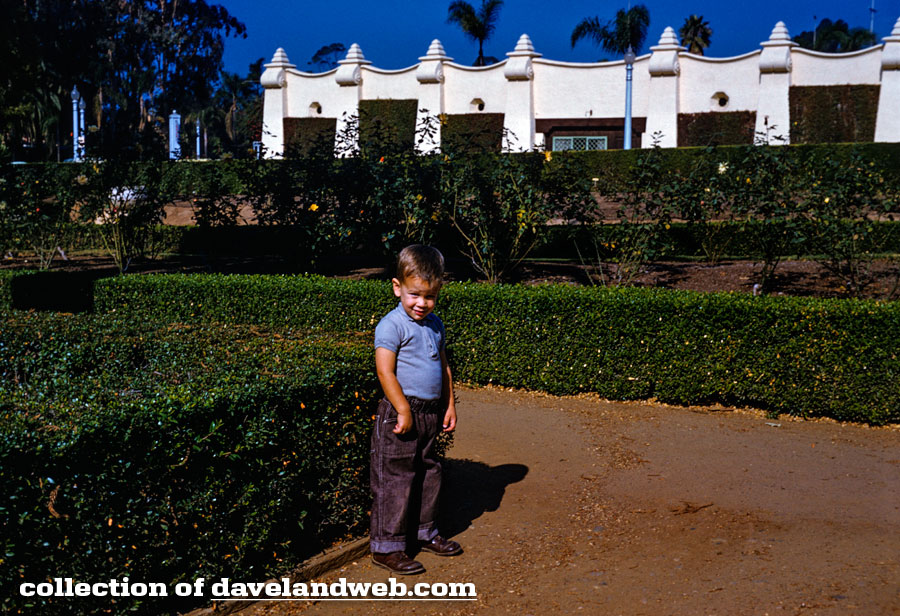
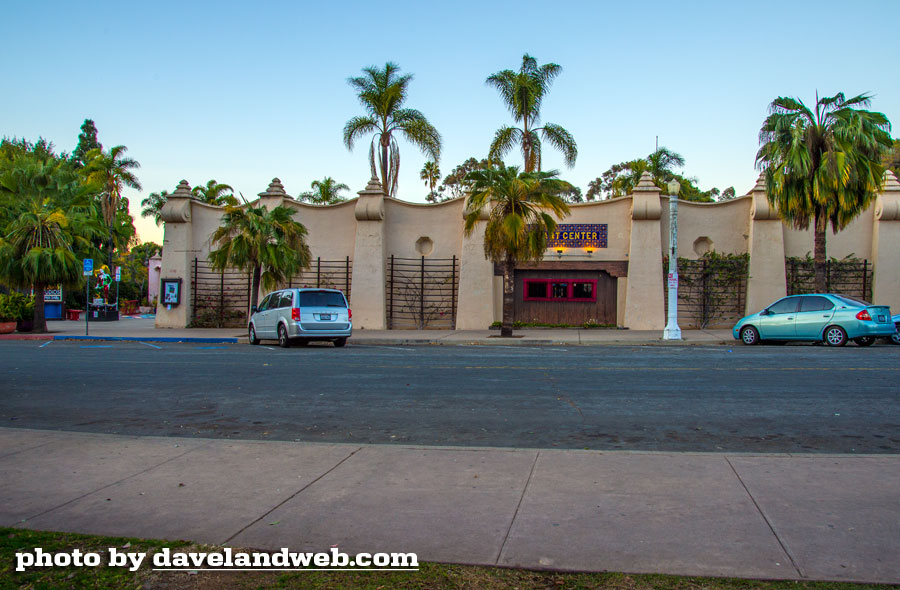
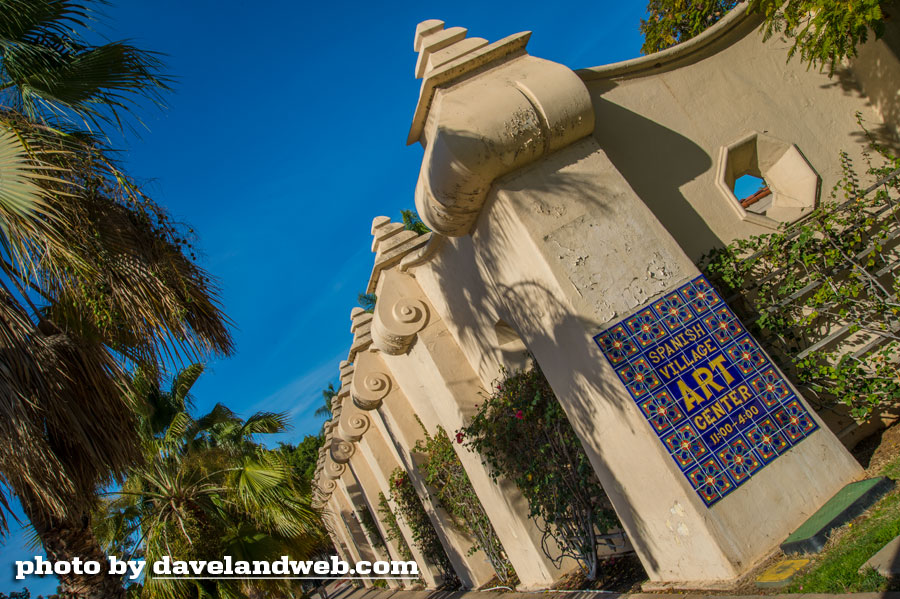
In this December 1961 building, my brother is standing near what is now the Spanish Village Art Center. It was originally built in 1935 to depict a charming old village in Spain for the second California Pacific International Exposition. In 1937, the Spanish village reopened as an art destination by a group of dedicated artists. During World War II the U.S. Army used the village for temporary barracks, and in 1947 it was reclaimed and restored by the artists. Over the last 60+ years, San Diego artists have continued to preserve and enhance this historical landmark by adding to its beauty with colorful flowers and unique entryways.


In this contemporary shot, there are taller trees and more pavement.


While the building still retains its charm, it badly needs a good coat of fresh paint.


This July 1958 photo shows the Laurel Street entrance into Balboa Park:


I had a difficult time duplicating the exact angle, as the Cabrillo Bridge (which is what you cross to get into the park) is currently under construction and tarps. Not conducive to taking photos!


I hope you enjoyed your "Then and Now" tour of Balboa Park!

Congrats to Ken from Friday's post Oz book giveaway contest. Please email me your mailing address: dvdpicasso@aol.com

See more vintage & current Balboa Park photos on my Balboa Park web page.

Monday, January 20, 2014

Disneyland and Haunted Mansion Memories


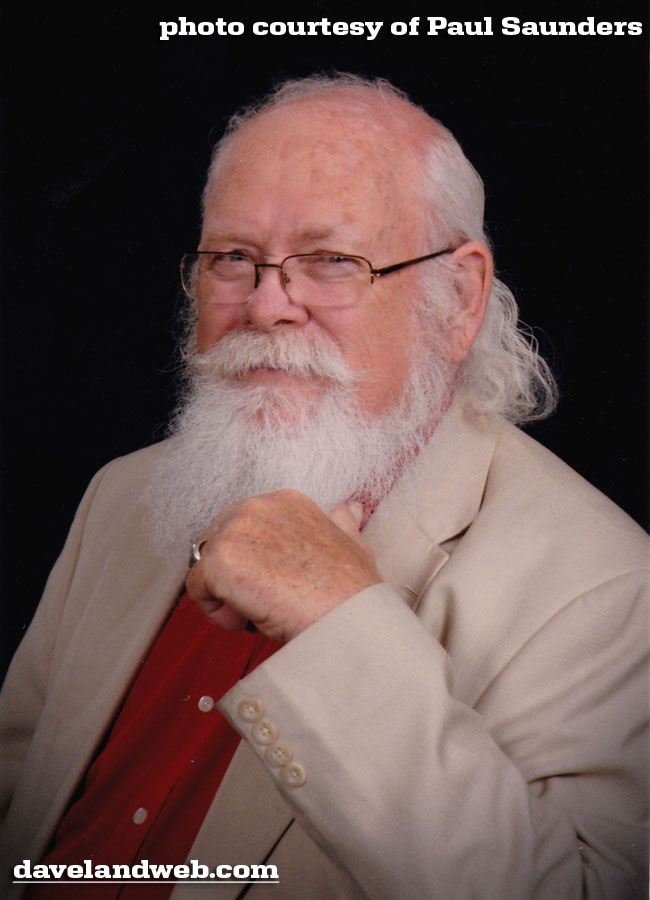
Paul Saunders, an Imagineer at WED Enterprises during the 1960s and 1970s, was kind enough to contribute the material for today's post. Paul Saunders was educated at the Institute of Design, Illinois Institute of Technology, Chicago, Illinois 1952 to 1955 and the University of Colorado 1956. He started his independent career in industrial and product design. He then settled his Colorado office with architectural design and build from 1957-1964. Seeking employment at a ski resort project to further his passion for mountain architecture, he discovered Walt Disney's Mineral King ski resort project and applied for employment at WED Enterprises in 1965. He moved from the Aspen, Colorado area with his family to South Pasadena to start work with other new hires at WED. His viewpoint comes from working under his mentor, Victor Greene. Paul was in charge of projects in Disneyland's Tomorrowland makeover with Monsanto's Adventure Through Inner Space, followed by leading a team to complete the Haunted Mansion. He created construction drawings for façades of New Orleans Square buildings and the designs for the Blue Bayou. For Walt Disney World, he designed the Skyway from Fantasyland to Tomorrowland and the Goodyear Autopia race track. He was recruited in 1972 as project designer by Randall Duel and Associates AIA of Santa Monica. From that position he became the head of theme park ride design with the singular achievement of designing the first modern loop roller coaster for Magic Mountain, Valencia California. Since then he has been independent with ride consulting, fiber optic display design, and architectural custom home design until his retirement in 2013.

Take it away, Paul!


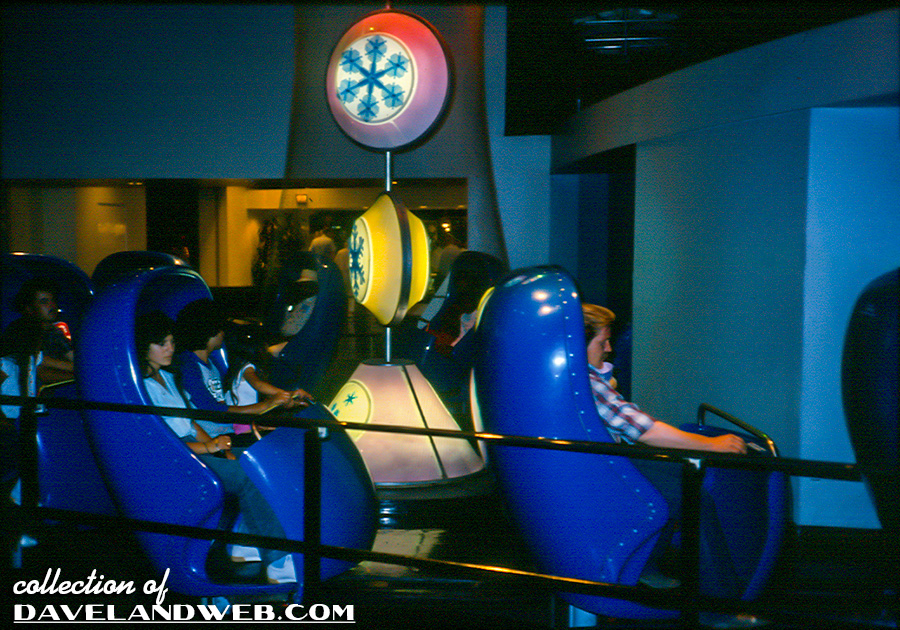
I worked at WED Enterprise starting in 1965 with many new designers and draftsmen as plans for many attractions in Tomorrowland were to change or be added to this area. My work was under Vic Greene and I was given an assignment for the new attraction of Monsanto's Adventure Through Inner Space. The concept of turntable loading and off loading from the Omnimover cars (shown above) in constant motion was new and made the difference for successful dark rides.


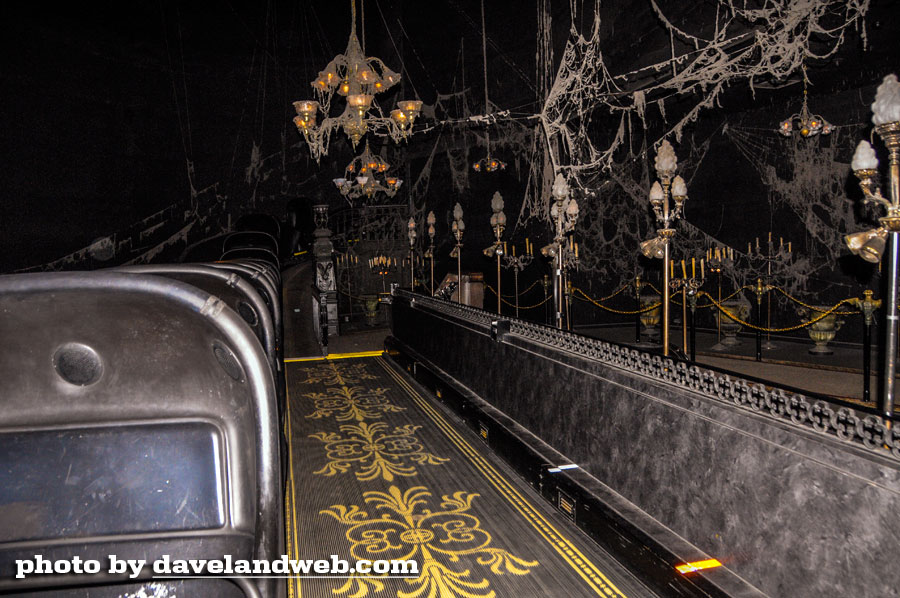
Once finished with ATIS, Vic asked me to take over the completion of the Haunted Mansion using the same Omnimover. However, I could not find the space for turntables and suggested using moving "sidewalks" manufactured by Stevens-Adams company in Aurora, Illinois, my home town. They worked just as well. I studied the sequencing of the two twenty foot diameter elevators so that we did not push too many people into the hall below.


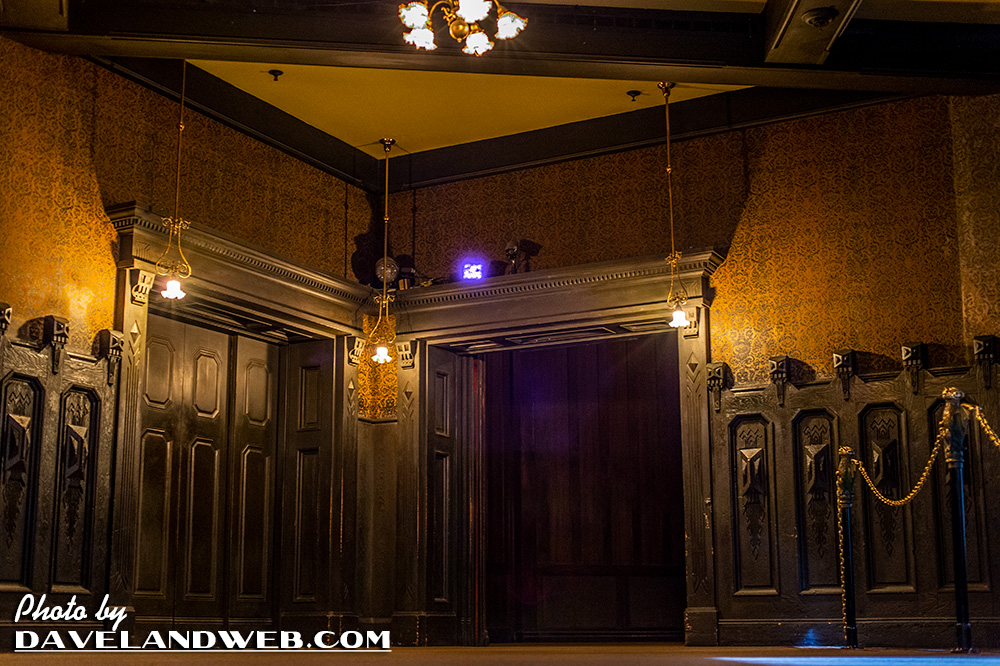
One day I was near the elevator doors in the lower hall and I noticed a painter wood graining the dark doors. I asked why he was doing that since people would be in dim light going away with their backs to the doors. He said "well, Walt would have wanted it that way." And of course he was right! It was always the plus of extra details that made Disneyland.


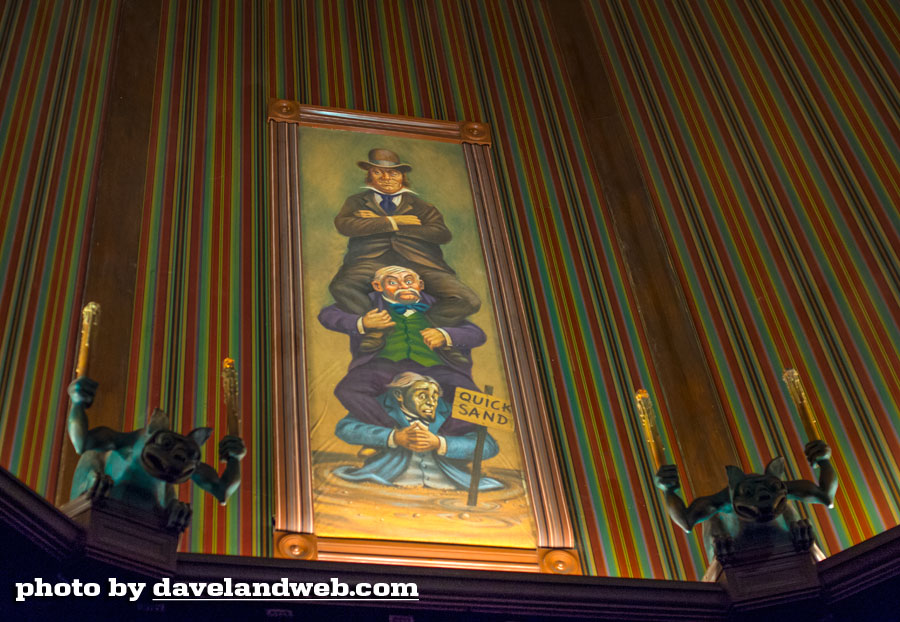
I was not one of the designers of gags for the Haunted Mansion but had some input on occasion. In the expanding
paintings in the elevators, there came up a question of how to expand the side frame moldings. I suggested making them out of soft rubber or similar material to unroll out of the bottom frame as the paintings expanded with the elevators going down.


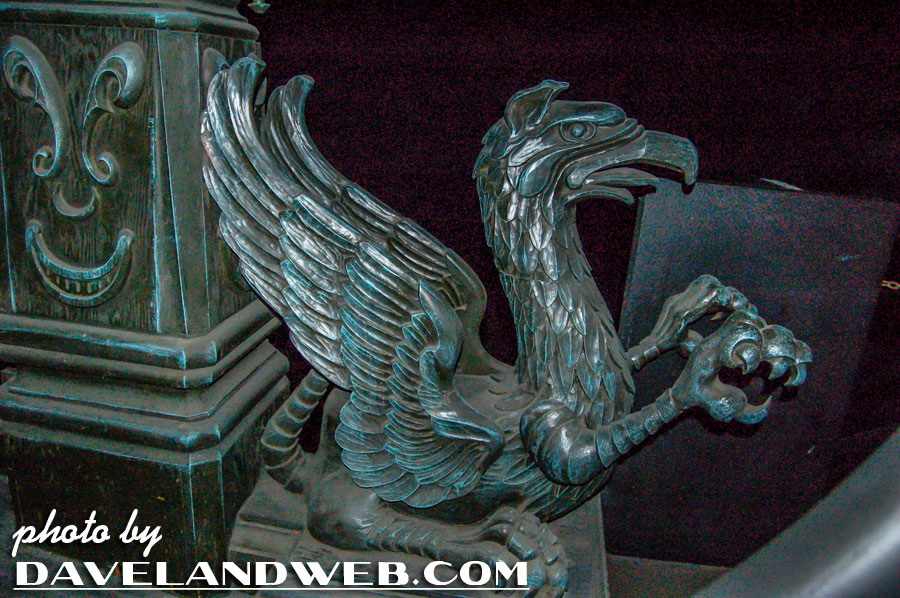
The gryphon was designed by Stan (can't remember his last name). He was Polish and a good friend. One day we were
walking together on the back lot of the studio when he suddenly stopped. I asked him what the matter was. He said that the barn we were looking at reminded him of the time he and his mother were running from the Nazis. The officer called for the men to come out of the barn. One did and was promptly shot. He went out and his mother came running out pleading to have his life spared. The officer said to turn around and head back to the barn. He thought for sure he would be shot in the back, but kept going and in fact ran around the barn and escaped. His mother caught up with him some time later and the two immigrated later to Argentina. Stan had a collection from there of beautiful moths and butterflies that I talked him into showing to a church group. I saw the gryphons on each side of the track leading away from the moving sidewalk while working, but I was upset that they were hard to see with the lights down so dim when the HM was in operation.


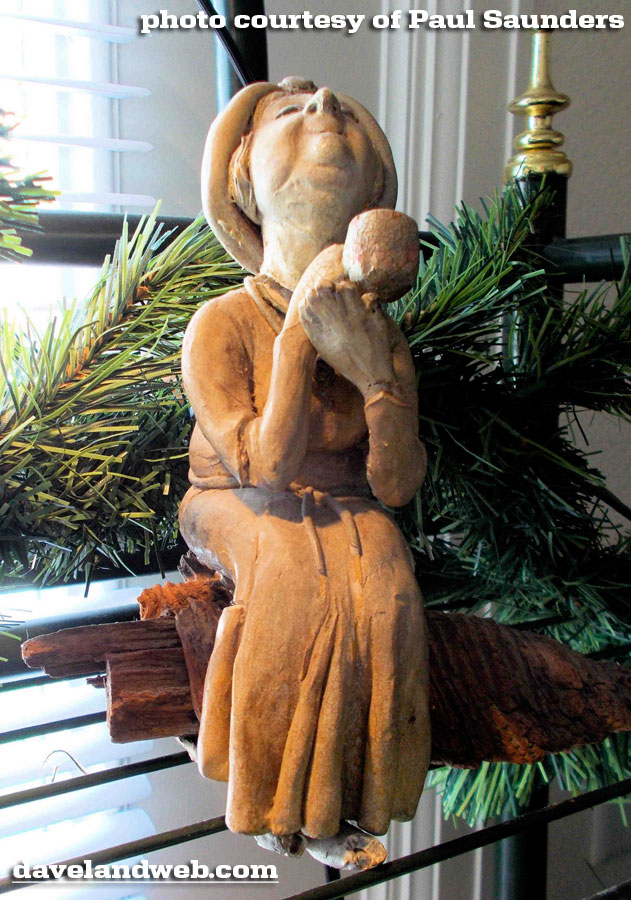
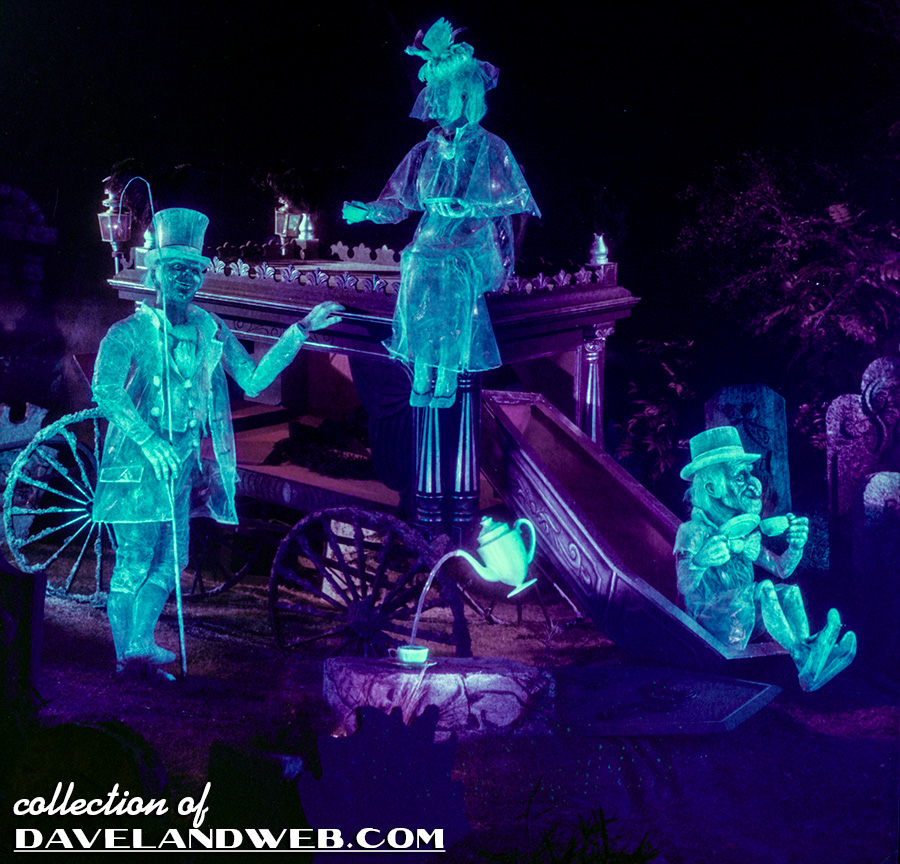
Blaine Gibson gave me this little model of the tea cup witch that sat in the graveyard set.


This is the closest thing in the HM I could find that matched the model.


Many thanks to Paul for generously sharing his recollections of working at Disneyland!

See more vintage & current Disneyland Haunted Mansion photos on my main website.

Sunday, January 19, 2014

Fashion, Film, and Charleston Garden


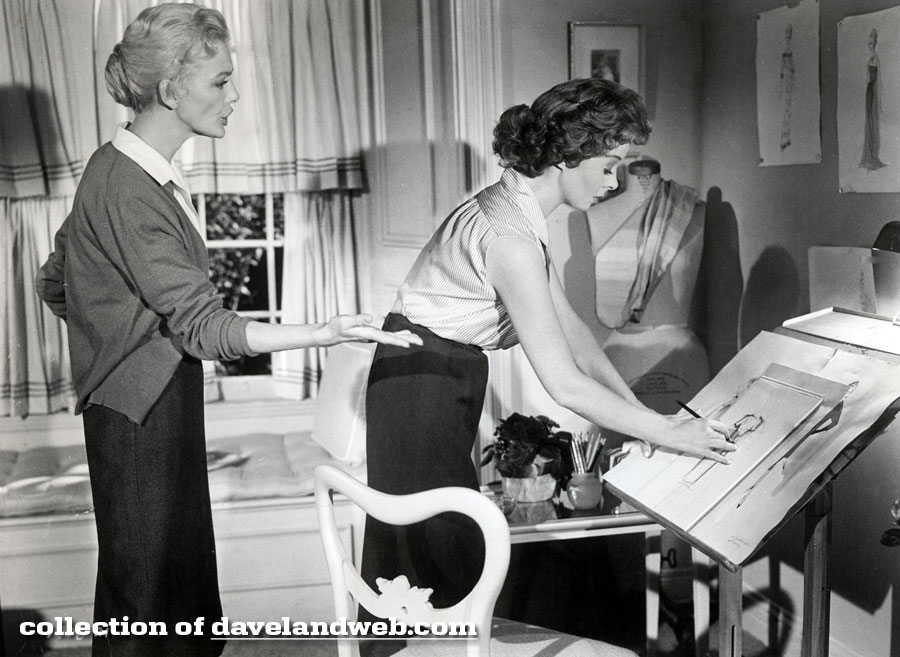
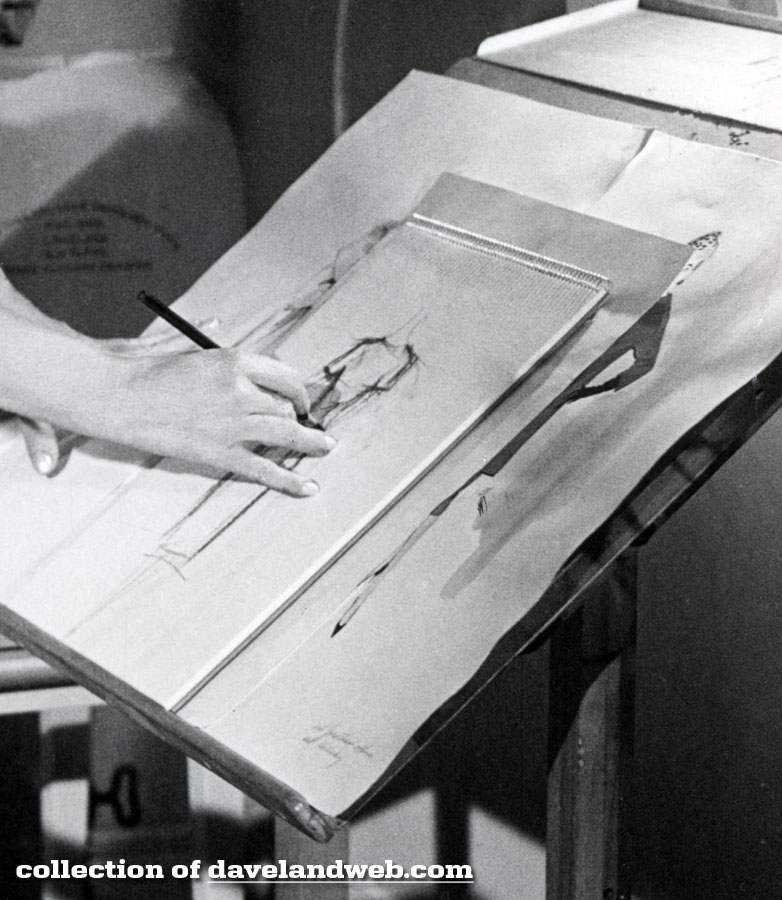
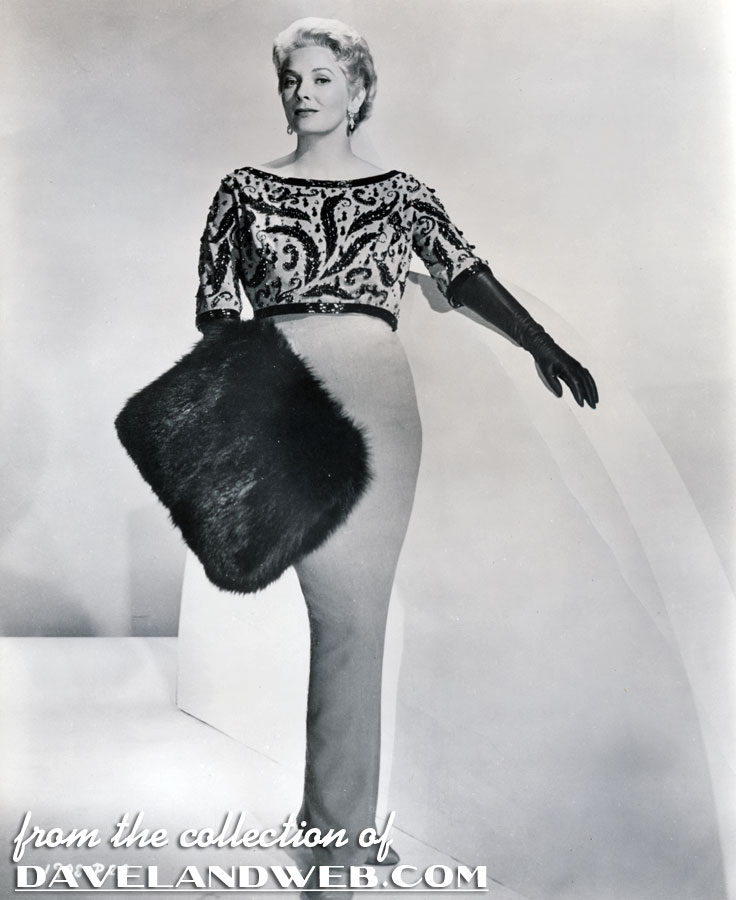
Fashion and film have always gone together, especially during the 1950's/1960's. In the glossy 1961 Ross Hunter melodrama, "Back Street," costume designer Jean Louis created a number of sumptuous designs for star Susan Hayward to wear. Her character just happens to be a budding fashion designer. What better excuse to increase the wardrobe budget and have the star wear even MORE amazing dresses? In the first still from the film, Rae Smith (Hayward) is being told by her sister, Janey (Virginia Grey), to move to the big city and let everyone see her talent. Let's zoom in and check out those sketches...do you think she's good enough?


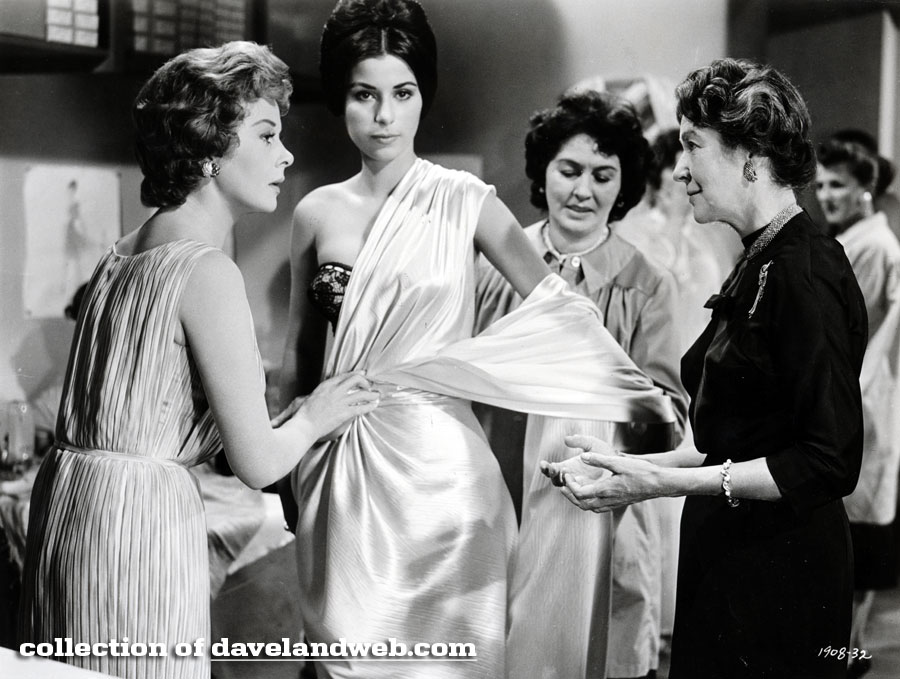
In this scene, Rae shows her assistant how to drape fabric.


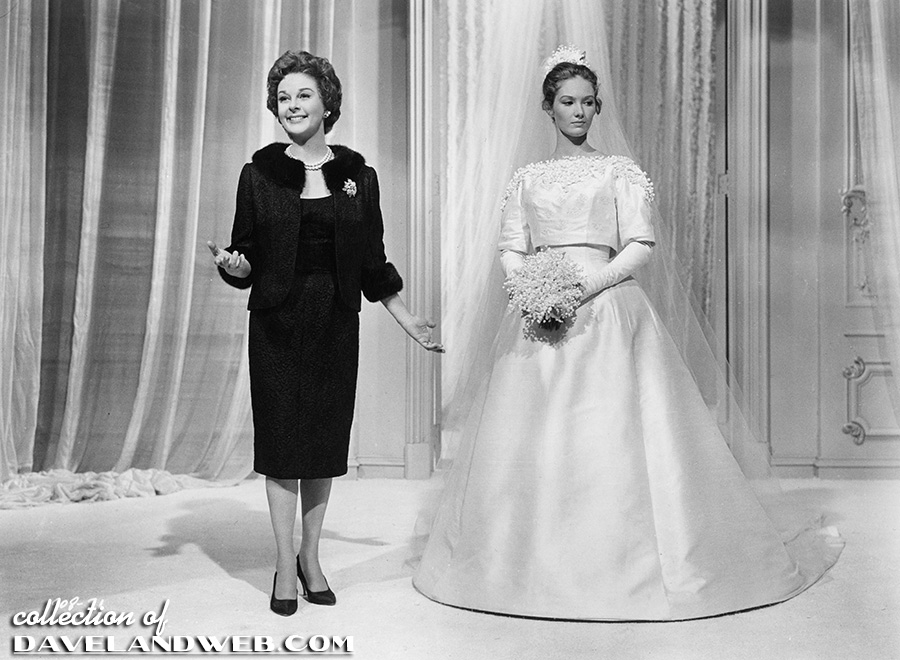
The visual highlight of the movie is the fashion show, where Rae gets to show off her new line of clothing, including this bridal ensemble. The woman who buys it turns out to be the alcoholic wife (Vera Miles) of Paul Saxon, the man Rae has been seeing on the side (John Gavin). Saxon also happens to own a number of department stores. Are you following along?


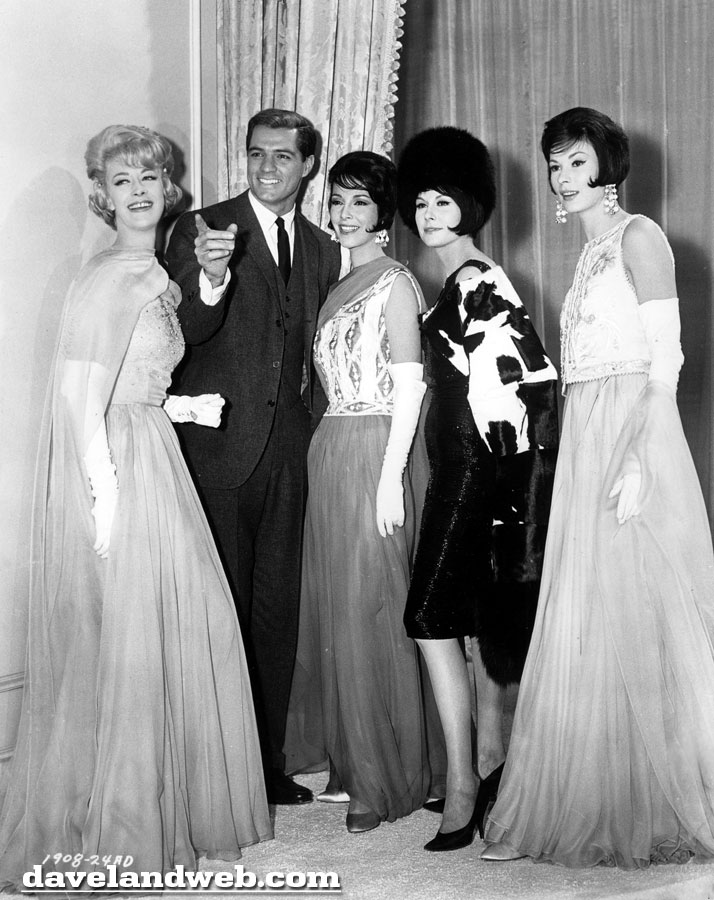
In this publicity shot, John Gavin poses with fashion show models Melissa Weston, Joanne Betsy, Vivianne Porte, & Gertrude Felder. Obviously, Jean Louis had his hands full for this movie.


Here Vera Miles models yet another Jean Louis creation. We don't get to see too much of this gown because she wears it in the scene where she has a car crash. What a waste of a good gown.


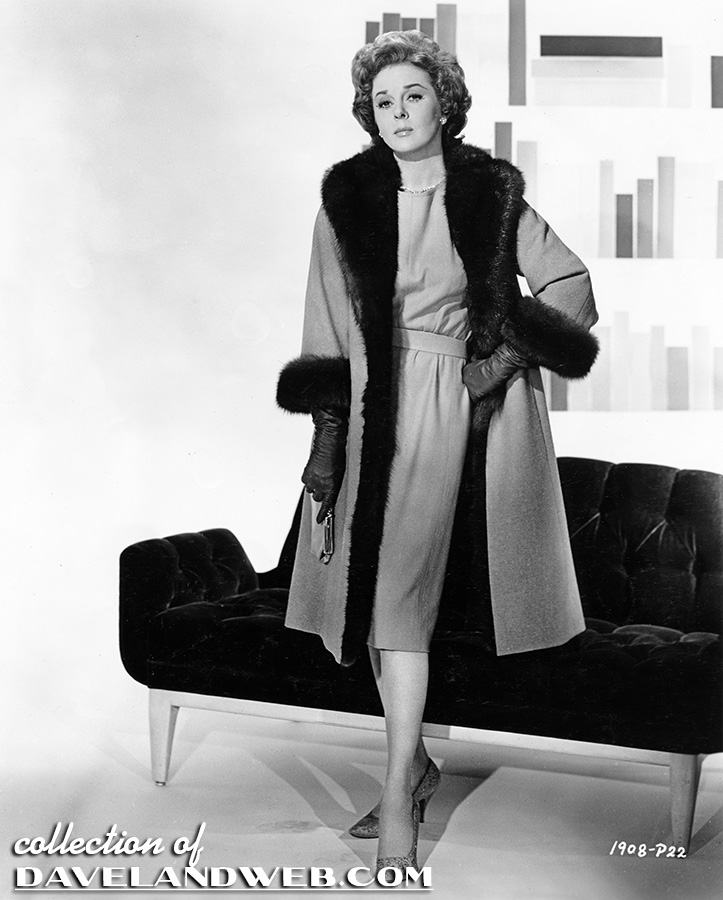
How about this fur-trimmed set for Susan Hayward, worn in the scene where Paul Saxon's kids give her the stink-eye at the airport. Those smart little varmints are onto her man-stealing ways!


For "Back Street," Jean Louis received an Oscar nomination for Best Costume Design in a color film. He was beat out by Irene Sharaff for "West Side Story." Another famous Hollywood designer, Edith Head, was also in the running that year, having been nominated with Walter Plunkett for "Pocketful of Miracles."

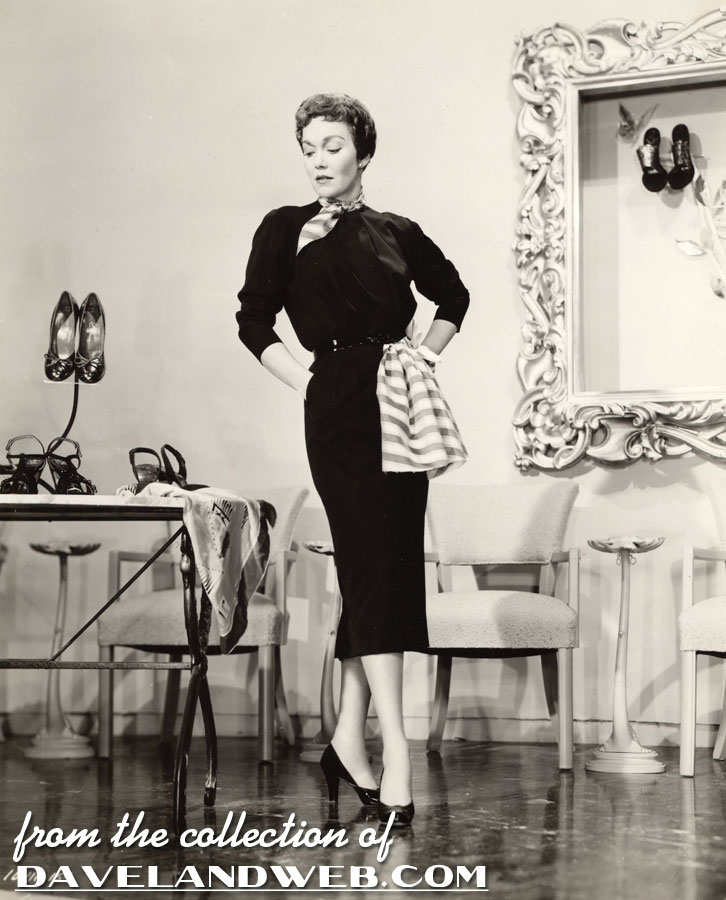
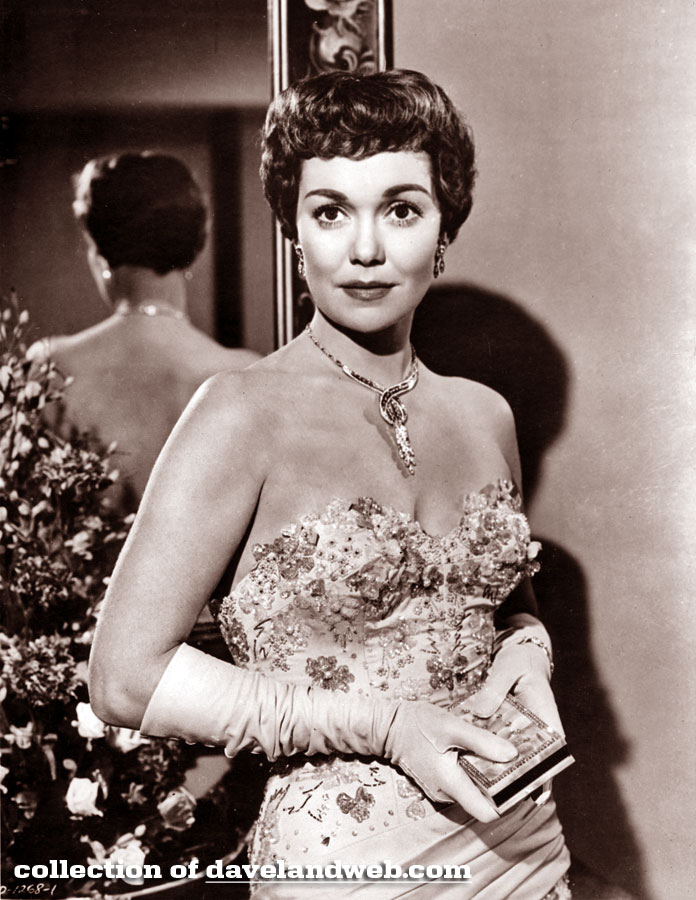
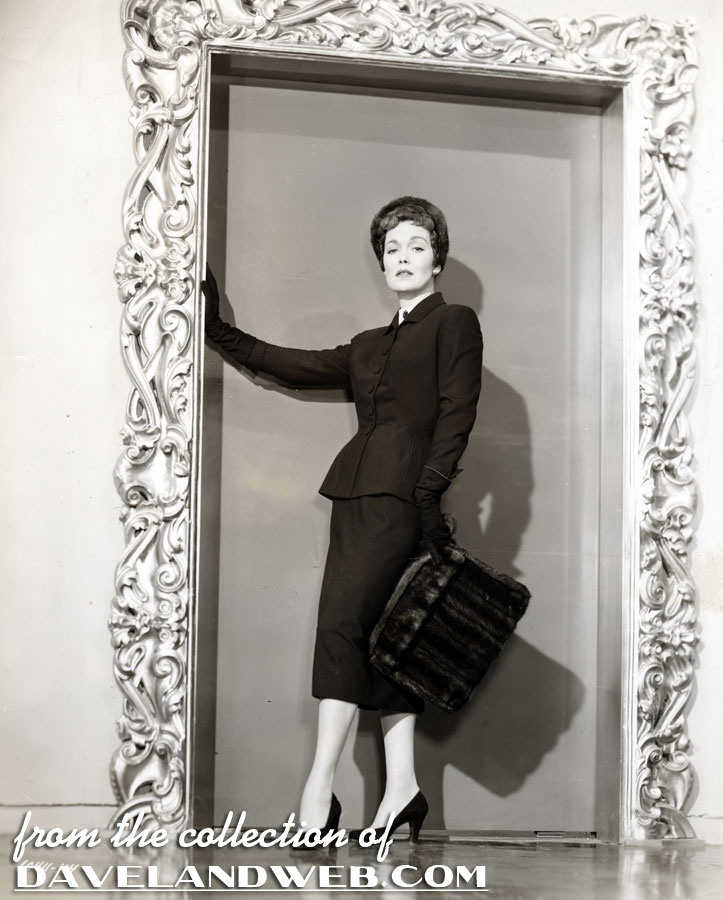
In 1955, Edith appeared as herself in yet another fashion show within a film, this time for "Lucy Gallant," starring Jane Wyman as the title character. Naturally, Lucy Gallant is a talented fashion designer. Surprisingly enough, this film received no Oscar nods for its fashion; at least Edith got a nomination that year for another film she did, Hitchcock's "Rear Window." Here's Wyman posing in one of her Edith Head creations for "Lucy Gallant":


Another Head design. That is one large furry purse!


In 1953's "Let's Do It Again," Jean Louis was in charge of outfitting Wyman:


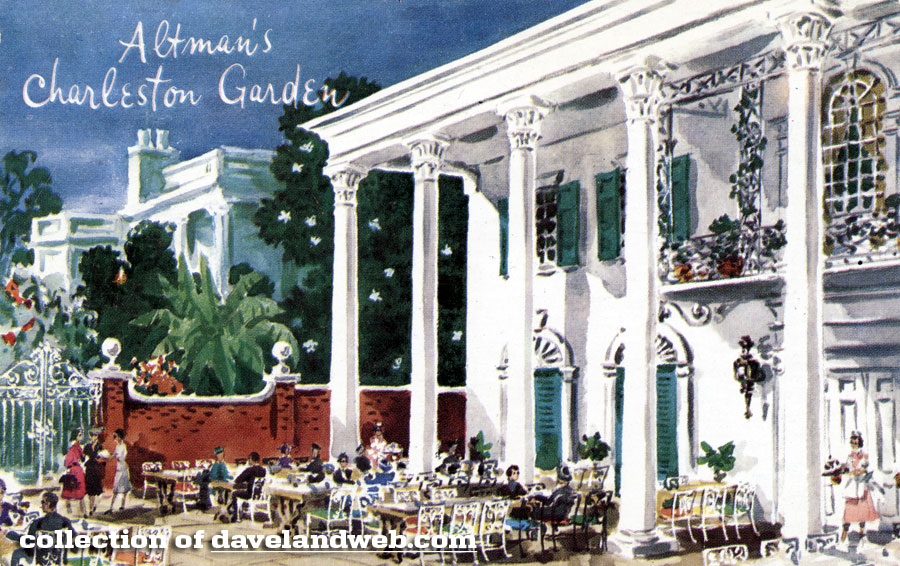
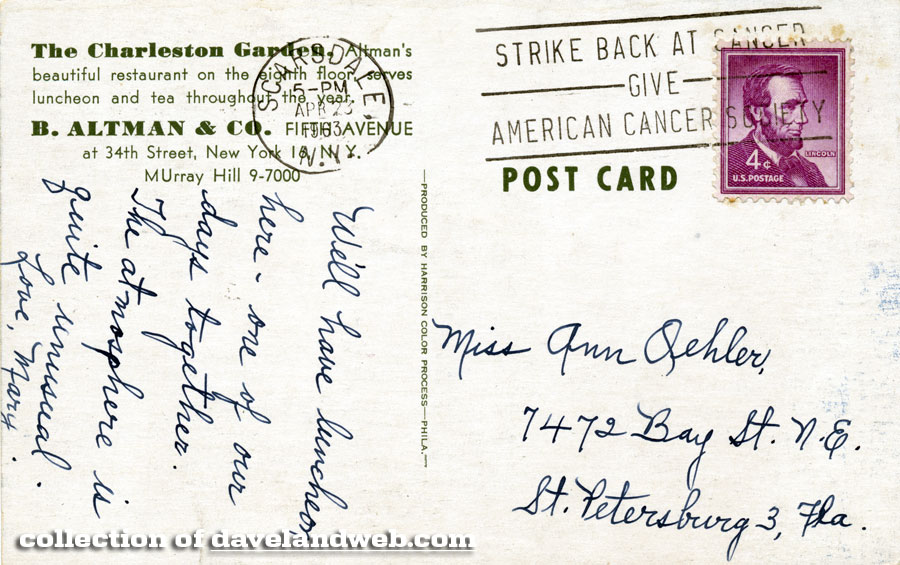
The appeal of putting so much effort into what the female leads wore in these films was because of the appeal it had for women all over America. Just like today, many are influenced by what they see the stars wear. But where would the average American Woman buy her fashion "back in the day"? One option was B. Altman's, a department store that had the foresight to move into the suburbs back in the 1930's. Going to a big city wasn't the only choice anymore for the average housewife. I remember as a little boy accompanying my mother on a few of her trips to the local B. Altman's. Here's a postcard from the New York City store's famous Charleston Garden restaurant and tearoom, which featured a southern plantation façade and murals simulating an outdoor garden...INSIDE the department store. Fashion shows were a staple of the restaurant, allowing women to both eat and shop. What a time-saver!


Here's what Mary, the sender of the postcard, had to say about her visit to the Charleston Garden:


I remember what a treat it was to eat at the St. David's location near Philadelphia with my mother. It was also my introduction to Pink Lemonade! As the years went by and the demographic of B. Altman's aged along with the store, it garnered the nickname "Menopause Manor," as it fell out of fashion with the younger set, closing down in 1989.

Have you ever been influenced to buy an outfit that you saw worn in a film?

See more classic film and television photos on my main website.

Saturday, January 18, 2014

Congress Ave. in Austin: 2 out of 5


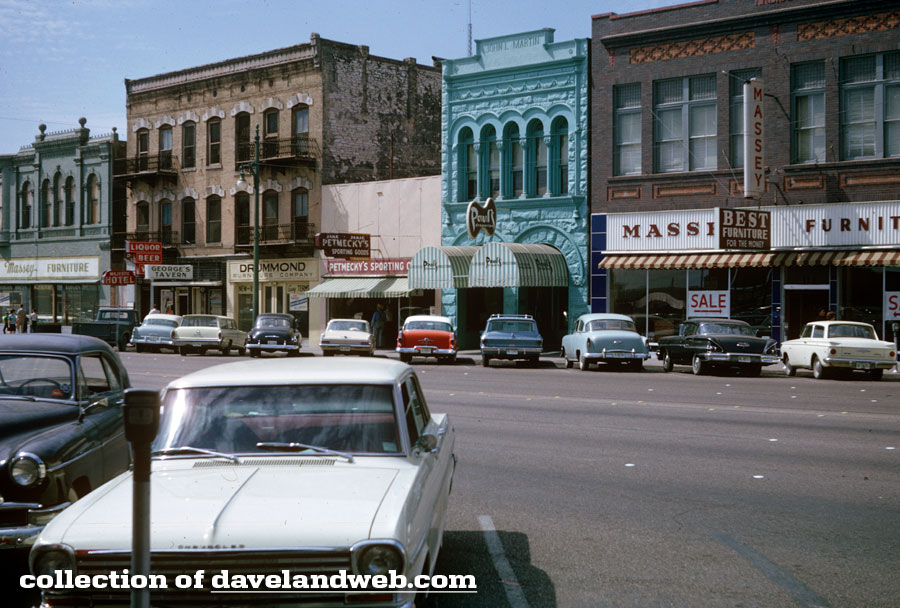
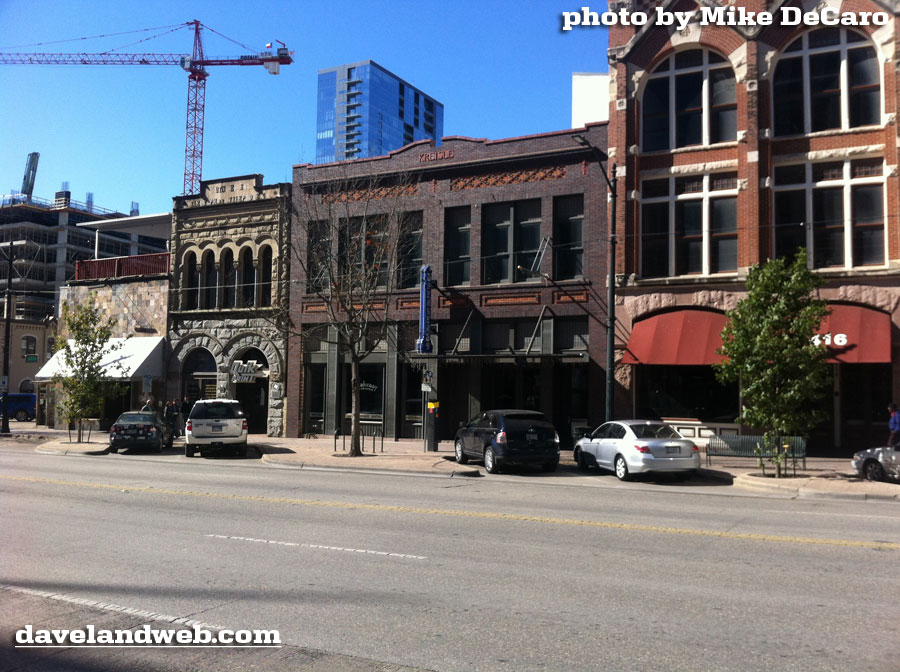
Today, we travel to Austin, Texas, for a view of what Congress Avenue looked like fifty years ago in 1964. It's pretty much your typical Main Street with a 1960's facelift. During that time it was fairly typical for businesses to cover their "antiquated" store fronts with corrugated steel or other materials to "modernize" them.

A modern view of the same area shows that of the five buildings visible in the 1964 shot, only two have weathered the storm. Mercifully, the ones that have survived have had their storefronts restored, minus the tacky 1960's coverings.


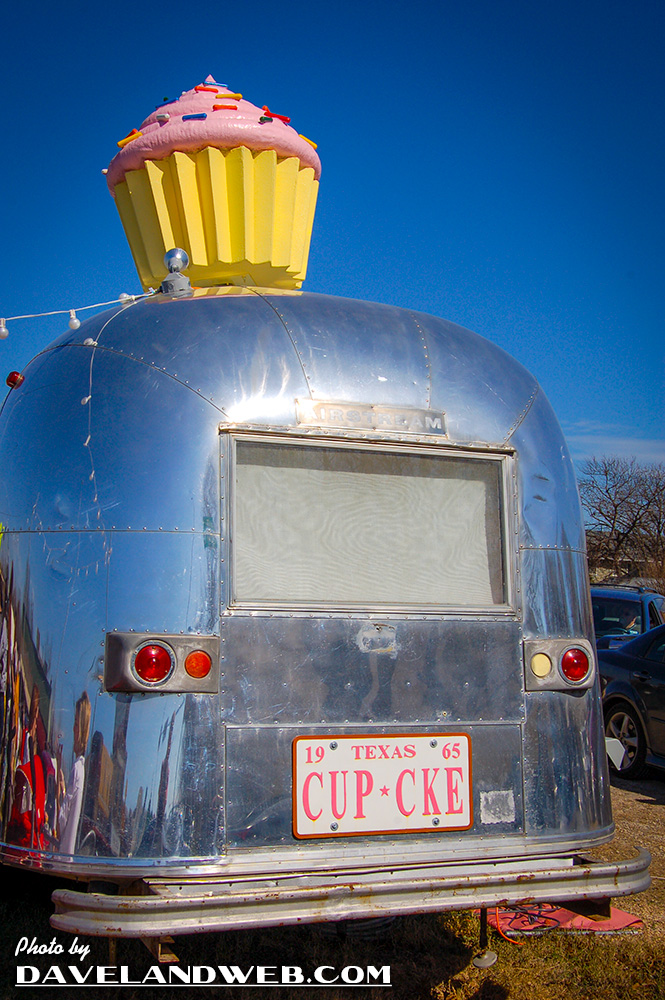
Congress Avenue (aka SoCo Shopping District) is the heart of restaurants and retail for Austin, such as Hey Cupcake (cupcakes from an Airstream Trailer):


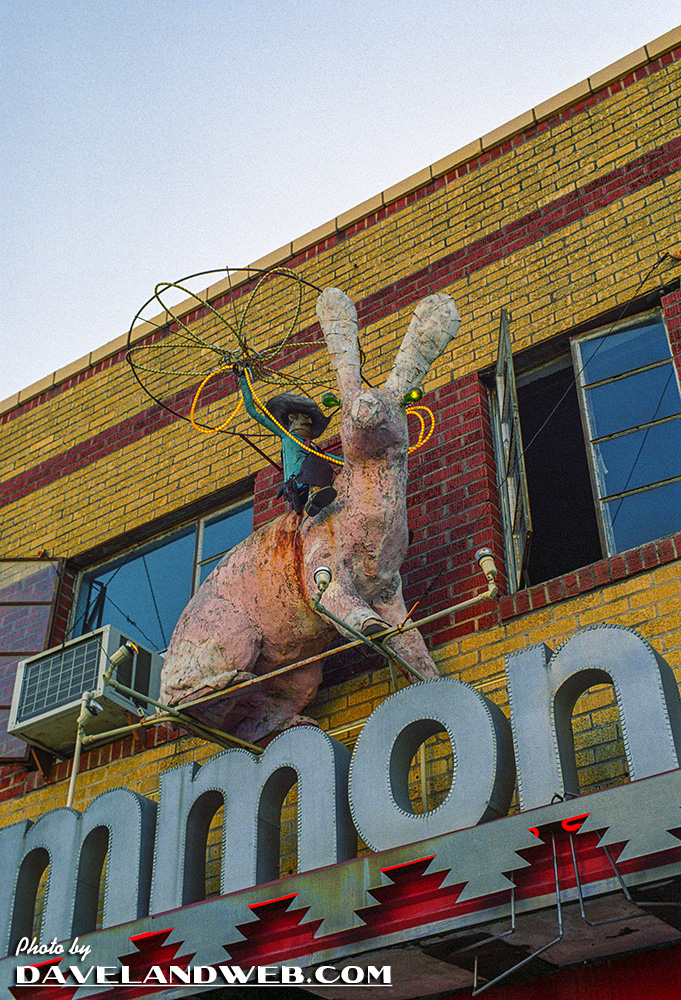
Uncommon Objects (raw materials for creative living):


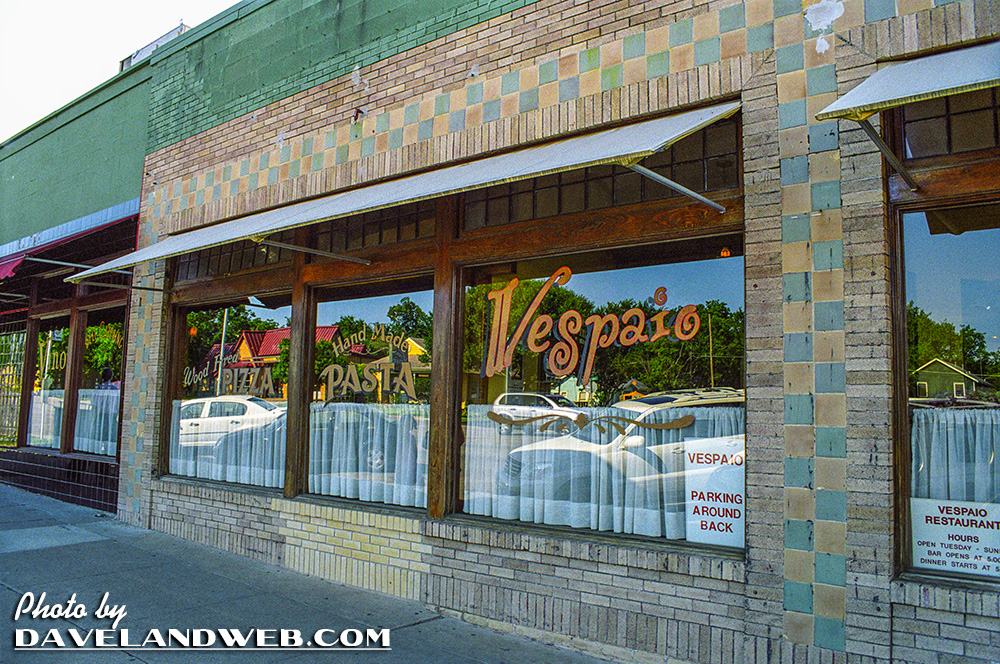
And Vespaio Ristorante:


Where else but Texas could you find a giant rabbit and cupcake in the same place? I guess that's what the slogan "Keep Austin Weird" refers to.

See more Daveland Austin, Texas photography on my Austin web page.

Friday, January 17, 2014

Willis in Coronado and Oz Giveaway


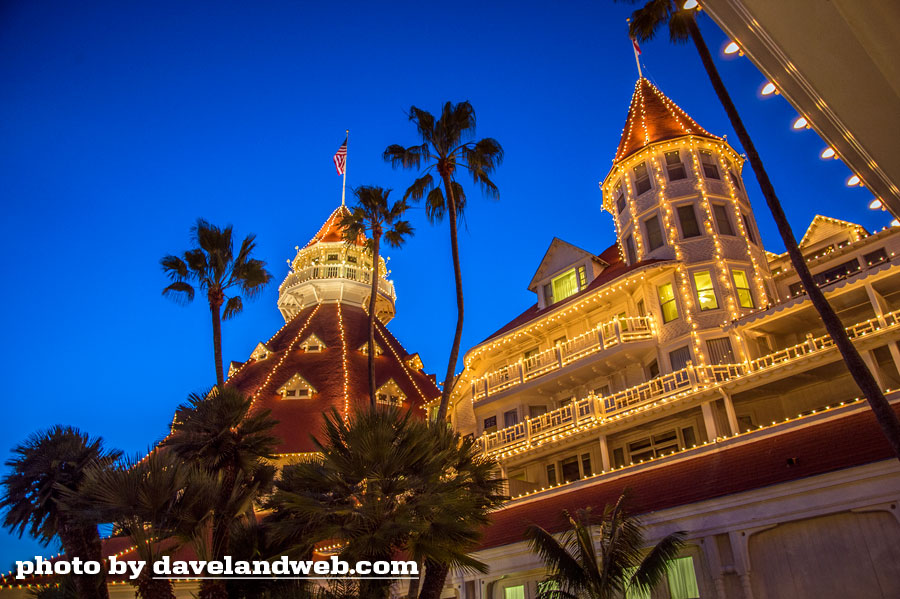
Christmas dinner 2013 was at the Hotel del Coronado, which relieved me of cooking duties for the second year in a row. The del has always been a favorite San Diego spot of mine, but I have noticed over the last few years that while the prices have continued to rise, the quality has sadly plummeted.

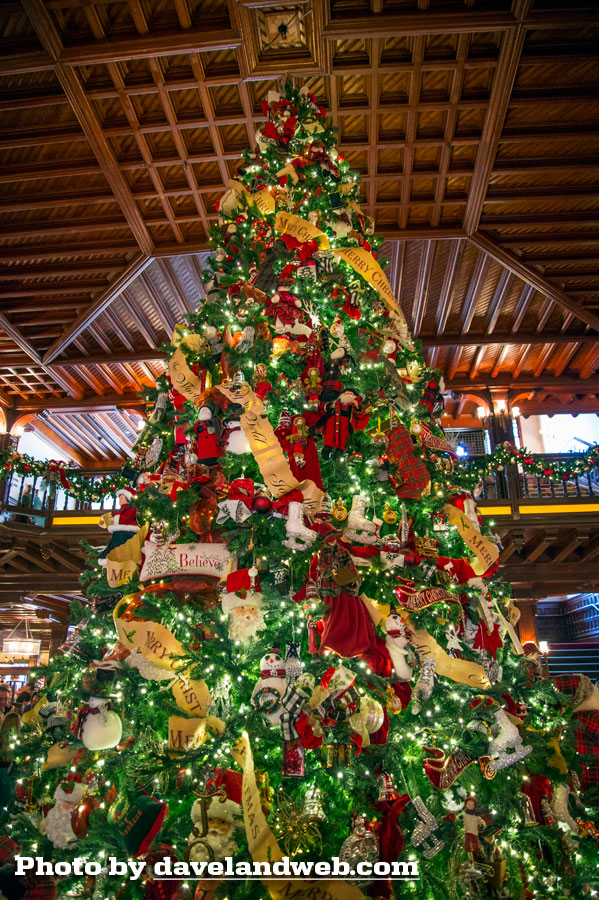
It's still a gorgeous historic building and very well-maintained, festively decorated for the season:


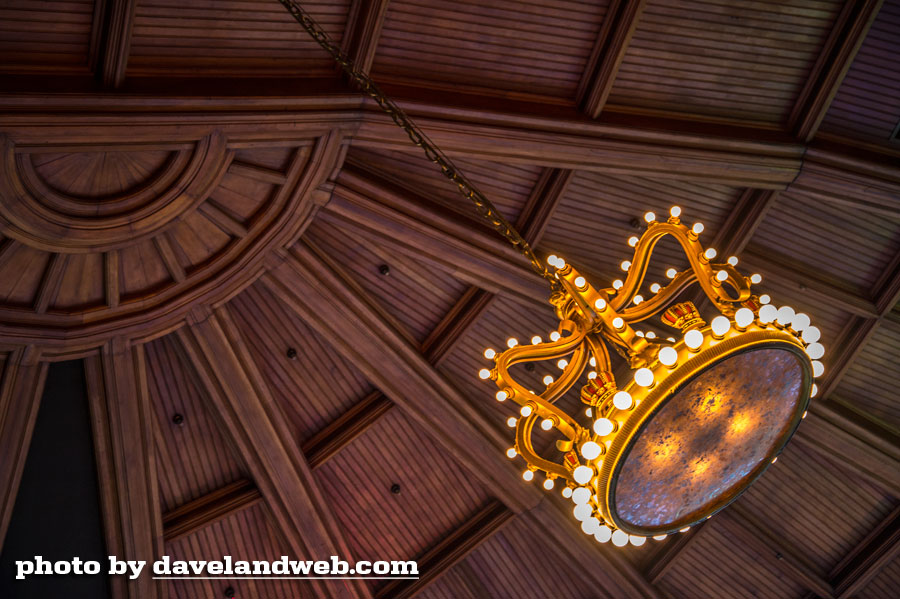
The Crown Room, with its amazingly huge crown-shaped chandeliers (supposedly designed by "The Wonderful Wizard of Oz" author L. Frank Baum), is still a very impressive dining area:


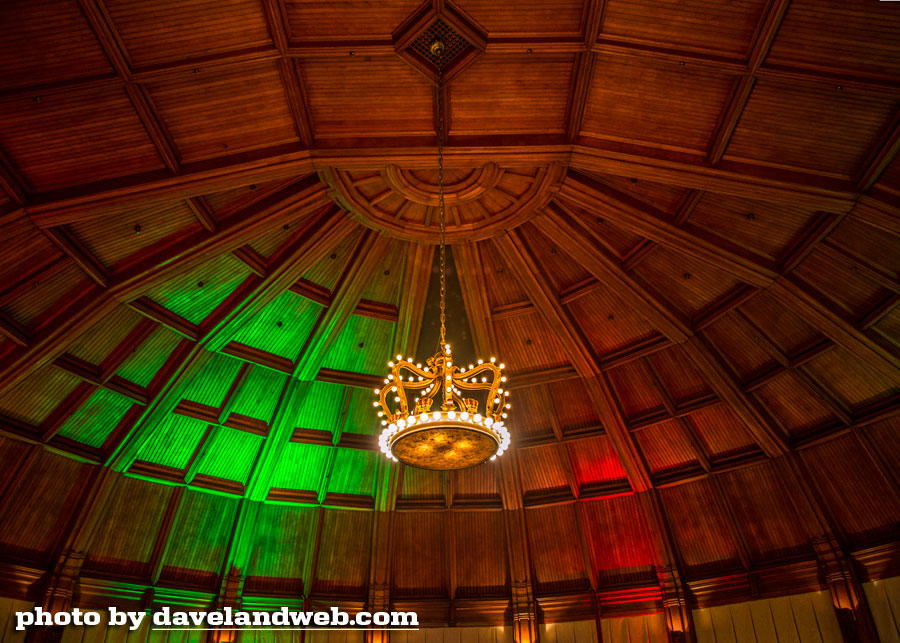
The coved ceiling, richly covered in hardwood, is a site to behold:


Sadly, the food at the $100+ buffet was lukewarm and uninspired. Adding up the cost of the entire table's dinner, I could have cooked an extremely impressive dinner of my own at a fraction of the price (and had leftovers!). The waitstaff seemed as if they came out of a Laurel and Hardy movie, bumbling over each other (the few times they showed up to the table), attempting to figure out how many glasses of wine should be added to the check.

I will not be returning for Christmas next year.

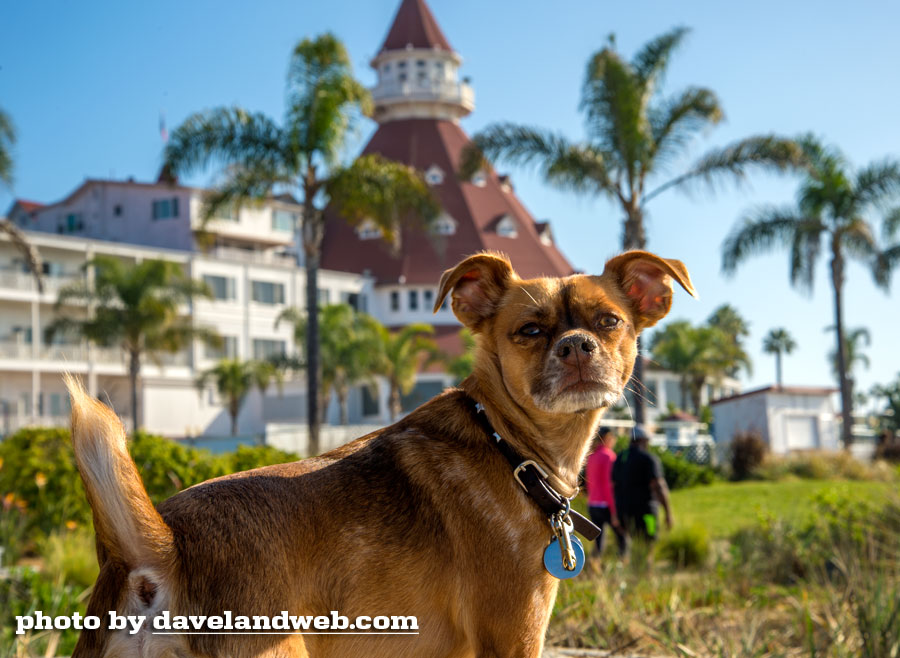
On a much happier note, I returned to Coronado Island a few weeks later on a mission, letting Willis accompany me on my journey.
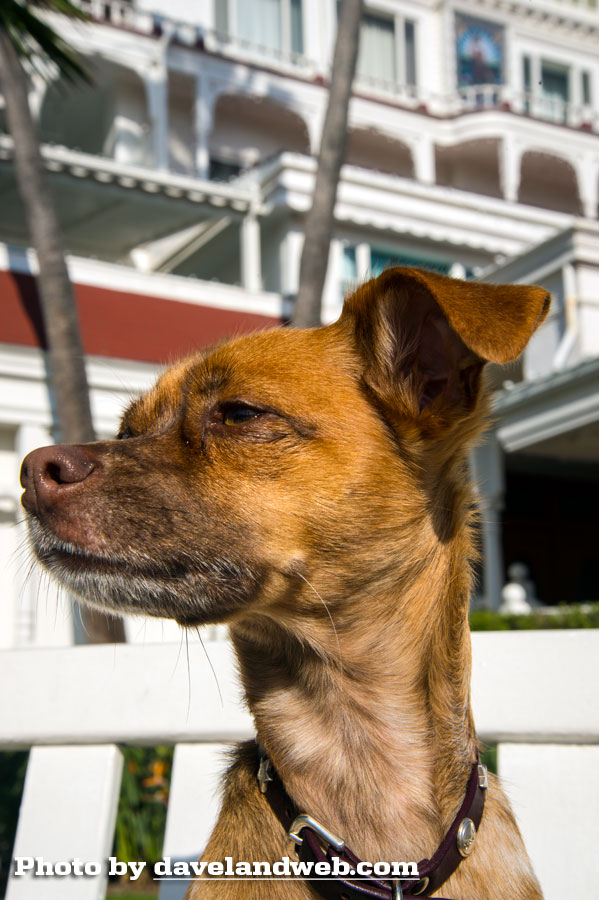


He especially enjoyed playing on the white sandy beach behind the hotel.


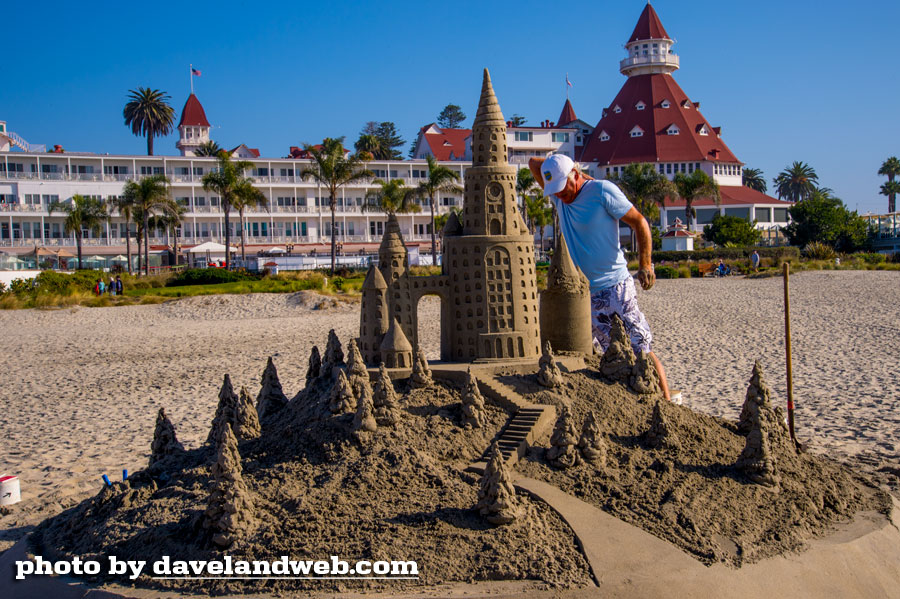
Nearby, Bill Pavlacka (aka "The Sand Castle Man") was building one of his masterful creations:
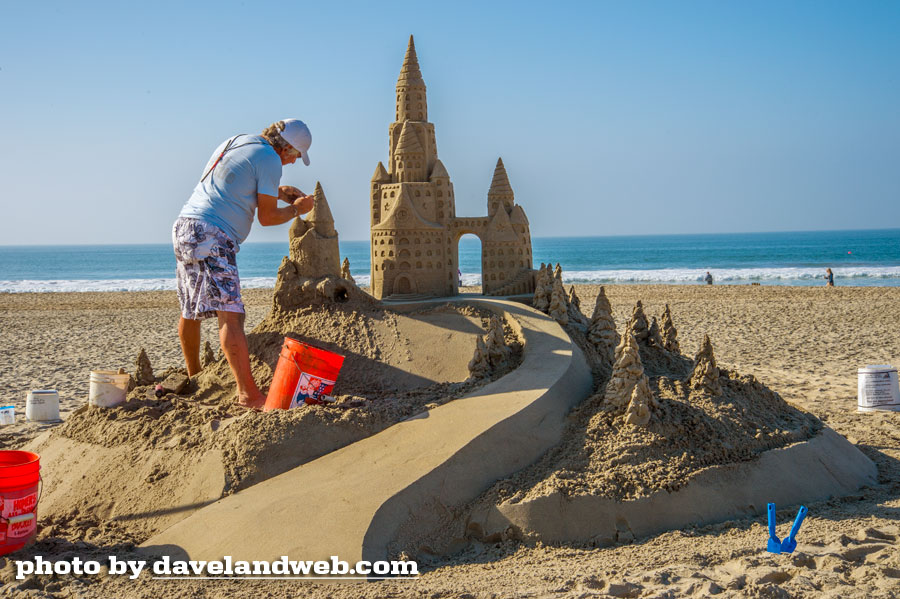


As you can see, this guy knows what he is doing!


In the residential area of Coronado is this park called Star Park Circle, which was the reason for my trip back to the Island.
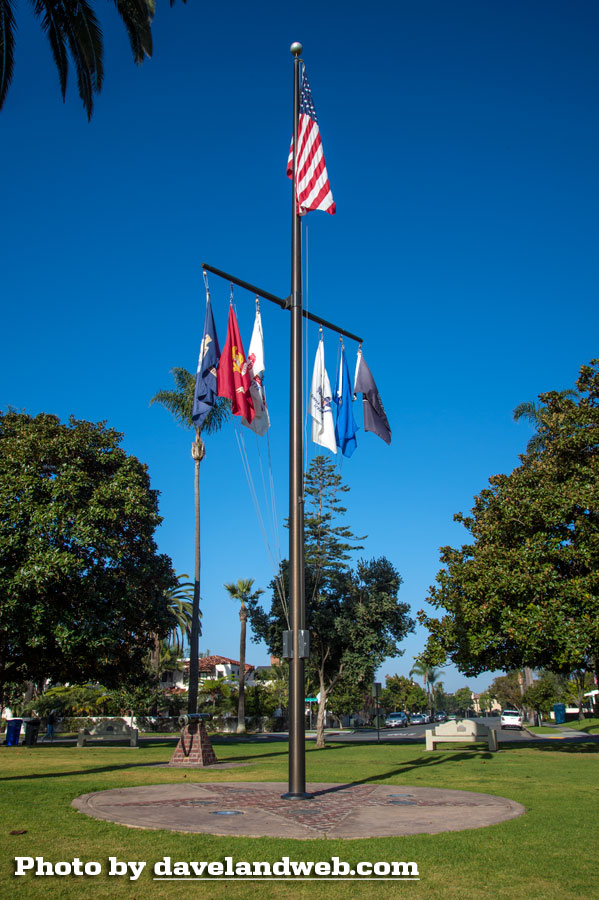
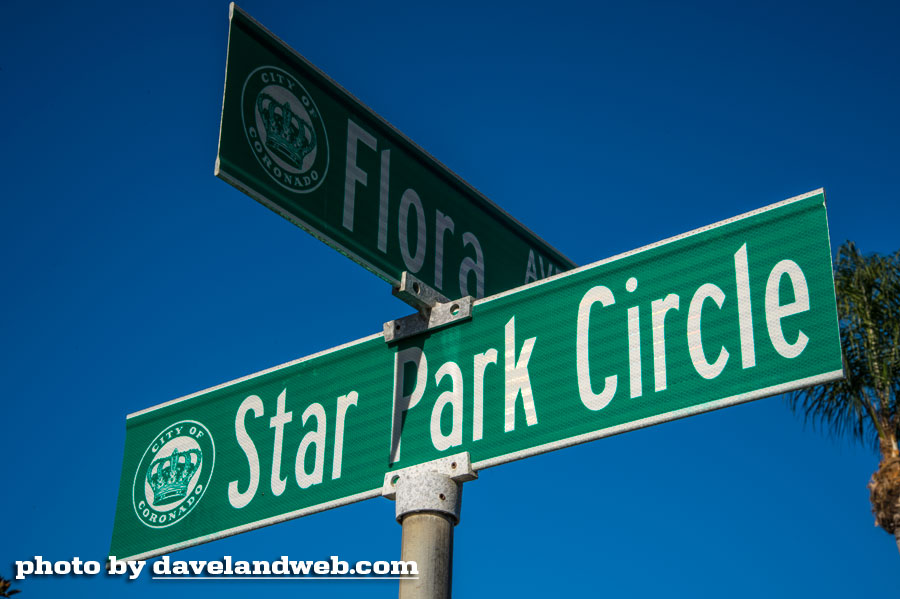


It was at this rented home on the perimeter of the circle that L. Frank Baum wrote four books in the Oz series that he was famous for: "The Marvelous Land of Oz" (book #2), "Dorothy and the Wizard of Oz" (#4), "The Road to Oz" (book #5), and "The Emerald City of Oz" (#6, which he originally had intended to be his last book in the series until public outcry and a need for money changed his mind). As a child, I voraciously read all 14 of Baum's books, so it was pretty cool to be able to see where some of them were written.
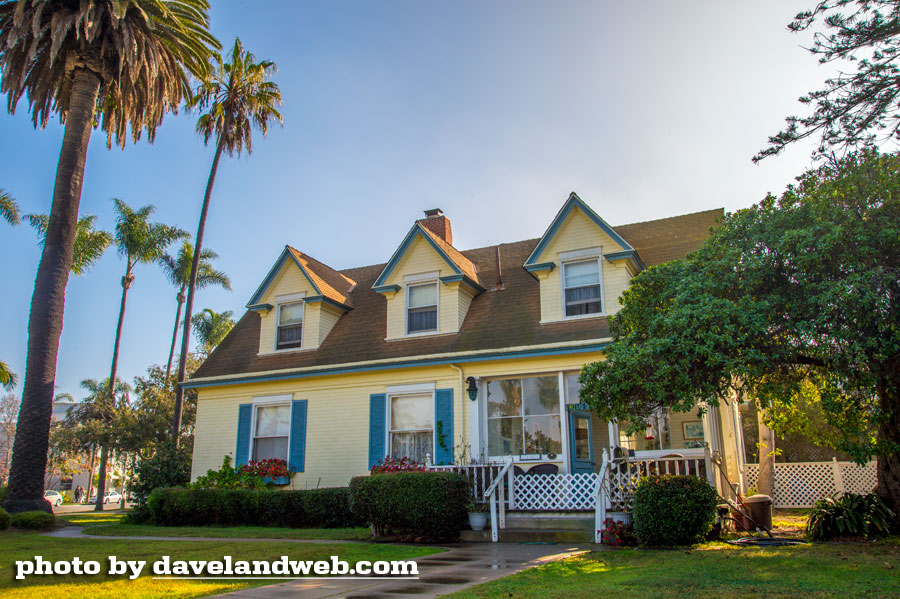


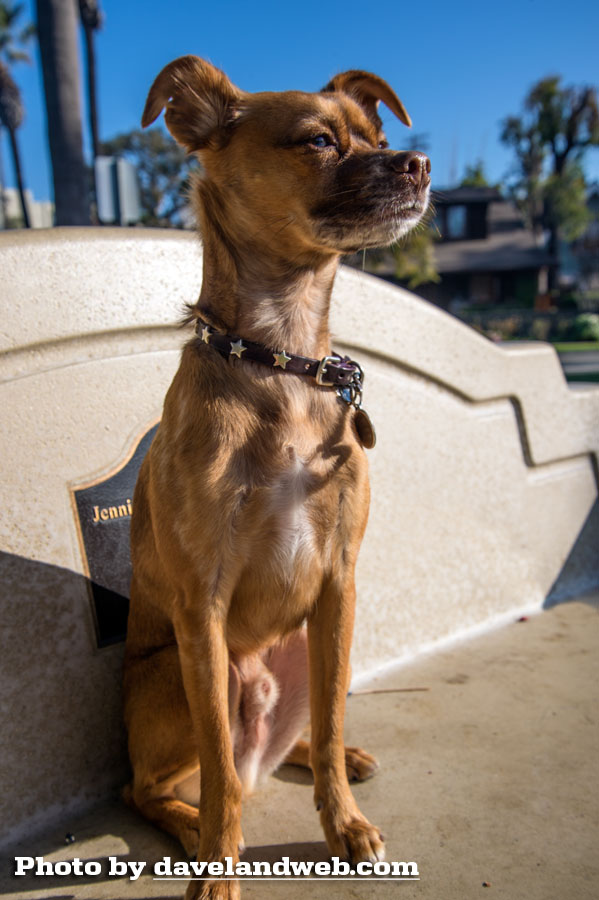
I think Willis enjoyed it, too.


Transitioning to the movie, "The Wizard of Oz," here's an early costume test of Judy Garland, back when the studio envisioned her as a blonde Dorothy:
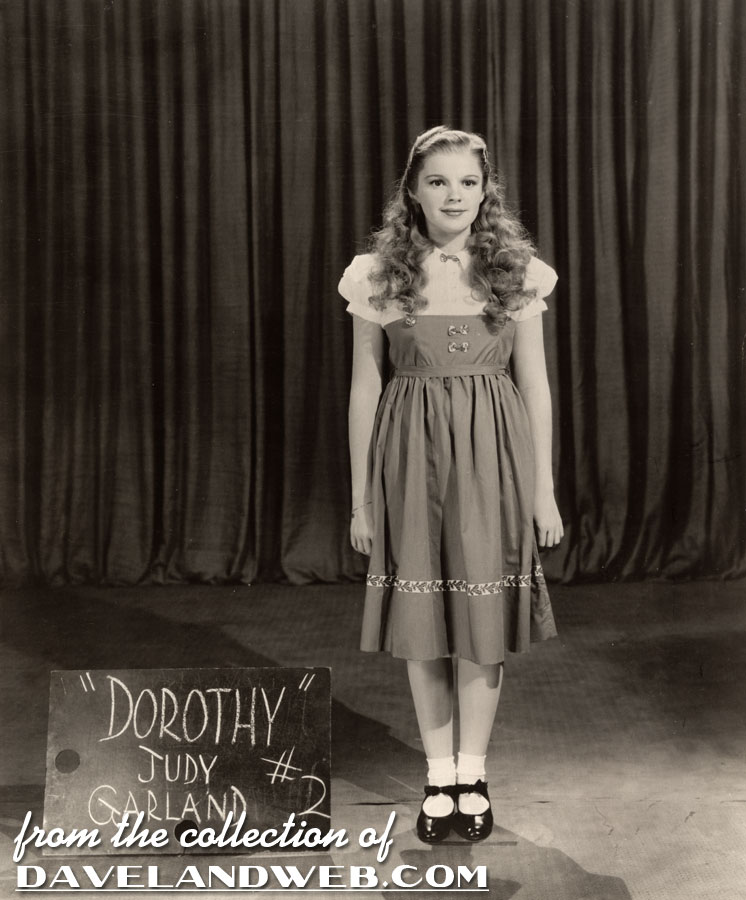


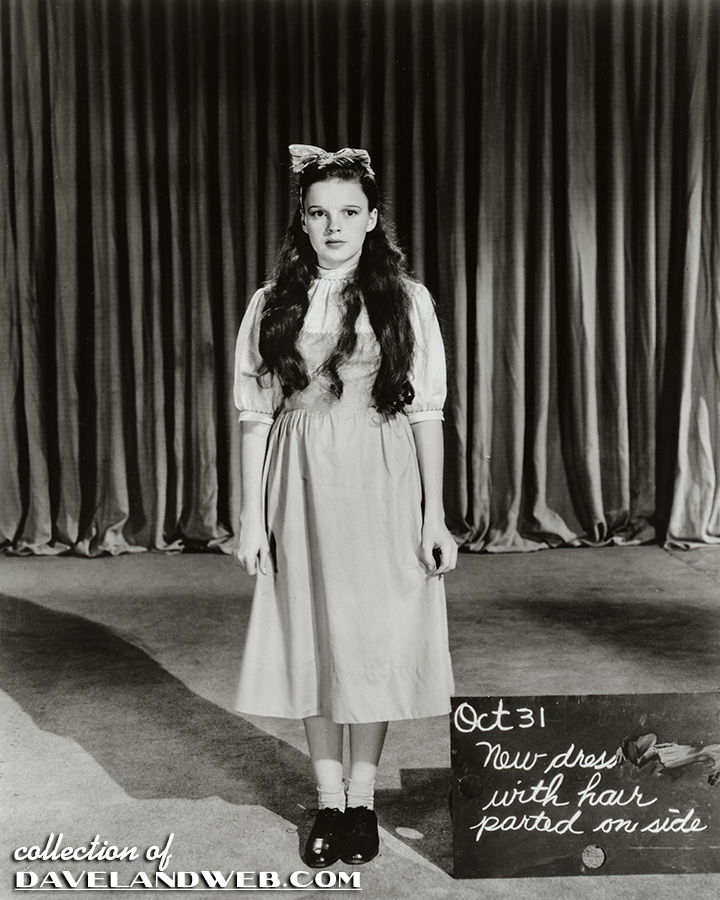
And how she looked a few months later on October 31, 1938, at the time that director George Cukor was briefly assigned to the film and encouraged MGM to let Judy Garland be herself:


In celebration of the 75th Anniversary of this beloved movie, Jay Scarfone and William Stillman have written a lavish book, "The Wizard of Oz: The Official 75th Anniversary Companion." This lavishly illustrated hardback book contains previously unseen photos and information as well as a generously filled envelope of reproduction publicity materials from the original release of the film.
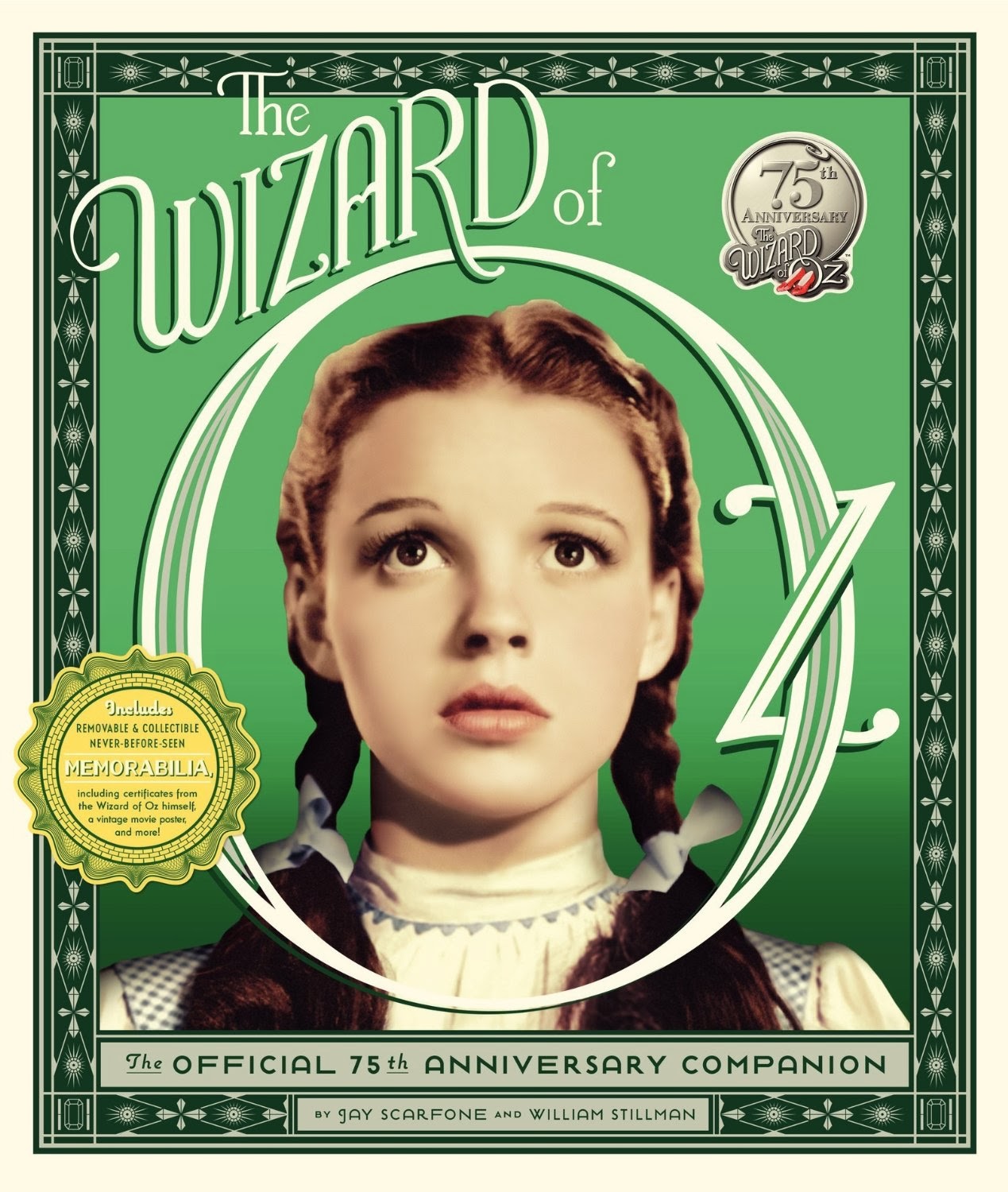


I am giving away a copy of this book for the informed reader who can tell me the name of the last book L. Frank Baum himself wrote in his Oz series. Leave a comment before Monday, January 20 at 5pm (PST) and I will draw a lucky winner from the correct answers. Check back Tuesday for the announcement and to see whether you need to supply a shipping address or not. Good luck!
See more Daveland photography on my main website.