Showing posts with label academy museum of motion pictures. Show all posts

Thursday, July 16, 2026

More Marilyn at the Academy


We’re back at the Academy Museum of Motion Pictures on Wilshire Boulevard in Los Angeles to see more of the Marilyn Monroe exhibit that is currently being featured until February 28, 2027. I was truly impressed by the display, but also knew enough to carefully read the accompanying small placards to learn whether the item was authentic or a repro. In the deleted scene below from “The Seven Year Itch” (1955), Tom Ewell, Marilyn, and Robert Strauss vamp it up:


This particular William Travilla outfit appears to be mostly original. From the placard:

Monroe wore this “cellophane effect” gown in a scene that was cut from director Billy Wilder’s “The Seven Year Itch.” In the scene, Richard Sherman (Tom Ewell) dreams of Monroe’s character styled like early Hollywood star Mae West. Designer William Travilla micked key elements of West’s typical costuming, which often featured boas and her signature cigarette holder. Monroe admired West in real life, often emulating her sassy persona and irreverent humor for blonde bombshell roles. Synthetic eyelash fabric; non-original boa, jewelry, shoes, and cigarette holder.


Next I saw the famous “subway dress.” Could it be original? Or was that too good to be true for the outfit that was auctioned off for a cool $4.6 million in 2011? The answer is a little muddy; not original, BUT...it was still made by Travilla himself. From the placard:

This replica was made by the original costume designer William Travilla. He often made close copies of his most iconic film looks for publicity purposes. This version has the belt secured in the middle. For the original costume, Monroe tied the belt to the side. Rayon crepe; non-original shoes and jewelry.


 Last one from “The Seven Year Itch” is this silk pajama outfit. From the placard:

One of Monroe’s most successful roles was as The Girl in director Billy Wilder’s “The Seven Year Itch,” a comedy about a restless husband left to his own devices for the summer. These silk pajamas mark a pivotal moment in developing Monroe’s girl next door character: when her scheming neighbor invites her over for a drink, he imagines her arriving in a sexy ensemble. Instead, she appears in casual attire, selected by Travilla and made by Jax—one of Monroe’s favorite clothing brands. Silk; non-original shoes.


 What’s your guess on this one? Real or replica? From the placard:

Director Howard Hawks’s comedy “Gentlemen Prefer Blondes” was the third of eight film collaborations between Marilyn Monroe and costume designer William Travilla. In the movie, showgirls Lorelei Lee (Monroe) and Dorothy Shaw (Jane Russell) are introduced in matching red sequin gowns for the opening song and dance number, a performance that catapulted Monroe from up-and-coming starlet to icon. Travilla used a mix of beige and red sequins that give the costumes extra shimmer on camera. Rayon crepe, sequins, and silk chiffon; non-original hat, shoes, and jewelry.


The jewelry was re-created by Kathleen Lynagh Designs; the hat by Robyn Simms Johnson.


Below you can see Marilyn wearing the costume (sans hat) with Tommy Noonan, who played her nerdy but wealthy suitor:


More Monroe memorabilia to come!

See more Academy Museum photos at my main website.

Monday, June 22, 2026

Monday is for Marilyn: Diamonds Are A Girl’s Best Friend!


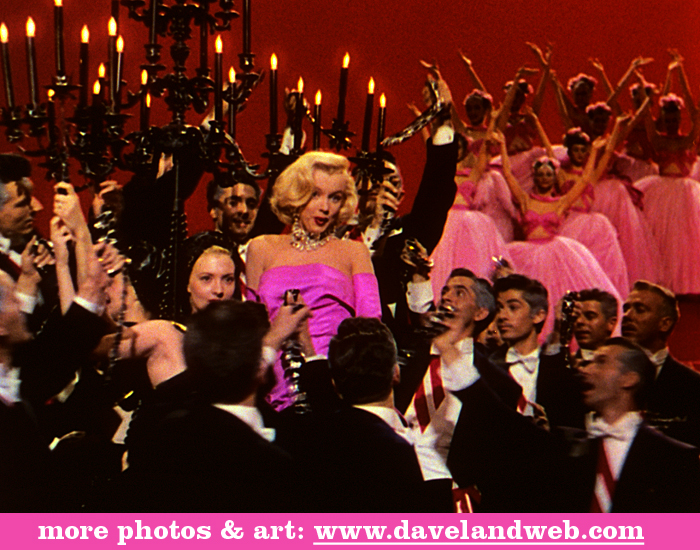
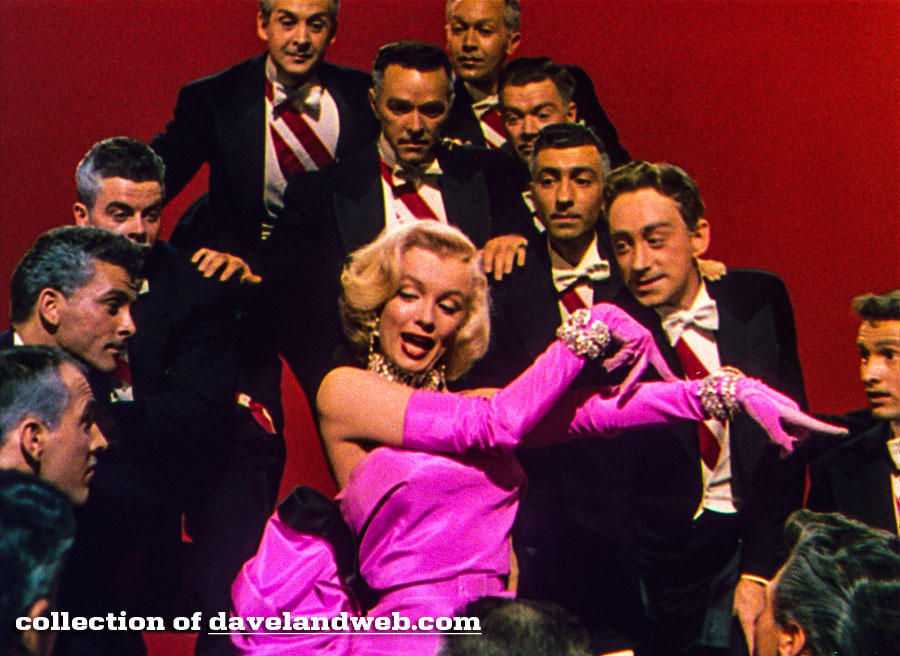
One of Marilyn Monroe’s most iconic numbers is from her 1953 film, “Gentlemen Prefer Blondes.” Wearing hot pink satin and covered in diamonds, the actress sang, “Diamonds Are A Girl’s Best Friend,” as shown in my recently created caricature above. It had to be done. At the Academy Museum of Motion Pictures in Los Angeles, they currently have an exhibit titled “Marilyn Monroe: Hollywood Icon.”


The entrance to the exhibit, designed for selfies of course:


One of the most gawked at pieces on display is the pink satin gown, which is an original with the jewelry re-created by Kathleen Lynagh Designs. The gloves and shoes are also reproductions.


William Travilla made the dress using a silk satin called peau d’ange (angel’s skin), chosen for its comfort and flexibility. In person, the fabric was described as pastel, but Travilla knew that Technicolor would boost the vibrancy. He added felt, boning, ostrich feathers, and horsehair to various areas of the dress to help keep its form during the rigorous dance number.


It amazes me how well preserved this costume is. The bow on the back:


This photo shows Marilyn wearing Travilla’s original design for the number:


…a bejeweled black two-piece over a mesh bodysuit. As the film was being finished, scandal broke out when Monroe’s 1949 nude photos resurfaced. The studio asked Travilla to remake the costume, resulting in this pink dress which was designed and completed just before filming.


Only the shorts and fan are known to remain of this original version which took months to create and cost about $4,000 at the time to produce (roughly $48k today!).


This unused pink bodice, which mirrors the chorus girls’ costumes, was archived and labeled with Monroe’s pink dress. It’s believed to have been made as Travilla explored options for the new design, though Monroe has never been pictured in it or described as wearing it.


A screenshot showing the chorus girls/dancers in the background:


This silverplate ring of elaborate links with a braided design, inlaid with shining clear gemstones, can be seen in the black and white photo showing Marilyn wearing the original outfit. Created by Joseff of Hollywood, it came up for auction recently:


Final photo for today is another screenshot of Marilyn performing the number that has been often imitated (but never improved upon!):


See more Marilyn Monroe photos at my main website.

Thursday, May 12, 2022

Not So Welcome at The Academy


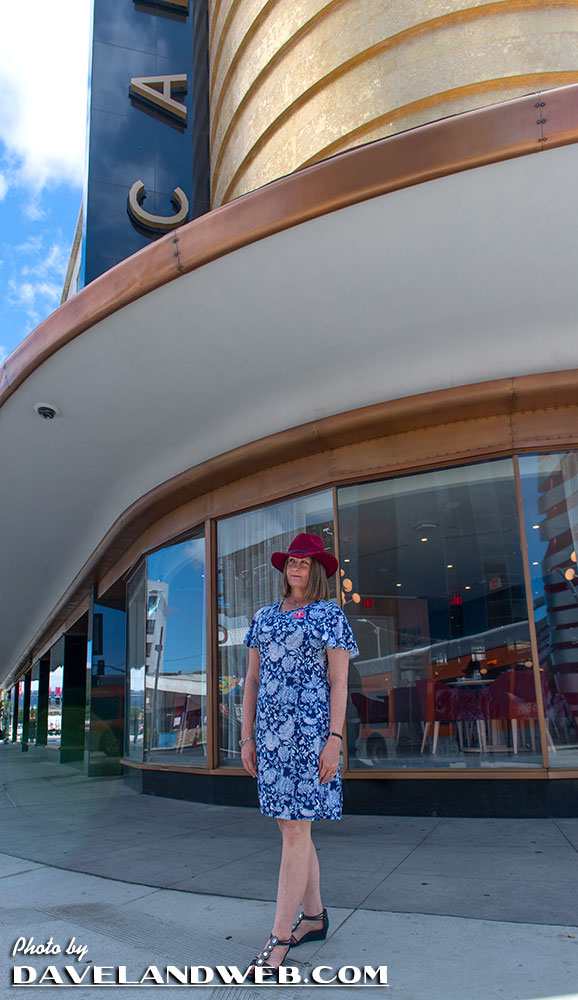
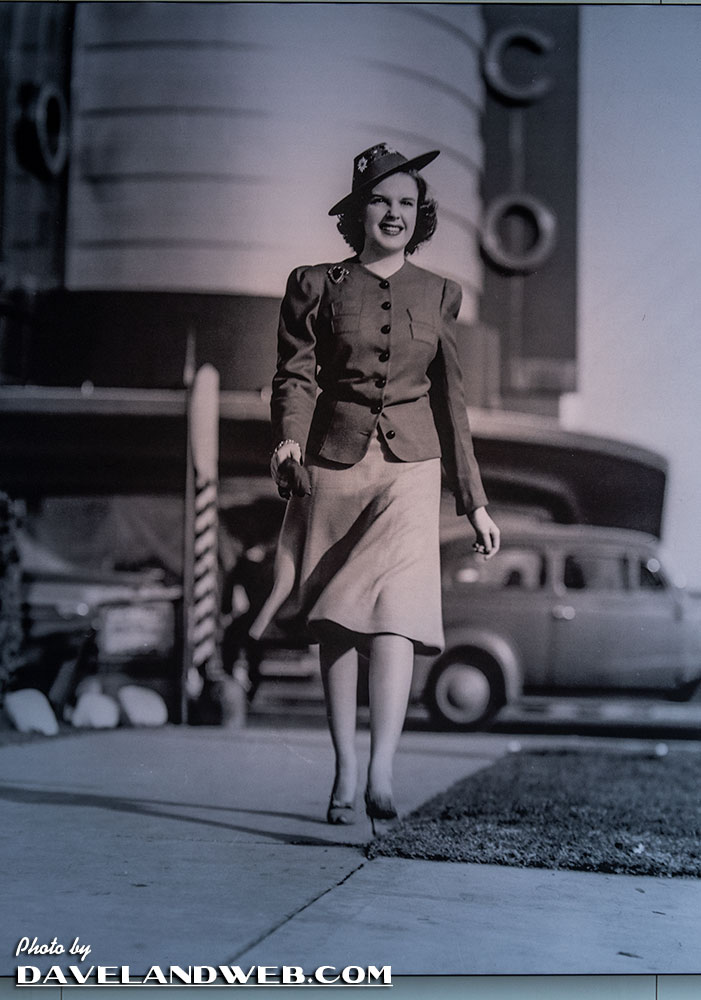
Part of Melissa’s (aka The Colonel) visit to LA included a trip to the recently opened Academy Museum in Los Angeles on Wilshire Boulevard, housed in what was originally the May Company building. Melissa channels Judy Garland back in the day as she walked in front of the (former) department store:


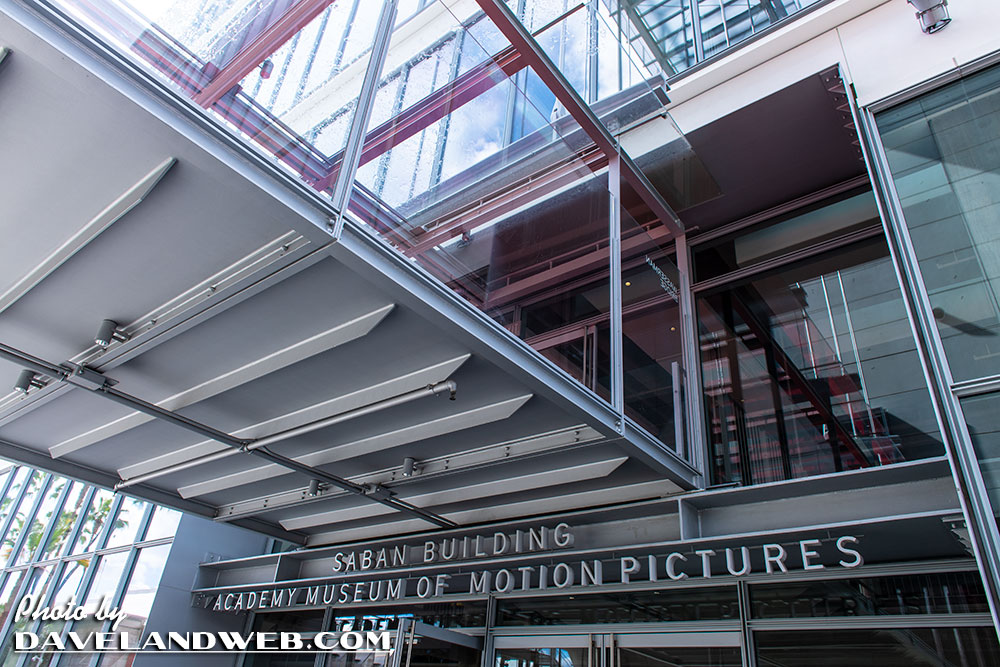
The addition to the historic building has the boring but currently trendy industrial chic look:


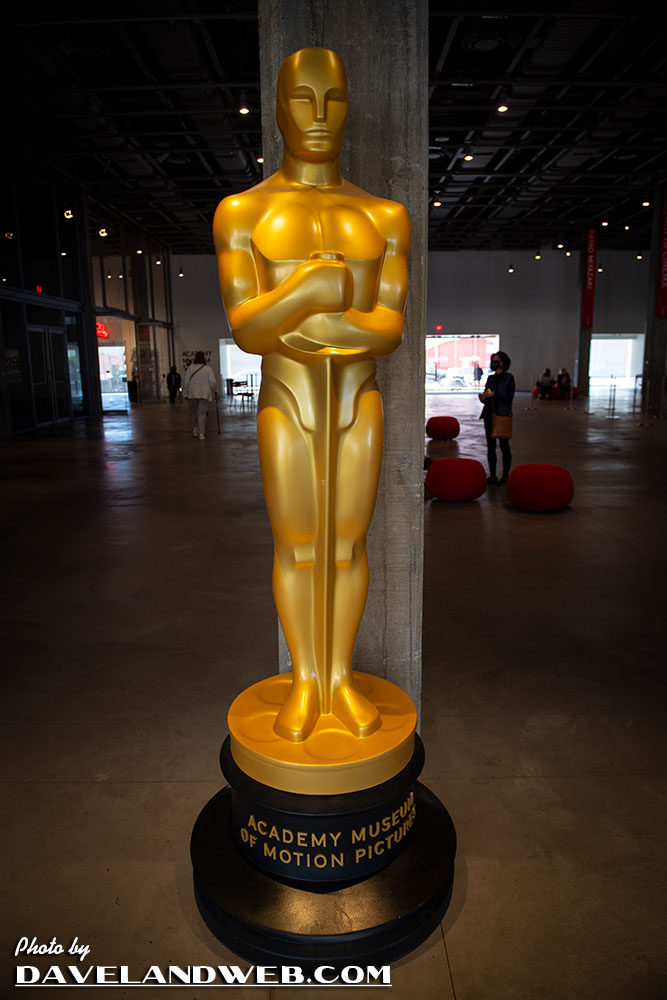
The inside of the building is just as cold and off-putting, which really makes the life-sized Uncle Oscar statue stand out like a sore thumb. I’m waiting for the day when somebody gets offended by the sculpt and it has to change.


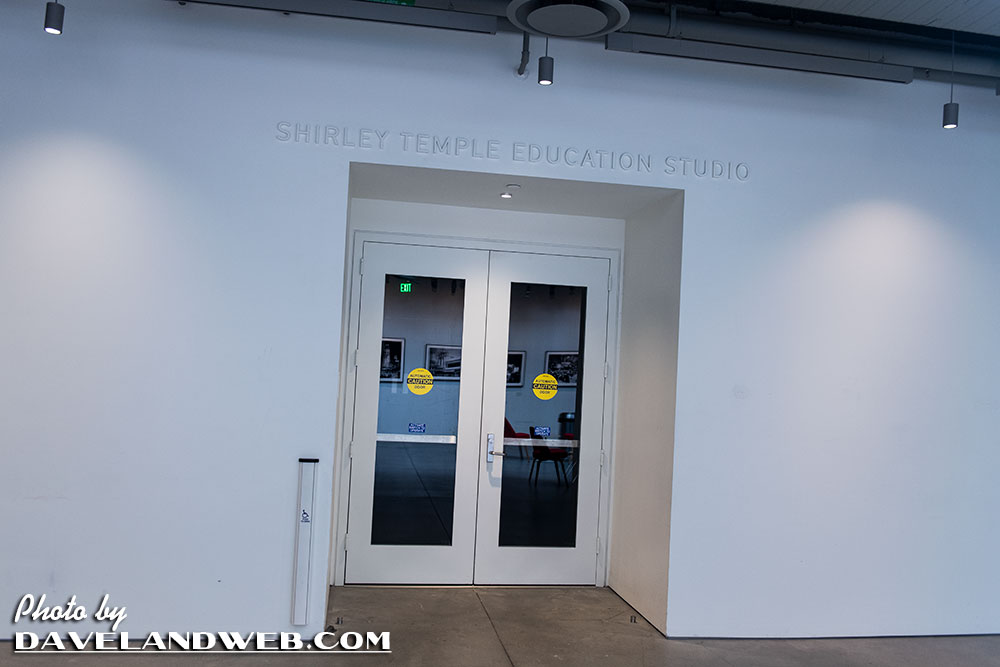
The first order of business was to get to the Shirley Temple Education Studio, which just so happened to be closed.


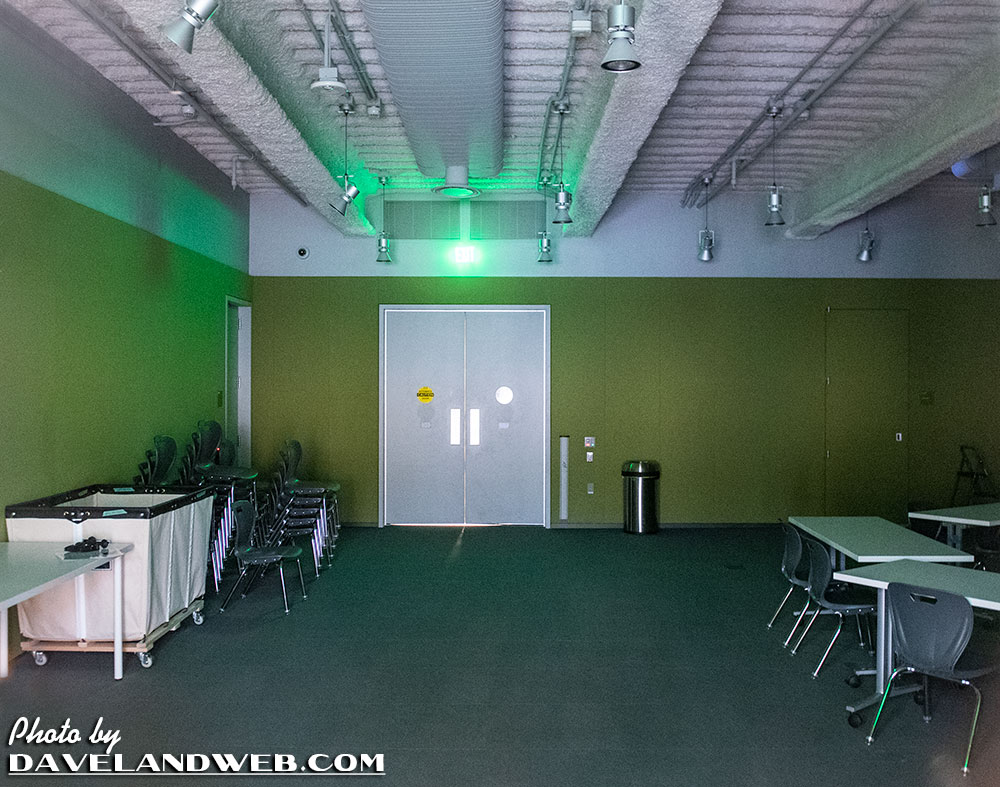
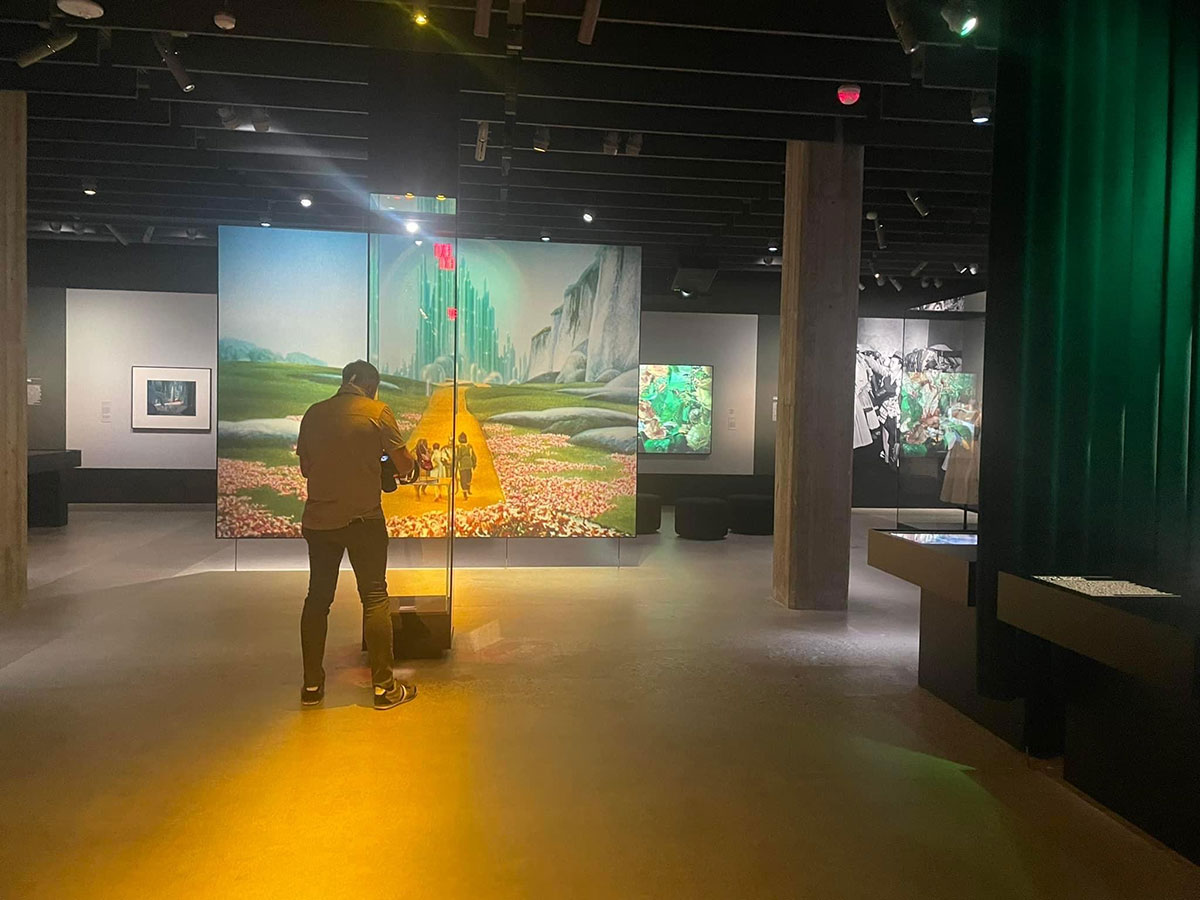
In case you’re wondering what $5 million dollars from Shirley’s family purchased, here’s an inside peek:


The Museum has a treasure trove of some of Shirley’s most iconic costumes, the desk used in her Fox Studio Bungalow, and memorabilia related to her close friendship/working relationship with dancer/choreographer Bill Robinson. And therein lies the real reason why Shirley is kept on the down-low. Because Robinson portrayed a servant to a plantation family in two of Shirley’s movies (both set in the Civil War), inside sources have revealed that the Museum is afraid of backlash if they put too much of Shirley’s history on display. More on that in another post. Moving on to the other main reason for the visit: the Ruby Slippers.


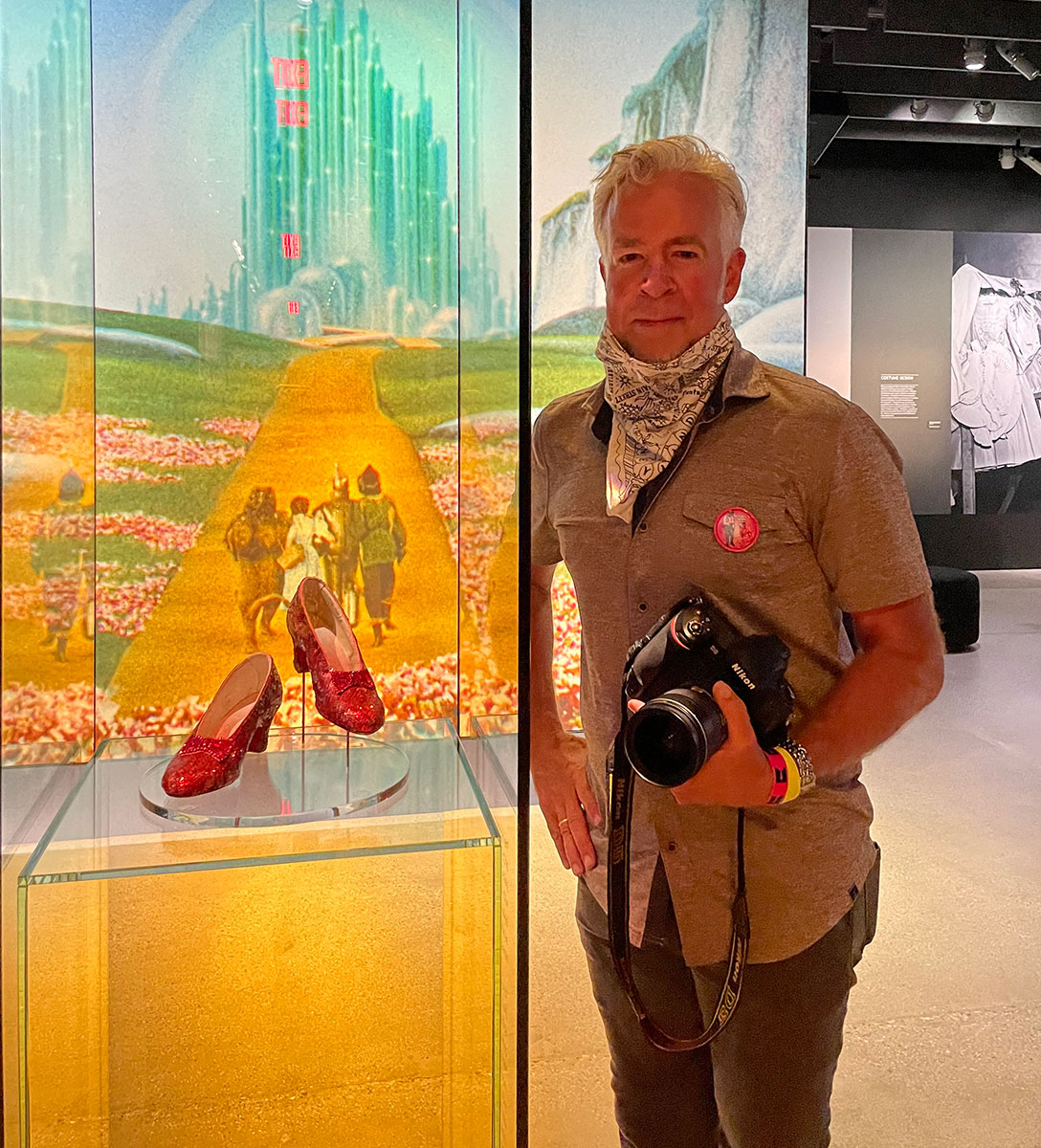
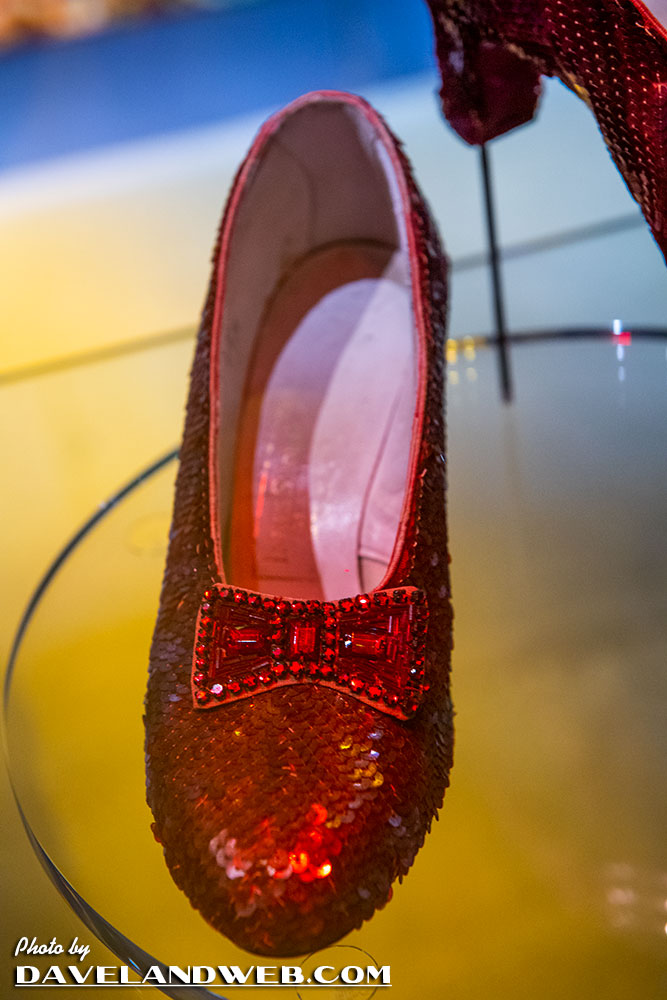
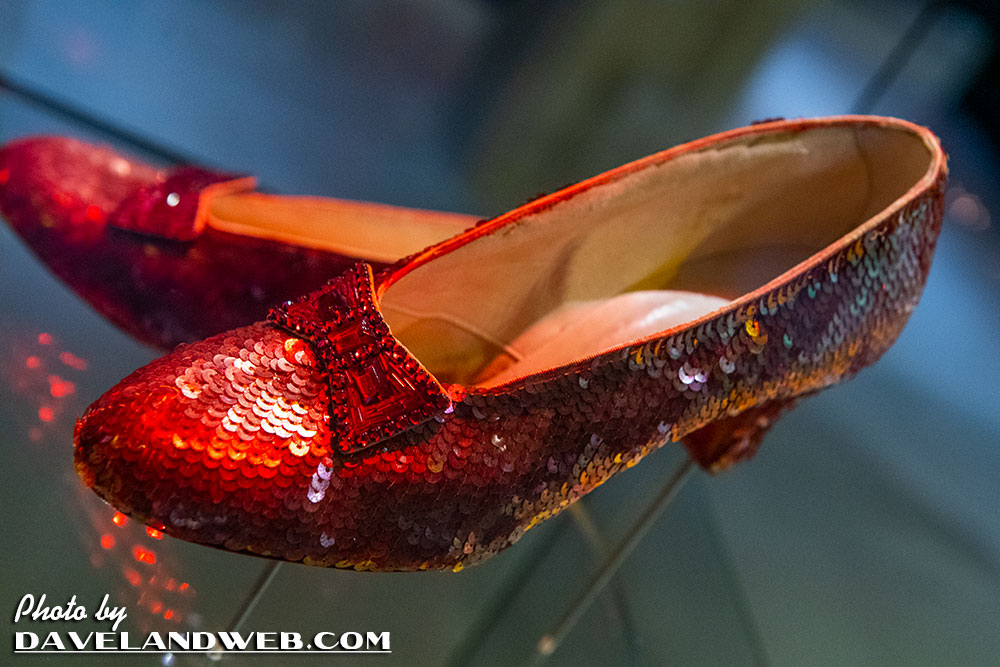
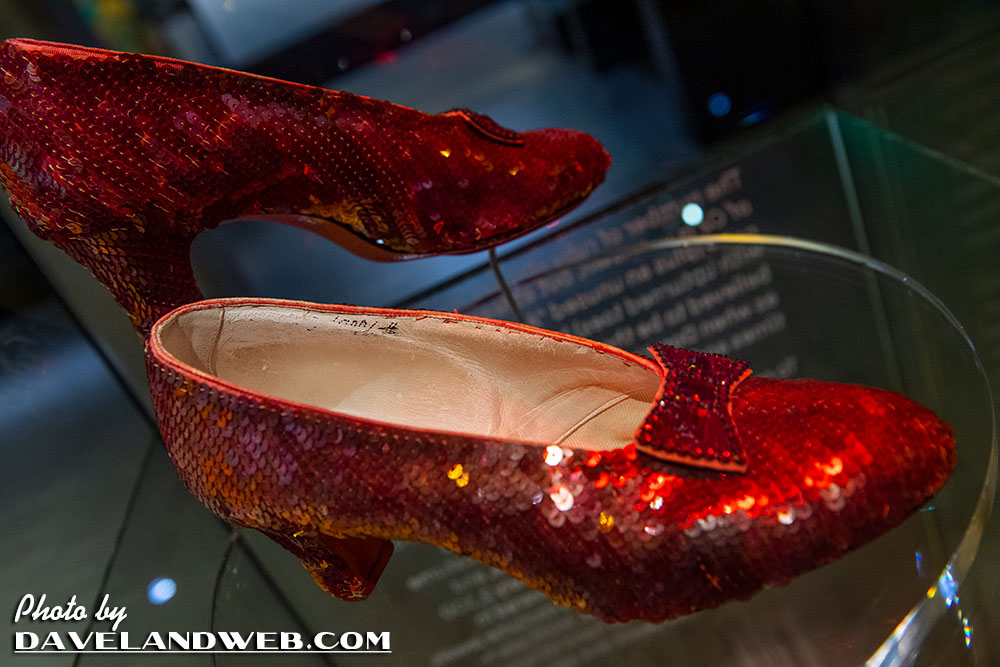
These are the Ruby Slippers that belonged to Kent Warner, the man who discovered all of the pairs created for “The Wizard of Oz” when MGM was selling off its historic props and costumes in their 1970 auction. Warner picked the best pair to keep for himself. From the display text:

This pair is believed to be the one seen in all close-up shots, as when Dorothy clicks her heels together three times and says, “There’s no place like home.”


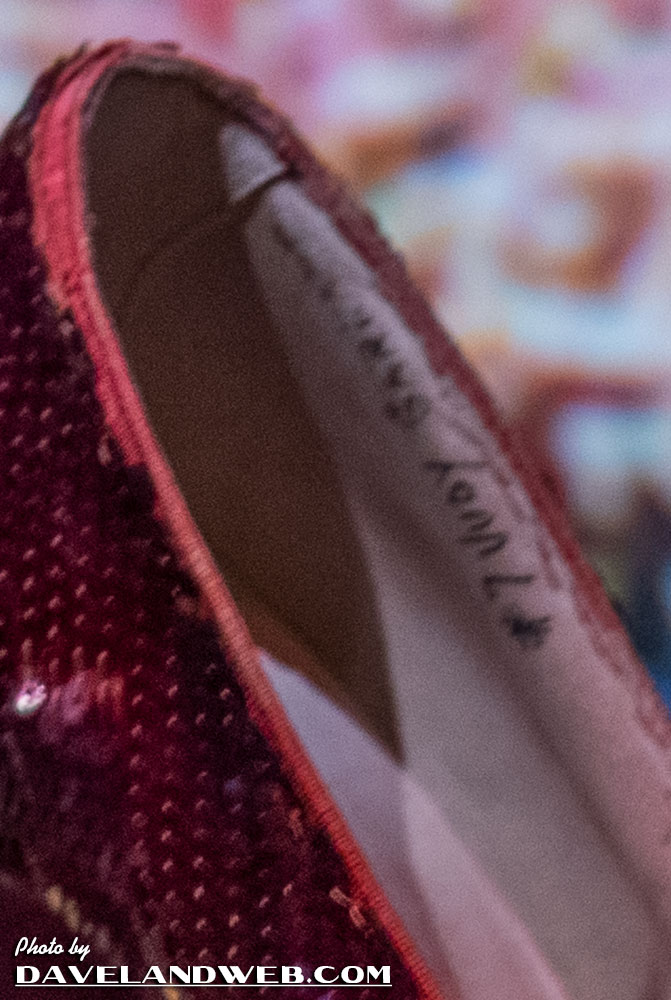
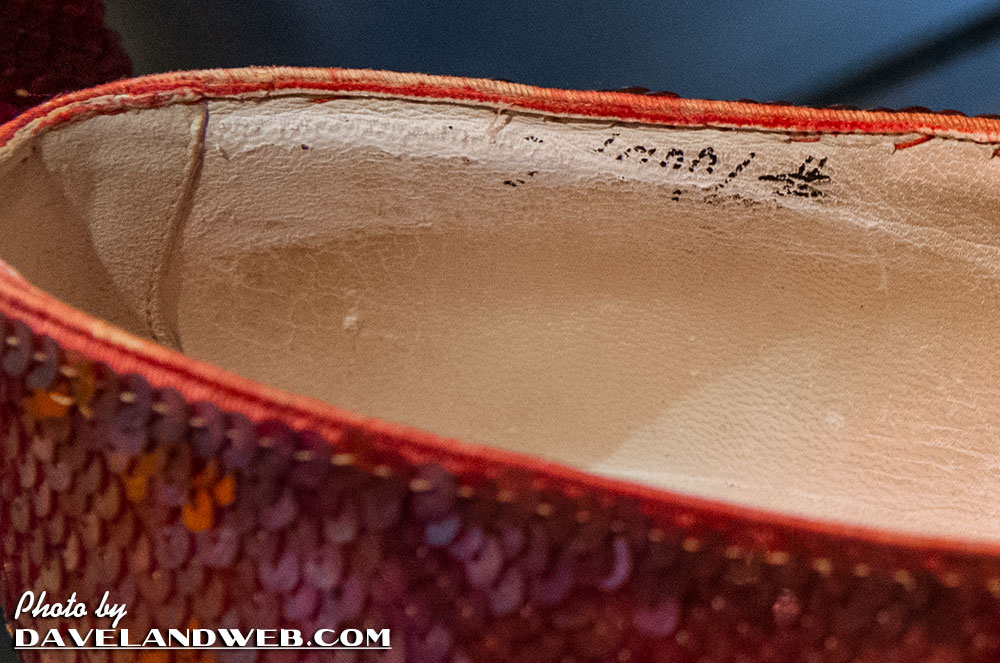
You can see #7 Judy Garland handwritten inside the shoe:


They are just incredible to see in person.


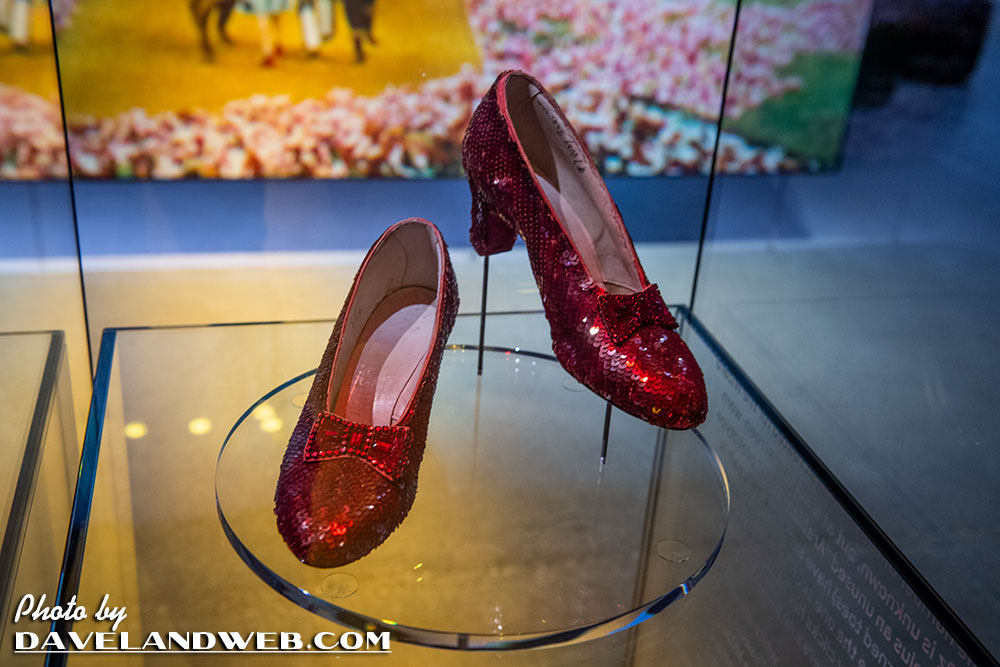
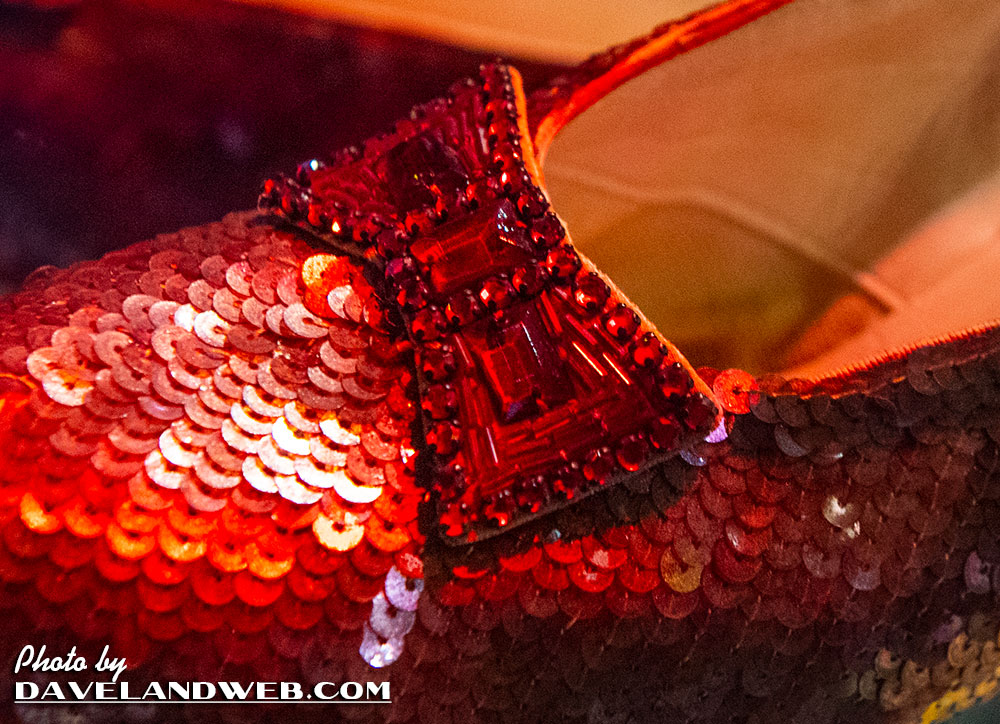
[W]hite silk pumps from the Innes Shoe Company of Pasadena and Hollywood were dyed red by the MGM costume department, covered in silk georgette, and hand-embellished with approximately 2,300 sequins each. A red leather bow covered in red rhinestones, bugle beads, and costume jewels was then affixed to each slipper. MGM seamstress Aurora DueƱas was on hand throughout filming to restore loose beads and sequins.


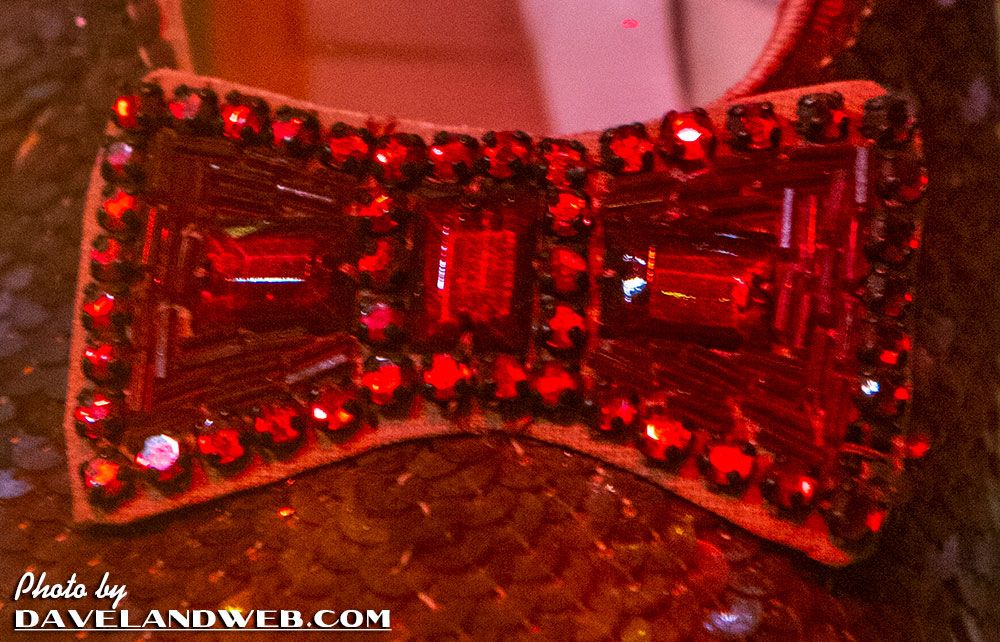
In the detailed shot, it would appear that rather than leather the beads for the bow were affixed to a cloth backing, as you can see the pattern of the fabric below the crystals and bugle beads.


Melissa captured me attempting to shoot the famed slippers without catching the reflection of the glass display. Not an easy task.


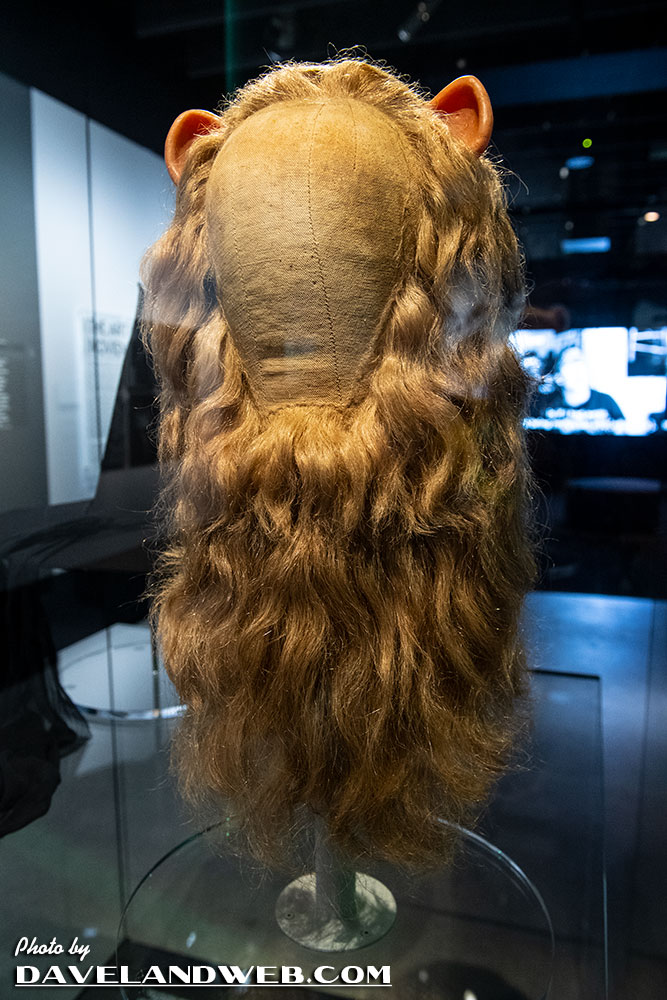
The Cowardly Lion’s mane was also on display:


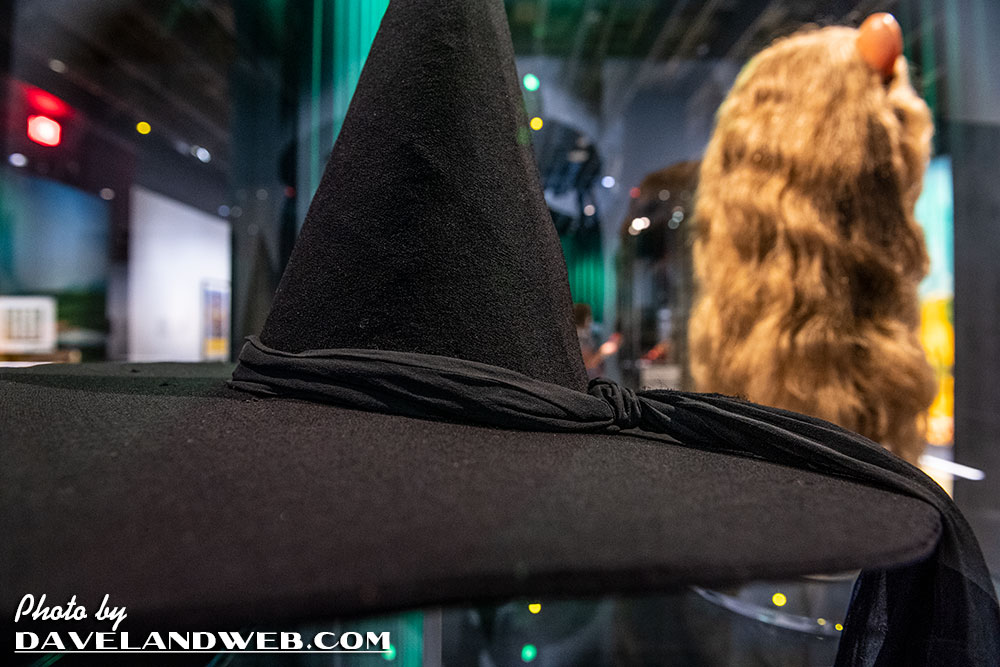
…and the Wicked Witch of the West’s hat. Extra lights were necessary to make Margaret Hamilton’s Witch’s costume register on Technicolor film. Adrian also designed this costume, made of black wool surrounded by a flowing silk scarf:


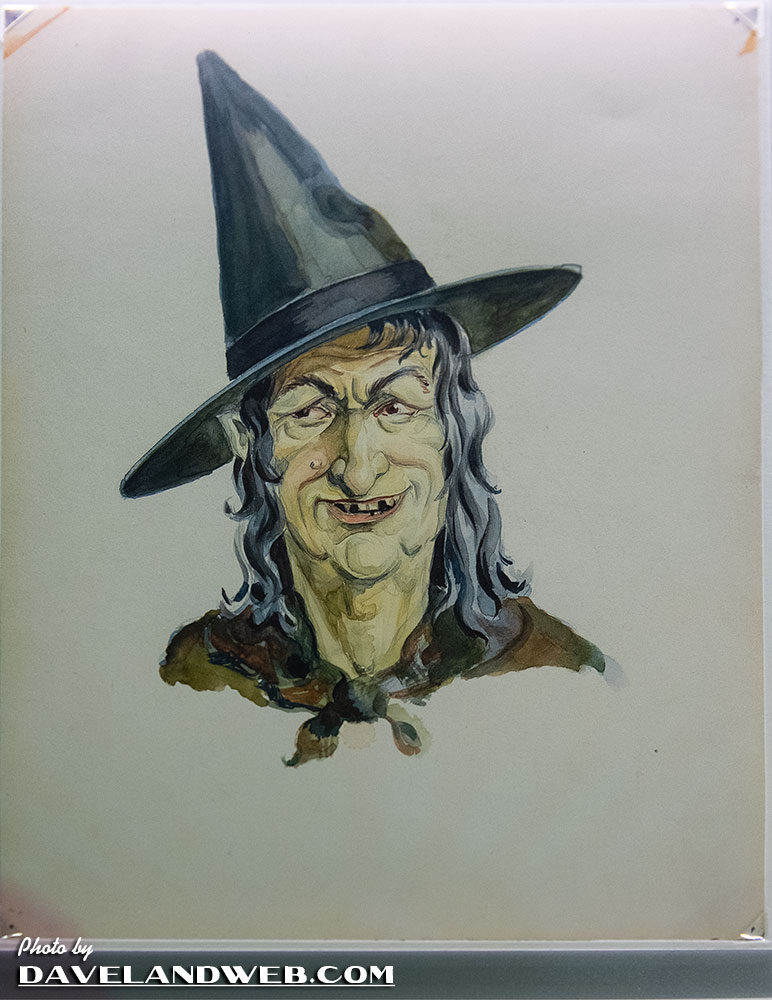
Here is the concept art by William Tuttle for the Wicked Witch, based on Jack Dawn’s makeup design:


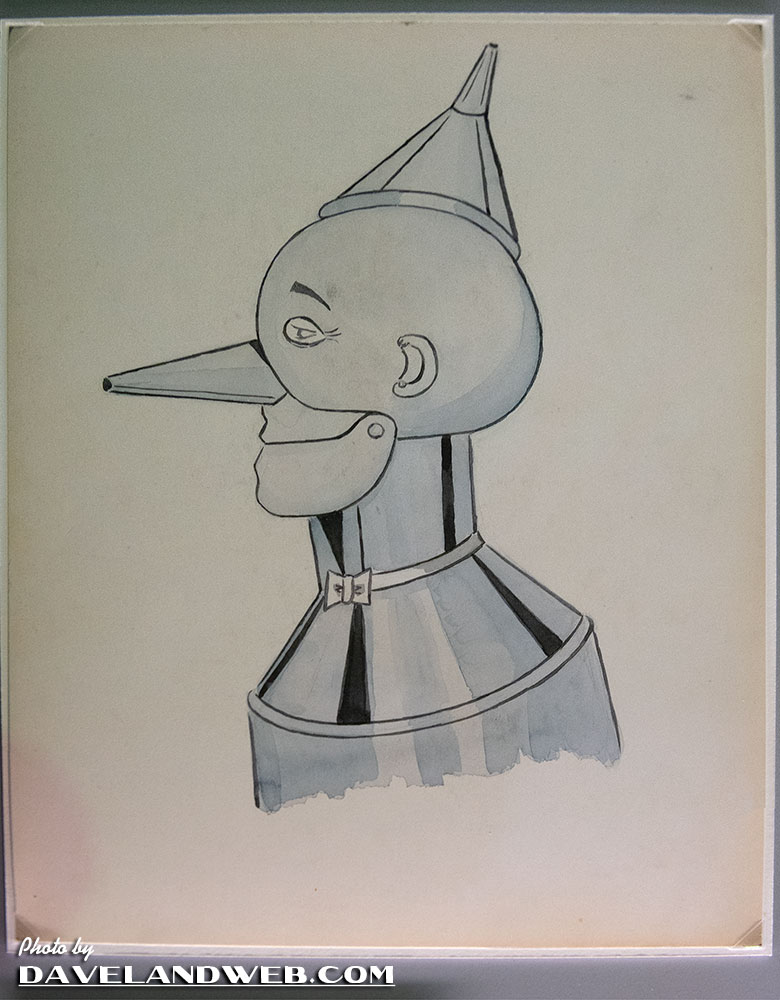
…and the Tin Man. For this one, Dawn and Tuttle stayed faithful to the original book illustrations by W.W. Denslow.


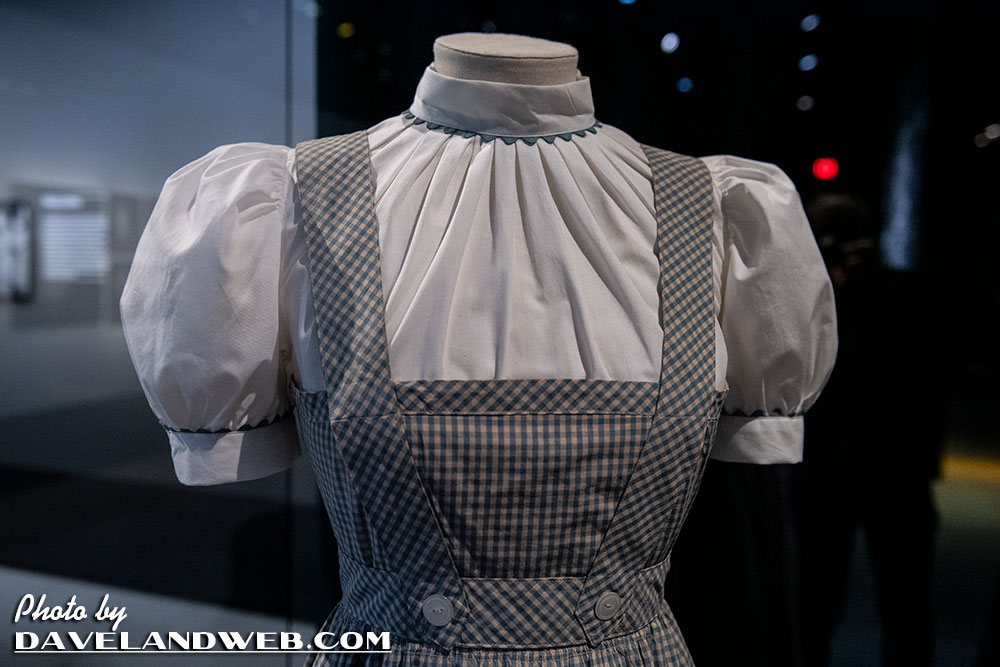
One of the pinafores worn by Judy Garland as Dorothy, designed by Adrian, with a non-original blouse:


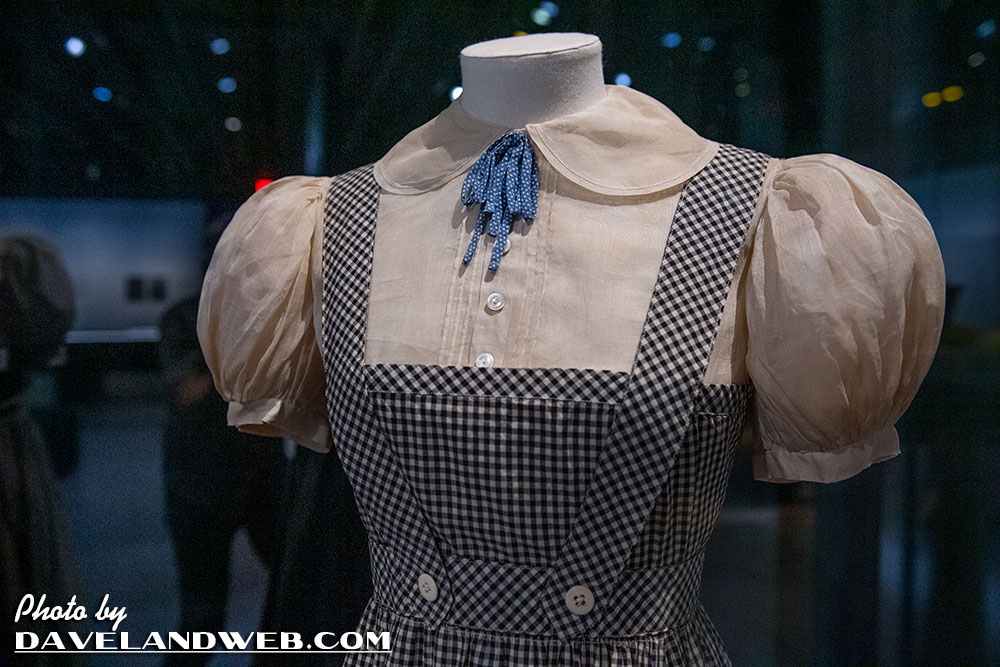
This is labeled as the sepia pinafore worn by Garland’s stand-in, Bobbie Koshay, paired with a blouse worn by Garland in unused footage directed by Richard Thorpe:


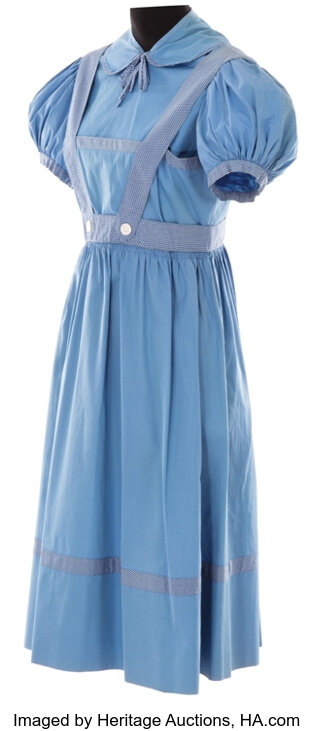
I recall the first time I saw a Judy Garland Dorothy costume was on the Freedom Train which toured the country in 1975-1976, with a cargo of precious treasures that spanned 200 years. Based on the Freedom Train website, I would have seen the dress somewhere between September 12-15, 1976. I remember my disappointment when it turned out to be a dress not used in the footage from the final film, but rather from the scenes under the direction of Richard Thorpe who was quickly fired. Here’s a shot of the Freedom Train dress from when it was sold by Heritage Auctions in 2013:


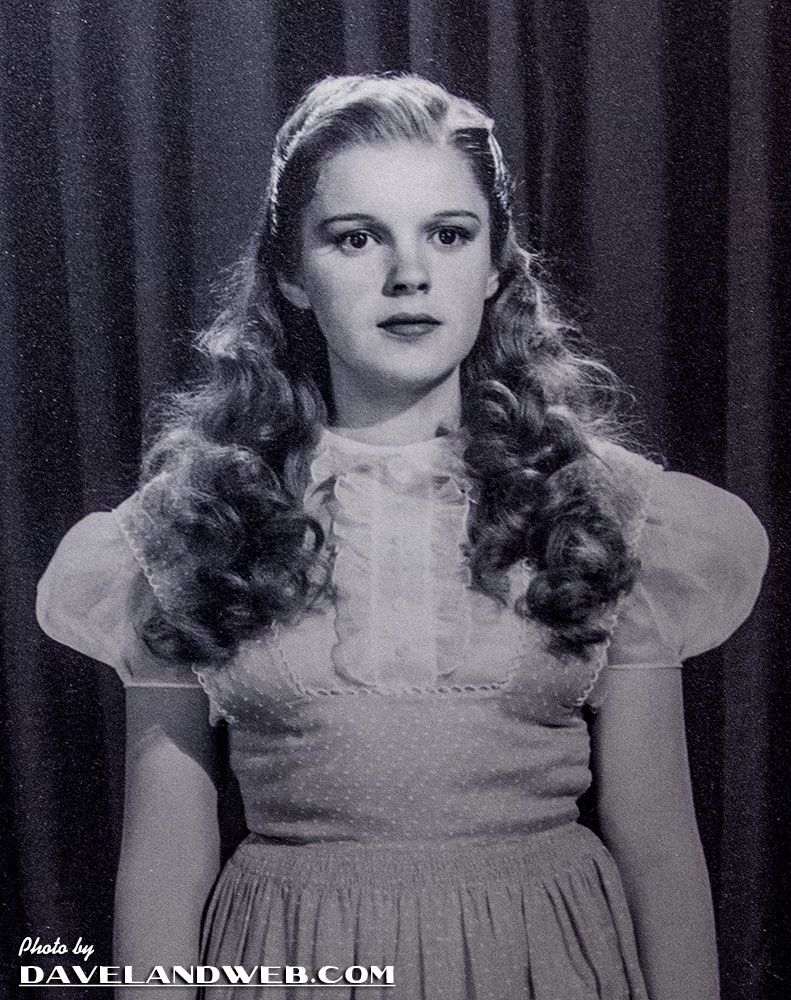
Back to the Academy. An early wardrobe test for “Oz,” with Garland wearing a blond wig and an unused version of the pinafore/blouse:


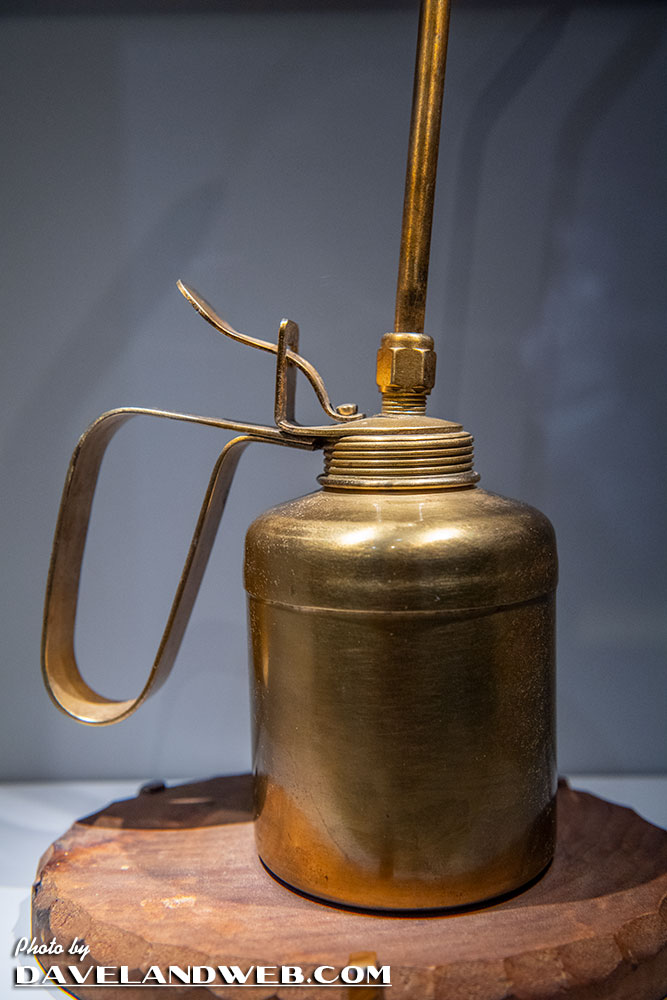
This oil can, used by the Tin Man, was presented to Jack Haley at the completion of filming:


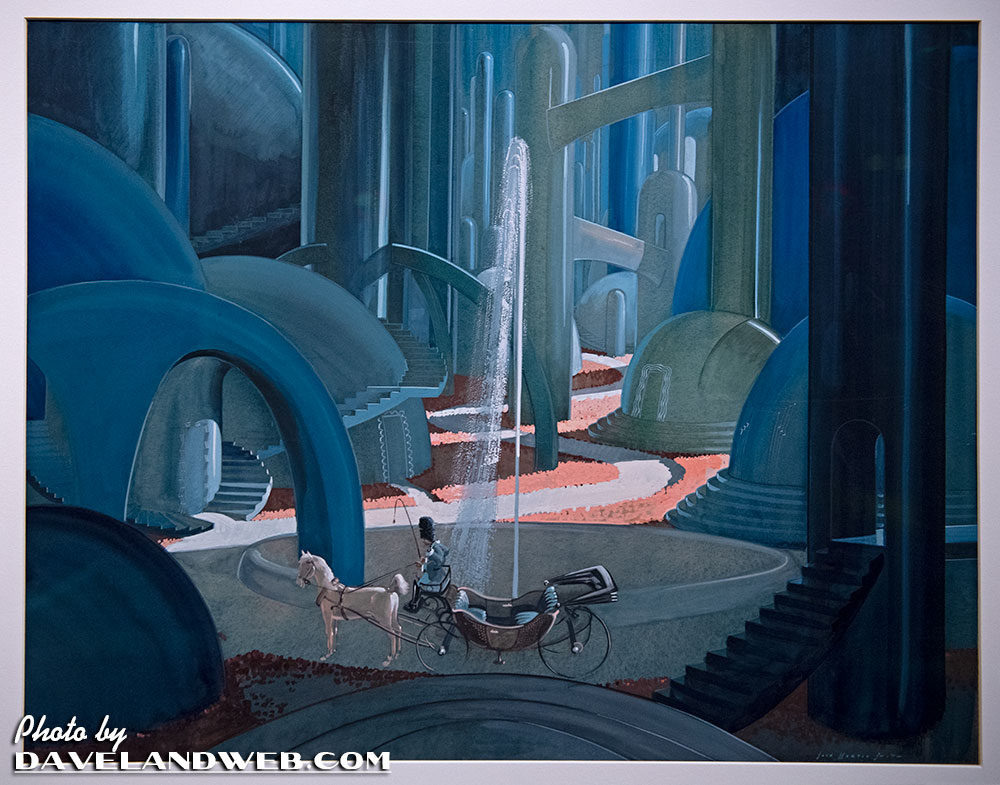
Jack Martin Smith’s concept art for the Emerald City, as envisioned by art director Cedric Gibbons:


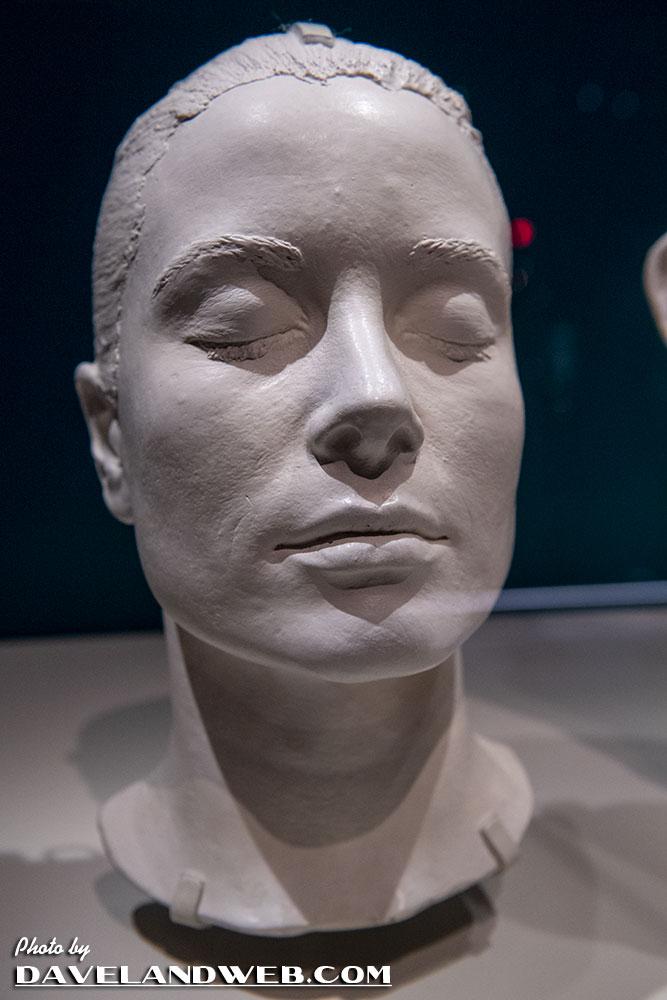
A life mask of actress Grace Kelly:


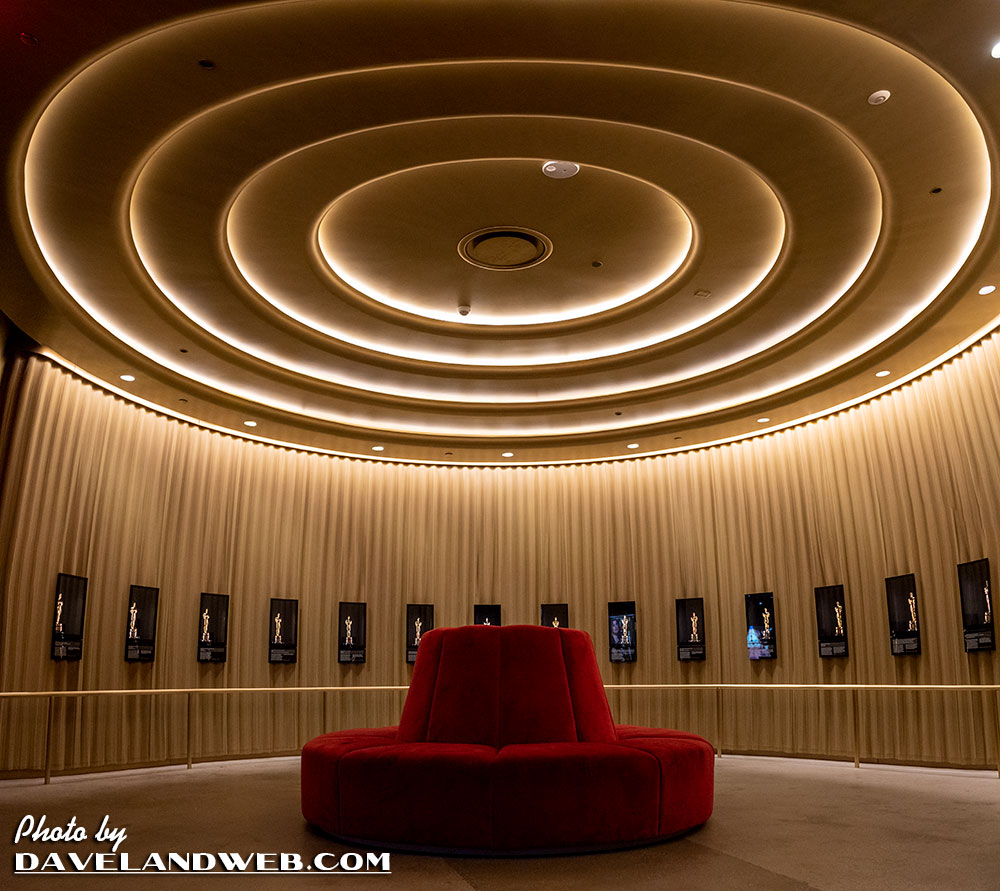
Oscars on display:


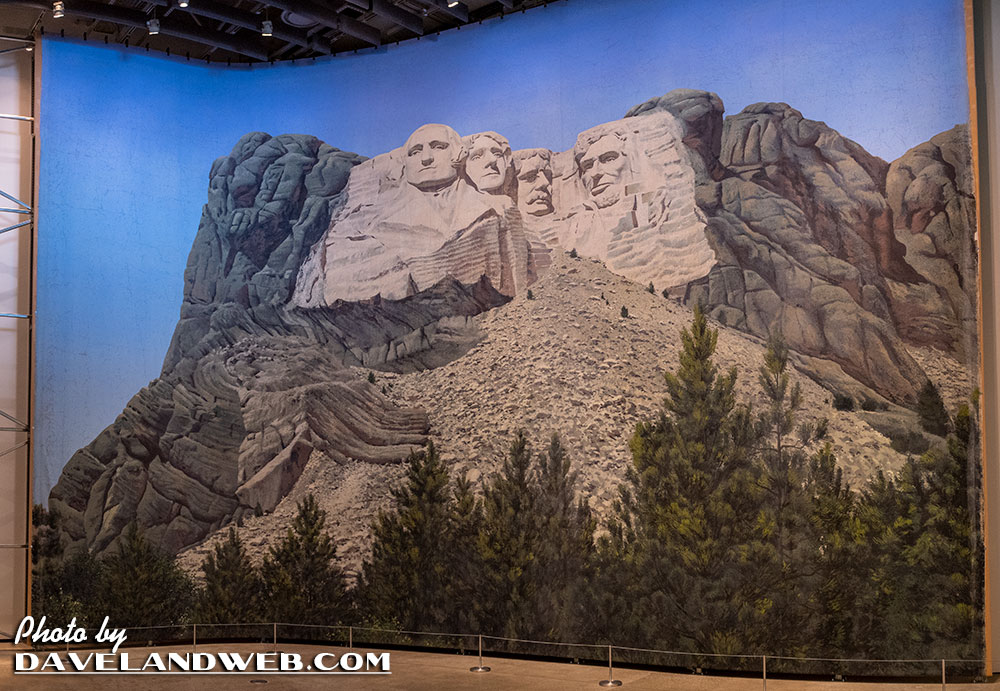
This one is a wow; the original backdrop painting of Mount Rushmore for the Alfred Hitchcock film “North by Northwest.” Even though it has been trimmed down over the years, the size (approximately two stories high) is still impressive.


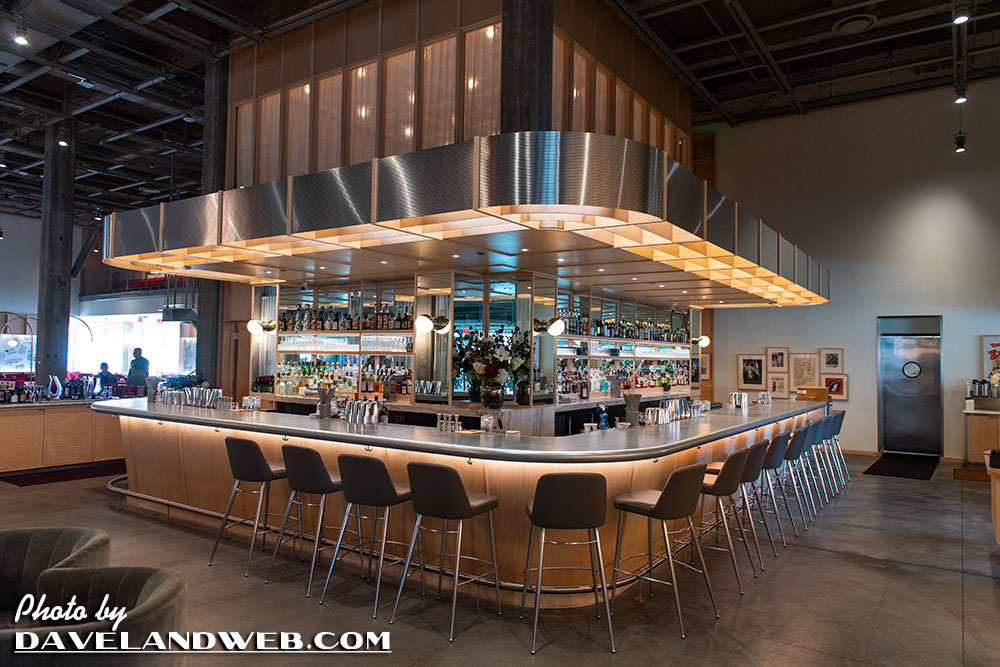
Melissa had arranged for a special Oscars Experience program that requires an additional charge; it was not working when we showed up at our designated time so she was refunded. Below is the restaurant/cafe inside the museum:


Overall, I would say this museum is a huge disappointment. So much space, so little to see. Because of the treatment of Shirley Temple’s legacy, I will not be in a hurry to return.

See more Academy Museum photos at my main website.